
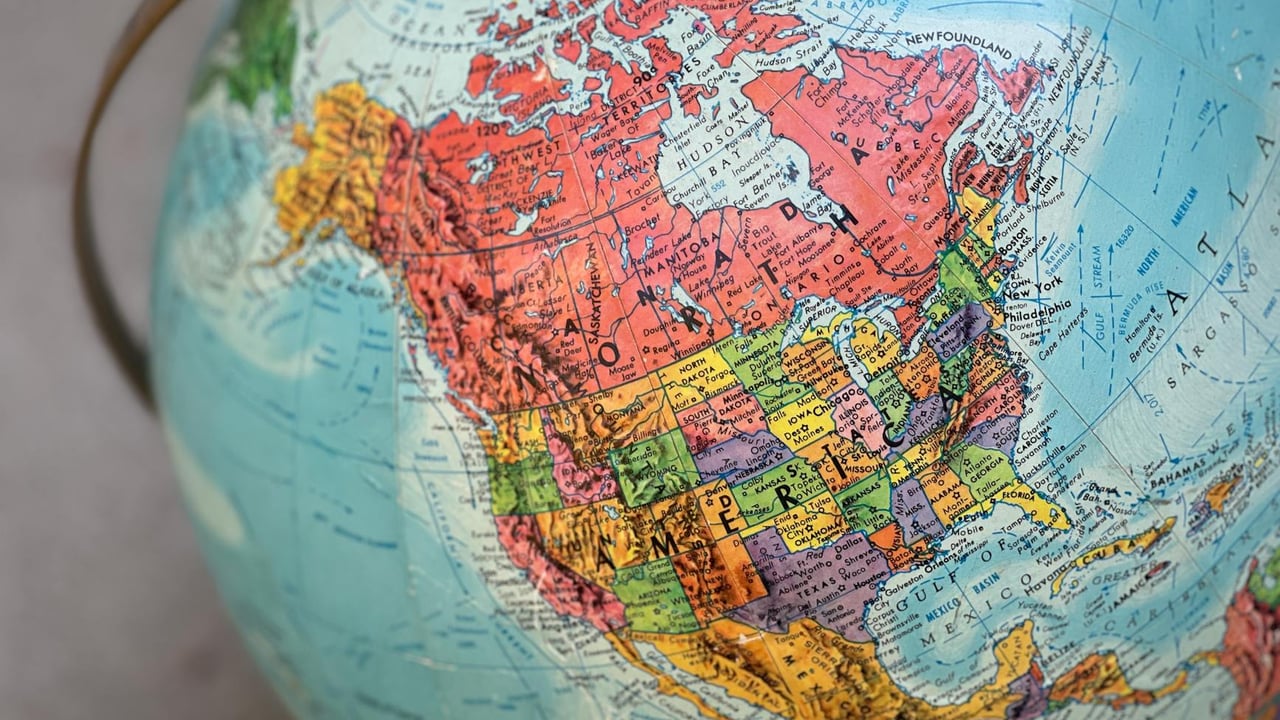

Canada’s armed forces have for the first time in a century drawn up a theoretical military model that simulates a United States incursion into Canadian territory, a step officials describe as a conceptual exercise rather than an executable battle plan. The exercise, reported by the Globe and Mail and confirmed by two senior Canadian government officials, is intended to test assumptions and explore potential vulnerabilities rather than to prepare for imminent conflict with an ally.
The modelling was described by sources as a framework for analysis: a way to stress-test defence postures, command-and-control arrangements and contingency thinking. Canadian officials emphasised the distinction between a conceptual model — which helps military planners imagine and evaluate threat scenarios — and an operational plan that would prescribe concrete orders and deployments.
The publication also reported that Ottawa is weighing the deployment of a small Canadian contingent to Greenland to join a Denmark-led exercise called "Arctic Endurance," pending final sign-off from Prime Minister Carney. Several European partners — including Norway, Sweden, France, Germany, the UK, the Netherlands and Finland — have already said they will send forces to the island, underscoring growing allied attention to the High North.
Taken together, the two developments reflect a broader reassessment of security assumptions at the intersection of alliance politics and Arctic geopolitics. Canada is a founding NATO member and a NORAD partner with the United States, but the decision to model a U.S. incursion signals that Ottawa is preparing for a range of contingencies, including scenarios where a close partner’s policies or actions become unpredictable.
The Arctic has become a focal point of strategic competition: melting ice opens new maritime routes and resource opportunities, while Russia has bolstered forces and infrastructure, and China has declared itself a "near‑Arctic state" seeking influence. Greenland’s strategic location and renewed interest from multiple capitals have turned the island into a high-profile stage for allied signalling and presence operations.
There are immediate diplomatic risks. Even if strictly theoretical, modelling an allied incursion can prick sensitivities in Washington and complicate bilateral trust. At the same time, exercises such as Arctic Endurance serve to reassure smaller Arctic states and allied capitals that NATO members can and will coordinate presence in a contested region.
Operationally the impact should be limited: a conceptual model does not alter force posture overnight. Politically and strategically, however, the move is telling. It demonstrates Ottawa’s intent to hedge against uncertainty, to prioritise homeland resilience and to assert an independent security calculus in the Arctic—choices that will require concurrent diplomacy with the United States and NATO partners to manage perceptions and preserve alliance cohesion.