
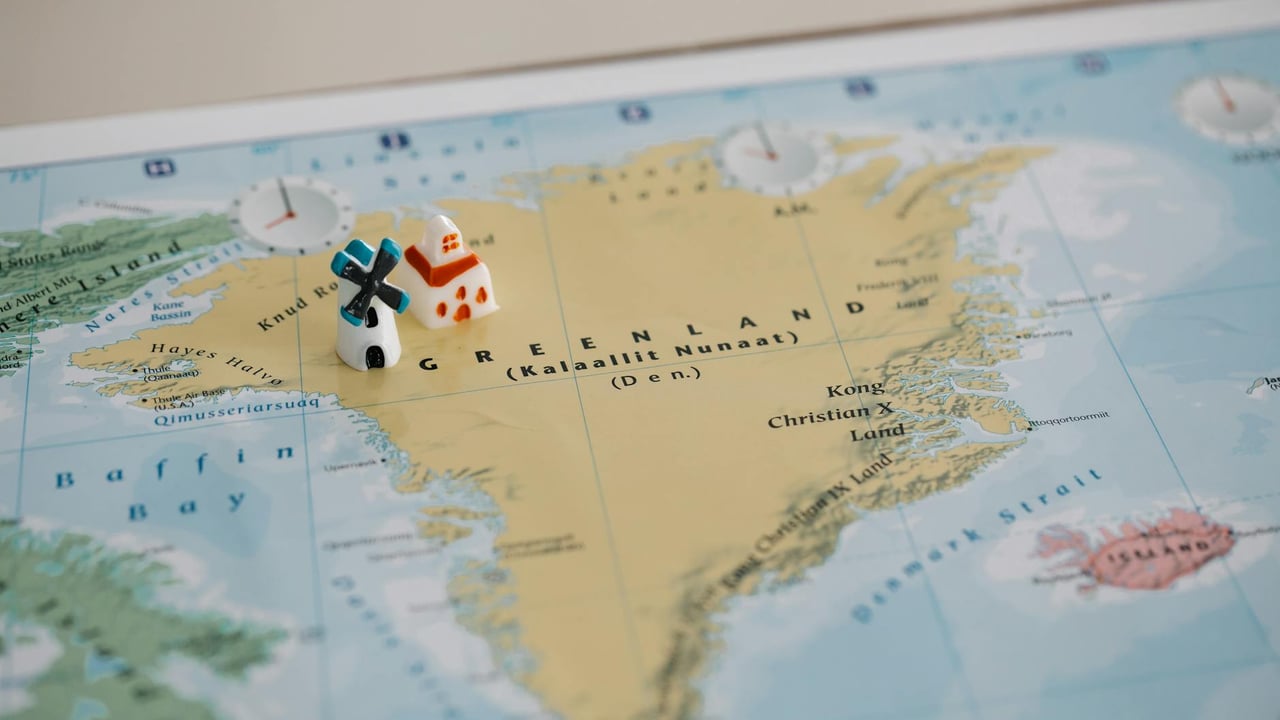

Greenland’s premier, Jens Frederik Nielsen, told a press conference in Nuuk that while the prospect of the United States using force to seize the island is unlikely, it cannot be entirely dismissed and Copenhagen and Nuuk must be prepared for all contingencies. He said Greenland will continue close cooperation with Denmark and is maintaining "good dialogue" with the EU and other allies as it seeks to strengthen partnerships in the face of growing geopolitical attention to the Arctic.
Nielsen warned that if the United States or other external actors attempted to instigate a "colour revolution" in Greenland, pro-American sentiment could quickly surface within the territory, complicating Nuuk’s internal politics. He described a social-media post showing an American flag planted on Greenland as "disrespectful," reflecting sensitivity in Greenlandic circles to perceived U.S. cavalier behaviour over the island’s future.
The premier called for strengthened military deployments and highlighted the arrival of European troops and an uptick in allied exercises in the region. "From a defence perspective, allies have held many exercises and tensions in the Arctic are rising," he said, framing a push for greater local readiness as pragmatic stewardship rather than alarmism.
Greenland is an autonomous territory within the Kingdom of Denmark with significant strategic value: it hosts early-warning and logistics infrastructure such as the Thule area, commands approaches to transatlantic air routes, and sits astride potential shipping lanes and resource frontiers opened by planetary warming. Western and global powers have intensified interest in the island since the late 2010s, when U.S. attention to Greenland briefly made headlines; Nuuk now finds itself balancing sovereignty, indigenous concerns, and great-power competition.
Denmark remains Greenland’s principal security guarantor, but Nuuk’s comments underscore a broader anxiety across Arctic capitals about the risks of militarisation, external influence operations and the domestic political strains they produce. Russia’s Arctic posture and China’s economic footprint are often cited in allied planning, but Nielsen’s remarks signal that even the United States — traditionally seen as a security partner — can be perceived as a disruptive force if diplomatic norms and consultation are not observed.
For international audiences, the premier’s statements are a reminder that the Arctic is not just an environmental or scientific frontier but a theatre of strategic contestation. Nuuk’s insistence on preparedness, continued partnership with Denmark, and engagement with the EU reflect an attempt to anchor Greenland’s security policy in multilateral frameworks rather than unilateral great-power transactions.
How Greenland navigates this fraught environment will matter beyond its 56,000 residents. Choices about basing, exercises and diplomatic alignment will reverberate through NATO planning, transatlantic relations and Arctic governance, and will shape whether the region tilts toward cooperative management or escalatory posturing.