
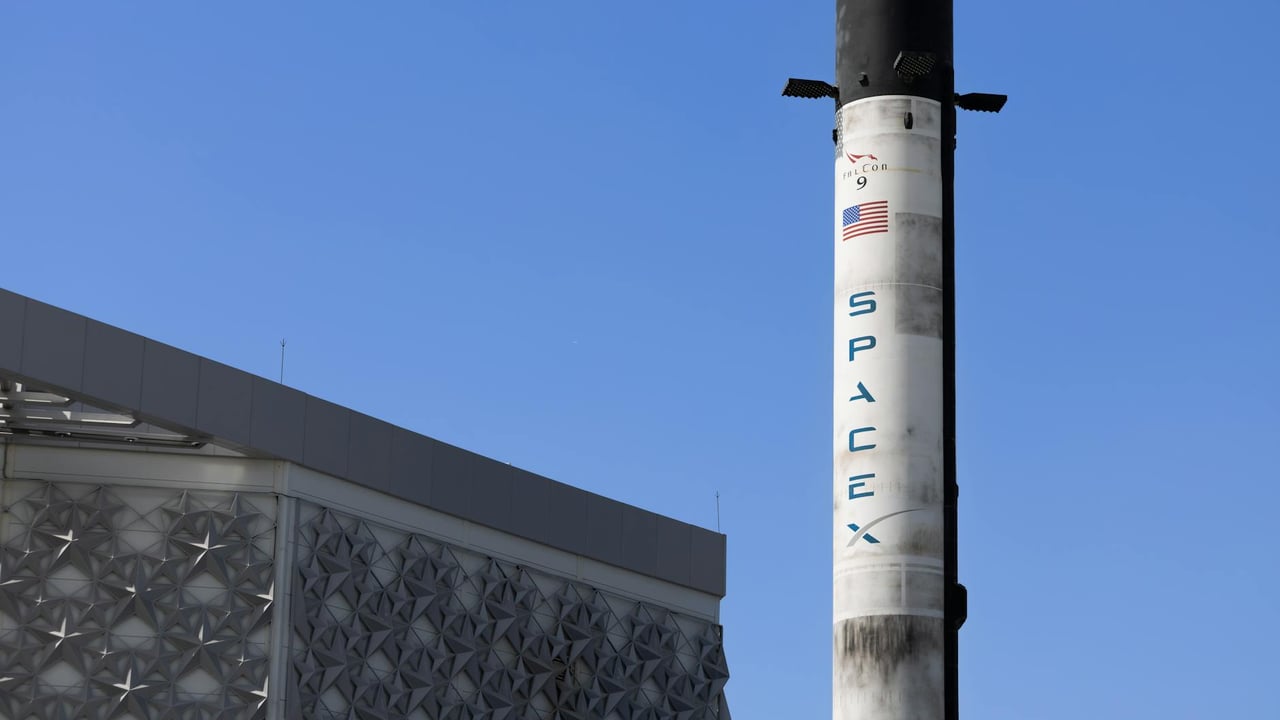

Elon Musk has warned that the principal bottleneck to the mass deployment of artificial intelligence is not chips or software but electricity. He said chip production may soon outstrip the number of units actually switched on, and outlined a bold plan for SpaceX to put solar-powered AI compute into orbit within a few years.
The observation flips a familiar narrative in the tech industry. For the past two years, executives and investors have fretted about shortages of specialised AI accelerators and the constraints of semiconductor supply chains. Musk’s point is different: factories can crank out silicon much faster than grids, datacentres and cooling systems can absorb the additional power draw needed to run those chips at scale.
That mismatch has practical consequences. High-performance AI inference and training require dense racks of GPUs or custom accelerators and intense cooling, pushing peak electricity demand in datacentres. If chips sit idle because operators cannot increase power provisioning or incur steep energy bills, the industry risks a period of surplus hardware, depressed prices and wasted capital expenditure — even as model sizes and appetite for compute continue to rise.
Musk’s proposed remedy is striking: move large-scale AI compute off the ground and into orbit, powered by sunlight. Space-based compute would, in theory, benefit from continuous solar exposure, simpler cooling circumstances than some terrestrial sites, and a distinct energy supply model. SpaceX’s existing launch capacity and in-orbit experience give the company a structural advantage in pursuing such a proposition compared with cloud incumbents focused solely on ground infrastructure.
The idea is not without trade-offs. Orbital compute faces higher latency for some applications, regulatory hurdles around cross-border data flows, and the upfront capital and operational complexity of building, launching and maintaining a constellation of compute satellites. There are also unresolved questions about bandwidth: moving large datasets to and from space will demand enormous downlink capacity and potentially new satellite networking architectures.
Geopolitically, the plan raises sensitive issues. Routing AI workloads through space-based platforms touches on export controls, national security assessments and data sovereignty rules that already complicate cloud and AI services. A commercial actor that couples launch capabilities with proprietary compute infrastructure could reshape competitive dynamics, advantaging firms that can vertically integrate satellites, communications and specialised chips.
For the market, the near-term consequence may be greater emphasis on energy solutions: more investment in datacentre electrification, local generation, grid upgrades and energy-efficient ASICs. For investors and policymakers, the development to watch is whether chipmakers face a true demand shortfall caused by energy constraints, and whether companies like SpaceX secure the technical, regulatory and commercial wins necessary to make orbital AI a viable alternative.
Musk’s pronouncements underline a fundamental shift: as AI scales, constraints move from silicon fabrication to systems-level bottlenecks — most notably power. How the industry responds will determine whether the next phase of AI growth drives a scramble for electricity, a wave of stranded compute capacity, or a rethinking of where and how compute is provisioned.