US Navy Puts First Hypersonic‑Armed Surface Warship to Sea, Signalling New Maritime Strike Capability

The US Navy has taken its Zumwalt-class destroyer to sea after refitting it to carry hypersonic missiles, a milestone that makes it the first US surface combatant to host such weapons. While the move advances the Navy’s long-range strike ambitions, true operational capability depends on further testing, production, and integration with targeting networks and other platforms such as Virginia-class Block V submarines.

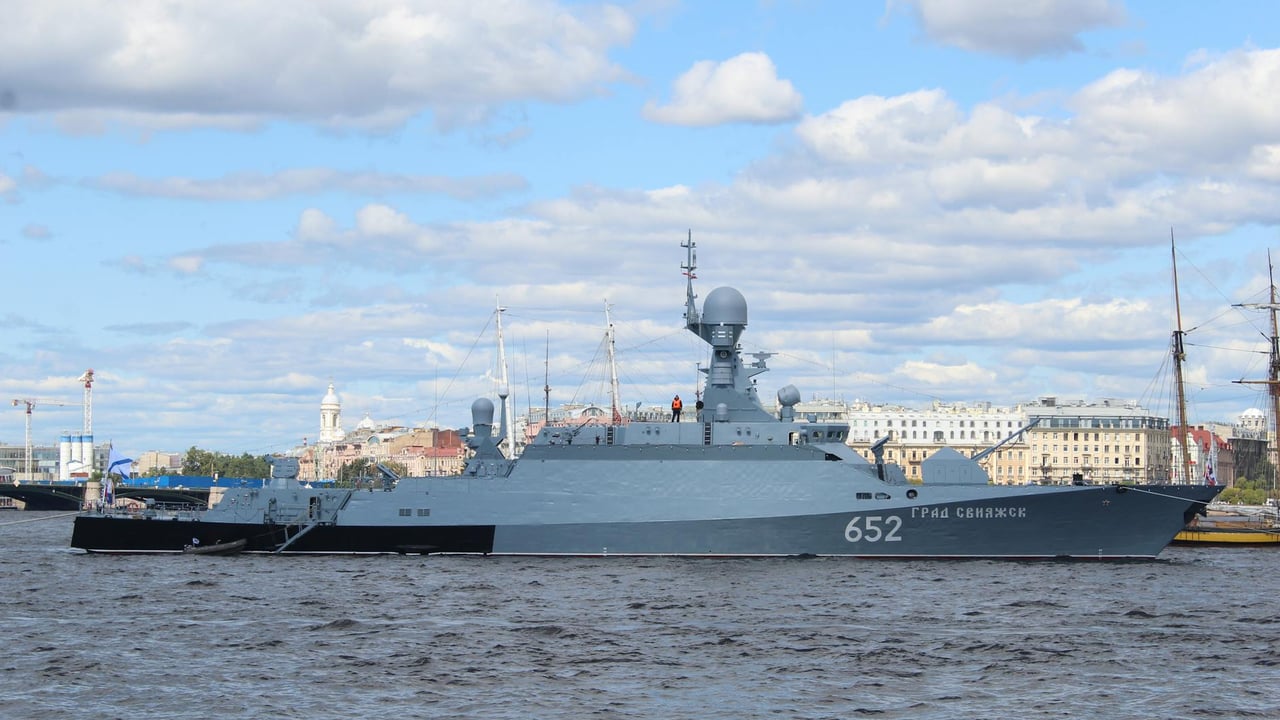
A modern navy warship docked in a European harbor on a clear day with cityscape background.

Key Takeaways

  • 1The Zumwalt-class destroyer completed nearly three years of modifications to carry hypersonic weapons and has undertaken its first sea trial post-upgrade.
  • 2This makes Zumwalt the first US surface combatant slated to host hypersonic missiles, part of a broader push to give the Navy long-range, high-speed strike options.
  • 3The US Navy still lacks a fully operational long-range hypersonic strike capability; the current activity represents a developmental milestone rather than full deployment.
  • 4Virginia-class Block V submarines are planned to carry a submarine-launched variant of the Conventional Prompt Strike (CPS) hypersonic weapon, expanding survivable launch options.
  • 5Operationalisation faces technical, logistical, and strategic challenges and will accelerate countermeasures and doctrinal adjustments among potential adversaries.

Editor's
Desk

Strategic Analysis

The Zumwalt sortie is a clear signal that the US is moving quickly to integrate hypersonic weapons into the naval domain, seeking to combine speed and survivability to penetrate advanced defences. But sea trials are an initial step in a complex pathway from prototype to operational capability: production scale‑up, reliable guidance and thermal protection, target acquisition at long range, and resilient command-and-control are prerequisites. Regionally, maritime hypersonics will complicate deterrence and crisis management by narrowing decision time and increasing the perceived rewards of pre‑emptive or escalatory options; globally, they deepen the technological arms race with China and Russia, likely spurring new investments in sensors, interceptors, and asymmetric counters. Policymakers will need to balance the desire for offensive reach with the risks of instability and the practical limits of fielding such advanced systems at scale.

China Daily Brief Editorial
Strategic Insight
China Daily Brief

The US Navy’s Zumwalt-class destroyer has completed a near three-year refit to accommodate hypersonic weapons and has sailed for its first post-upgrade trial, marking the first time an American surface combatant will host hypersonic missiles. The low-signature, electric‑power‑heavy Zumwalt design, long plagued by cost and role debates, has thus been repurposed to carry a new class of long‑range, high‑speed strike systems that the Navy believes will expand its ability to contest distant targets.

The upgrade is presented as a step toward giving the surface fleet a prompt, hard‑to‑intercept strike option; the Navy and broader defence community have repeatedly described long‑range hypersonic weapons as a game changer because of their speed, maneuverability, and ability to squeeze current missile‑defence architectures. Still, the service acknowledges it does not yet possess a full, deployable long‑range hypersonic strike capability—this sortie represents an important developmental milestone rather than the declaration of an operational force.

Alongside the Zumwalt modification, US planners envision a submarine dimension to hypersonic deployment: the next‑generation Virginia-class Block V attack submarines are slated to carry a submarine‑launched variant of the Conventional Prompt Strike (CPS) hypersonic weapon. Submerged launch from hard‑to‑detect platforms would complicate adversaries’ targeting calculus and extend the geographic reach and survivability of US hypersonic options, but will require new integration of launch mechanisms, fire‑control systems, and logistics.

The operationalisation of maritime hypersonics has wider strategic reverberations. For East Asia and the Indo‑Pacific, where anti‑access/area denial networks and layered air defences are emphasised, sea‑based hypersonics could alter calculations about strike depth, escalation, and forward basing. At the same time, adversaries will accelerate countermeasures—improved sensors, layered interceptors, and doctrine changes—heightening technological competition and complicating crisis stability.

Practical challenges temper the headline. Fielding hypersonics at scale entails production ramps, stockpile management, maintenance of complex thermal and guidance systems, and a datalinked targeting infrastructure able to provide timely, survivable targeting data. The Zumwalt sortie shows momentum, but turning that momentum into reliable, persistent capability will take further tests, doctrine updates, and significant investment amid competing defence priorities.

Share Article

Related Articles

📰
No related articles found