
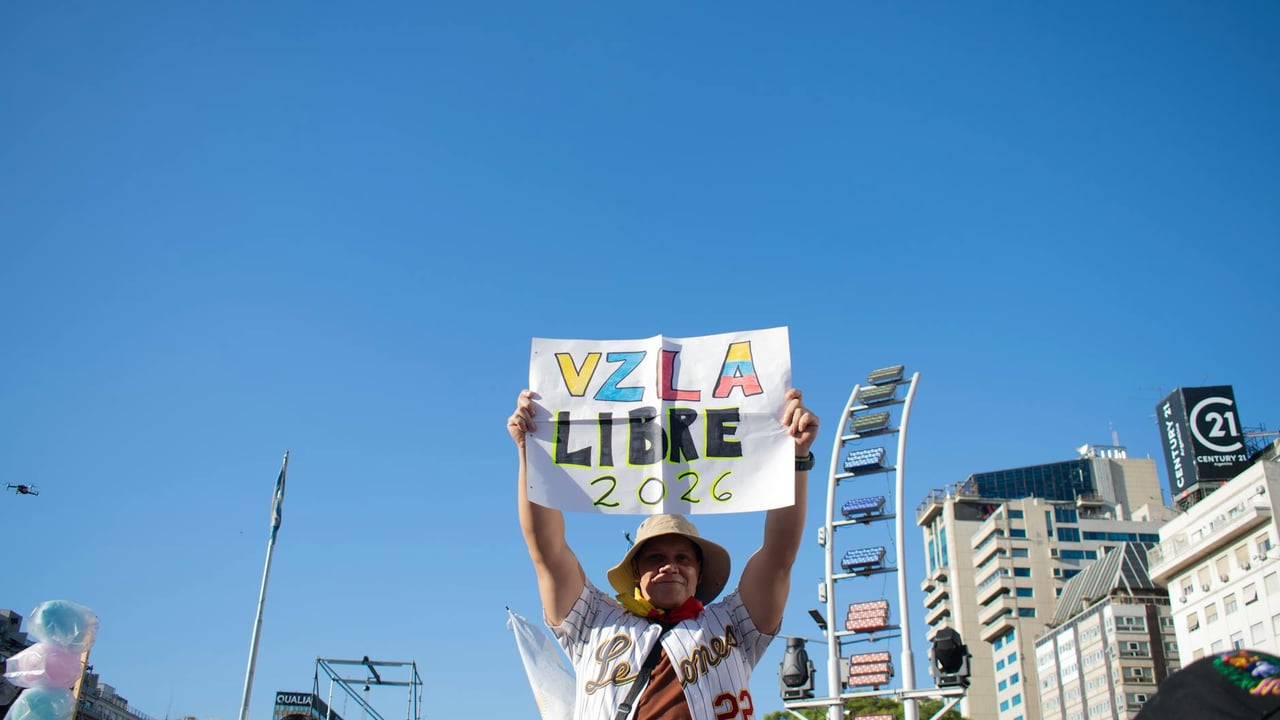

Tens of thousands of Venezuelans gathered in Caracas on January 23 to denounce what protesters described as a large-scale U.S. military operation that forcibly detained President Nicolás Maduro and his wife on January 3. Marchers invoked the symbolic date — the 68th anniversary of the 1958 popular uprising that ended a military dictatorship — to frame their demonstrations as a defence of sovereignty and constitutional order.
Speakers at the rallies called for the immediate release of the Madur0s and warned that the episode should serve as an alarm for all Latin American nations. Demonstrators emphasized national dignity and resistance, portraying their mobilization as the vanguard of a regional struggle against external intervention.
The protests took place against a backdrop of already fraught U.S.–Venezuelan ties. Washington has for years imposed sanctions and recognised opposition figures, while Caracas has accused the United States of pursuing regime-change policies. The latest allegations of direct military action — if substantiated — would represent a significant escalation beyond economic pressure and diplomatic isolation.
For Venezuelan authorities and their supporters the event offers a potent political narrative: external aggression justifies internal unity and resistance. For the opposition and governments in Washington and allied capitals, the episode, depending on its veracity, could expose the limits of covert pressure and risk opening a conventional fault line in hemispheric diplomacy.
Regionally, the incident has the potential to reignite historical fears of U.S. intervention across Latin America, prompting statements of solidarity and condemnation from governments and political movements aligned with Caracas. Even countries that have sought more pragmatic relations with the United States may find themselves forced to articulate positions on sovereignty and non-intervention, complicating diplomatic coordination on migration, energy and trade.
Internationally, an episode framed as a U.S. military operation against a sitting head of state would raise legal and institutional questions at the United Nations and the Organization of American States, and could draw responses from Venezuela’s external backers. Beijing and Moscow, which have invested politically and economically in Caracas, would likely use the moment to denounce unilateral action and reinforce their ties.
What happens next will hinge on two variables: independent verification of the alleged operation, and how regional and global actors respond. Absent clarity, the dominant short-term outcome may be domestic consolidation around a narrative of victimhood and resistance in Venezuela, with attendant risks of heightened polarisation and confrontation in an already volatile hemisphere.