
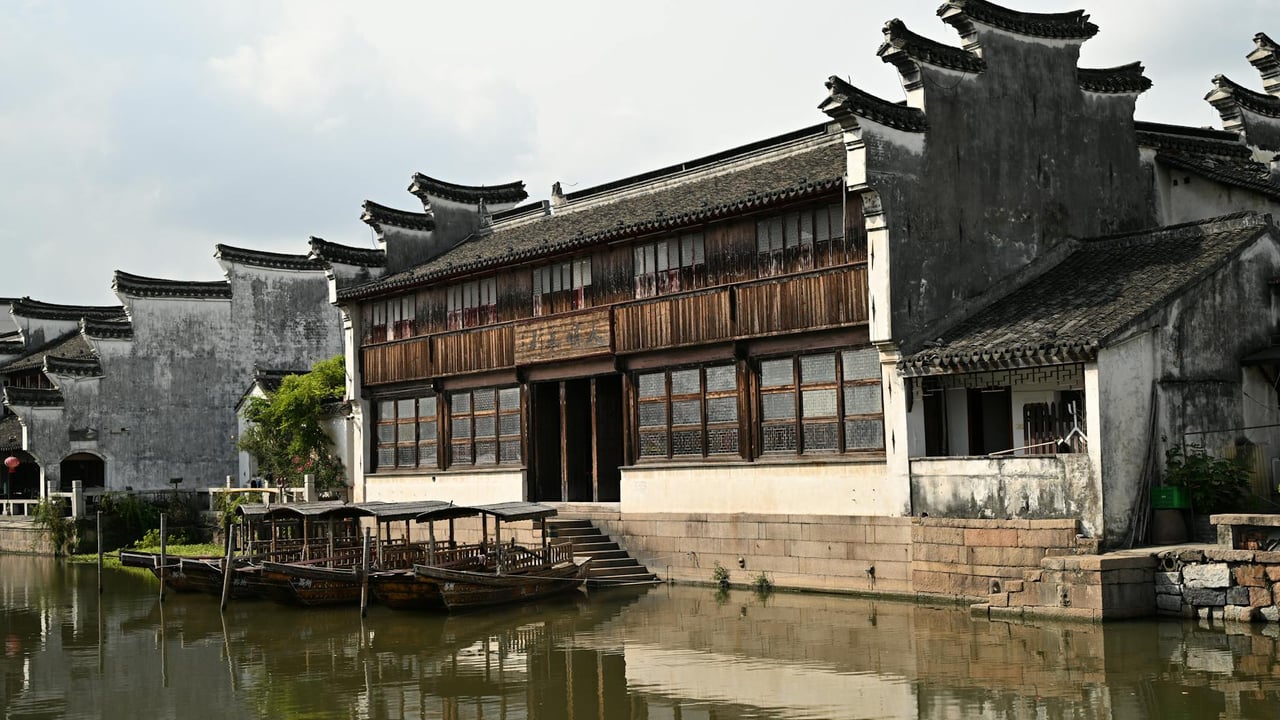

On a cold New Year’s day in Nanjing’s Gaochun water town, a traditional wooden sailboat named the Water Guerrilla Fighter cut slowly through the winter light. The vessel is a painstaking replica of a once-common Chinese river craft called the "sigua paozi"—rebuilt by Wu Haozhi, a 30-year-old post-90s graduate student and former soldier who spent two years tracing fading memories, tracking down elderly shipwrights and hunting rare timbers to revive a near-lost craft.
Wu’s project began as nostalgia. He remembers boats drifting in childhood waterways that have since vanished from the rivers and lakes of Jiangsu. His research at Yangzhou University and in the archives of the Grand Canal Museum exposed a wider pattern: traditional Chinese wooden sailing technology, honed over centuries, has been supplanted by motorboats and Western-style triangular sails, and the craftsmen who once carried that knowledge are thinning with age.
Reviving such a boat proved as much social work as carpentry. Oral transmission and apprenticeship once kept shipbuilding alive; blueprints and written descriptions are sparse, and many techniques exist only in the hands and memories of septuagenarian masters. Wu enlisted help from his tutor Fan Yinhua and persisted through weeks of rebuffs before winning the cooperation of veteran shipwright Yang Fangbao, who, after repeated visits and a shared meal and drink, agreed to teach and to bring other surviving masters into the project.
The practical obstacles were severe. Long, straight, dense timbers—the backbone and masts of the craft—are now scarce, and modern wood processors often refuse small, bespoke orders. Wu spent nearly a year sourcing cedar-like firs, dense hardwoods and chestnut timbers across Jiangsu and Anhui, cajoling workshops into making irregular cuts and tolerating the waste-heavy work old methods require.
In a makeshift shed the team relearned mortise-and-tenon joinery, plank shaping and traditional caulking. The work demanded physical endurance; Wu’s hands grew callused and his forearms were raw. The exchange between youth and age became symbolic: an elderly master, Du Zhongqiu, passed on a decades-worn saw to Wu—a gesture that formalised the transfer of craft and trust.
The project was not only artisanal but curatorial. Wu compiled a local ship manual, the Nan Jinling Ship Manual, documenting more than a dozen regional boat types and almost-forgotten techniques such as tung-oil preservation and handling characteristics for each hull form. He also produced 3D models to preserve the geometry of the craft digitally. The finished boat and the manual were acquired by a local museum, and Wu has announced plans to build a larger vessel and attempt a commemorative voyage along the route associated with Zheng He to showcase China’s maritime culture abroad.
This revival matters beyond a single boat. It highlights the fragility of intangible cultural heritage when skills are transmitted orally and when economic and material conditions change rapidly. It also illustrates how individual initiative, combined with institutional access to archives and museum interest, can turn endangered craft into living exhibits. Yet the project underscores structural issues: ageing practitioners, broken supply chains for traditional materials, and limited funding for apprenticeship pathways.
Wu financed much of the project with his veteran resettlement payment of 150,000 yuan and 400-plus days of labour. His story weaves together themes of military discipline, cultural stewardship and local identity, and it points to a wider question confronting policymakers: how to convert isolated revivals into sustainable living traditions rather than one-off restorations.