
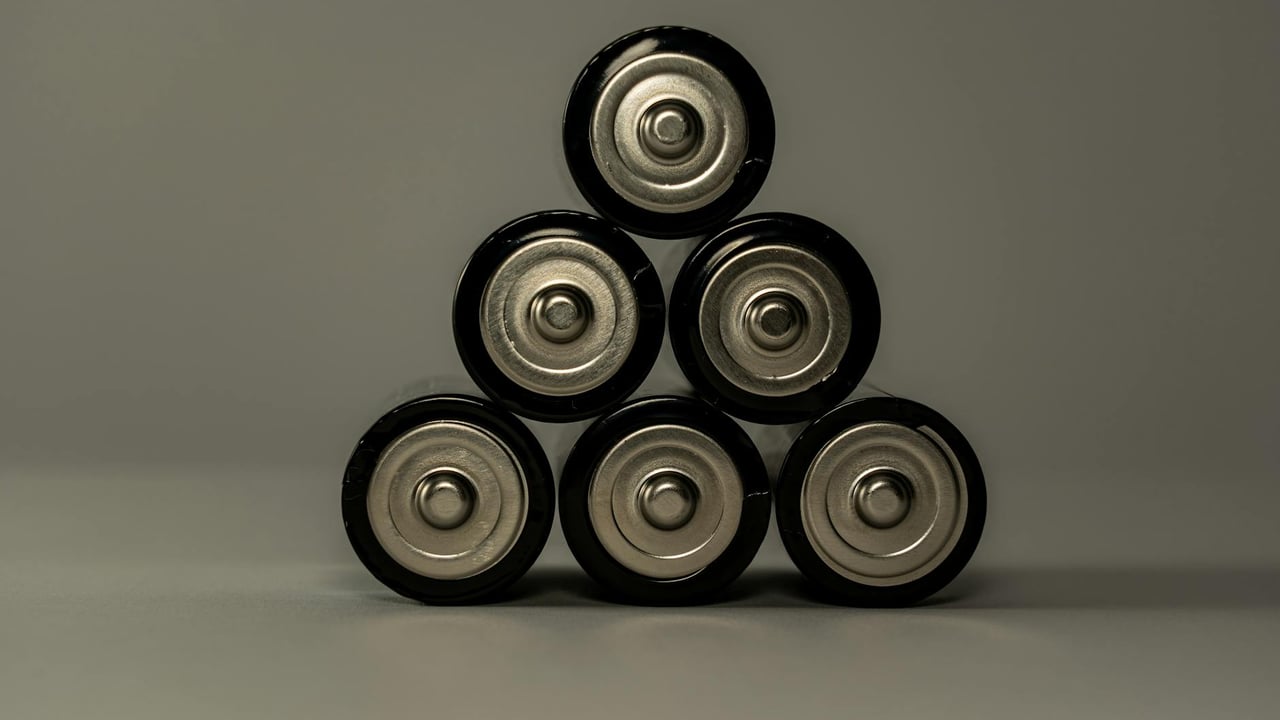

Faced with an erosion of share in the booming Chinese commercial electric-vehicle market, Ningde Times (CATL) has placed a strategic bet on sodium‑ion chemistry. The company’s newly unveiled Tianxing II commercial battery package includes the industry’s first mass-produced sodium battery aimed specifically at extreme-cold performance: CATL says the cell retains over 92% usable capacity at -20°C, supports plug-and-charge at -30°C, and survives severe mechanical abuse — including saw-cut, drilling and multi-directional compression — without fire or explosion.
The product launch is not merely a technical demonstration. Industry data show CATL’s installed battery capacity for new-energy commercial vehicles slipped to 79.74 GWh in 2025, accounting for 49.17% of the domestic market and down nearly 12 percentage points year‑on‑year. That decline, amid an expanding commercial EV market, has left space for second‑tier suppliers to chip away at CATL’s dominance. Executives framed the sodium strategy as a rapid counterpunch: a differentiated chemistry that addresses a clear pain point for fleet operators in cold regions and for weight‑sensitive light‑commercial vehicles.
Sodium‑ion batteries carry two obvious selling points. Sodium is abundant and widely sourced, which lowers long‑term raw‑material exposure to the tight lithium market; and the chemistry inherently offers a wider operating temperature window and strong safety characteristics. Those features translate into operational advantages for operators in northern China, the Russian Far East and other high‑latitude markets where lithium‑ion packs suffer winter degradation, and for logistics fleets that prioritise uptime and simplified thermal management over peak energy density.
Yet sodium’s limitations are apparent. Energy density currently lags behind mainstream lithium chemistries — including iron‑phosphate (LFP) — and the sodium supply chain is nascent. CATL’s chief technologist has set an internal target to close the energy‑density gap with LFP within about three years, but industrial costs today remain higher on a per‑kWh basis because production lacks the TWh‑scale economics that lithium cell manufacturing enjoys. For now, CATL is positioning sodium as complementary rather than replacement: the firm says it will roll the chemistry out initially across light commercial segments and, as capacity expands, into passenger cars, construction machinery and stationary storage.
The Tianxing II family also highlights CATL’s multi‑track product strategy. For long‑range variants the company is deploying an “ultra‑hybrid” cell that mixes ternary and iron‑phosphate materials to hit intermediate energy‑density targets without the full cost of an all‑ternary pack. This product differentiation seeks to match battery architecture to specific fleet use cases — high‑frequency urban delivery, intercity trunk routes or high‑temperature logistics — and to squeeze more life‑cycle value from each chemistry.
If CATL can scale sodium manufacturing while trimming costs, the technology could become a structural challenger in segments where cold tolerance, safety and system simplicity matter more than absolute gravimetric energy density. That would shift where mileage‑driven value accrues across battery chemistries, force rivals to respond with either better LFP low‑temperature performance or similar sodium offerings, and alter procurement calculus for OEMs and fleet owners. But a rapid transition is not guaranteed: adoption depends on widespread industrialisation, supply‑chain maturation for sodium‑specific cathode and anode materials, and real‑world fleet validation beyond supplier lab claims.
For the near term, the move is as much defensive as it is opportunistic. CATL retains clear leadership in installed capacity across passenger and commercial segments, but the sodium play is a bid to lock in future volume growth by occupying new technical space. The next 24–36 months will be telling: success will hinge on whether CATL can turn laboratory robustness and cold‑climate performance into scalable, cost‑competitive production and whether customers — particularly large fleets operating in severe climates — are willing to re‑specify packs based on runtime reliability instead of headline range figures.