
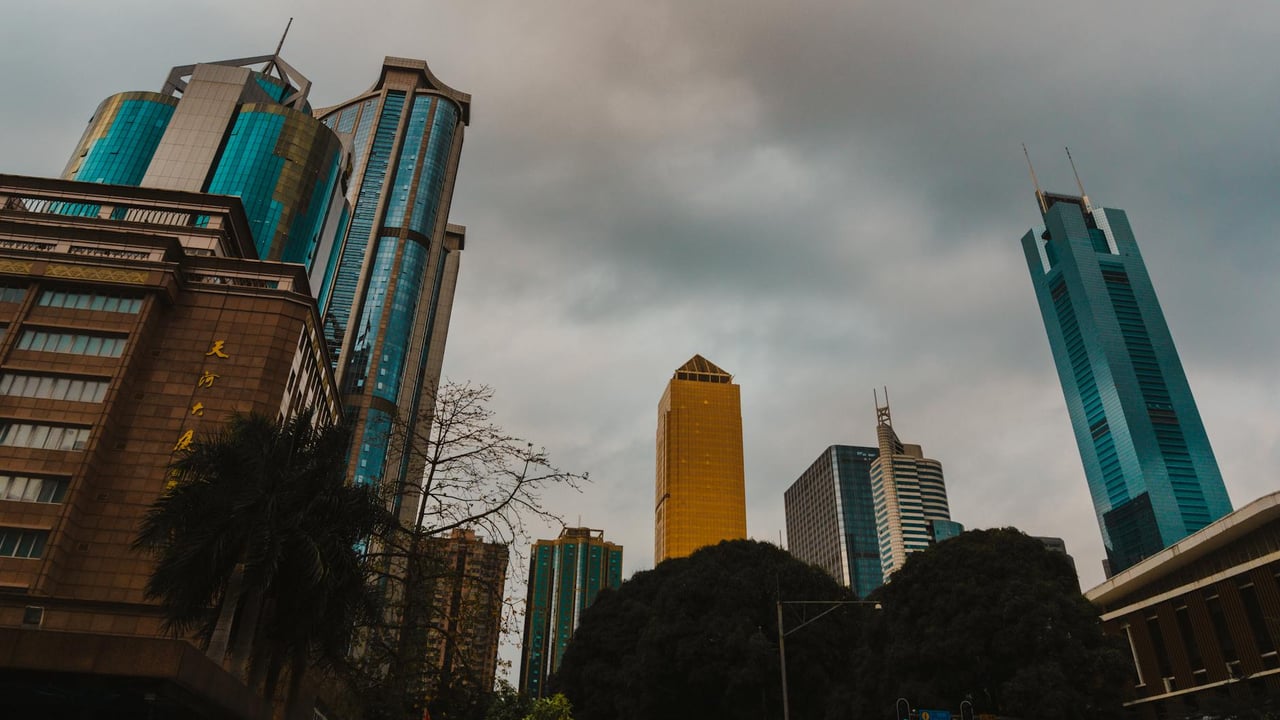

Guangdong province announced a GDP of RMB14.58 trillion for 2025, marking its 37th consecutive year as China’s largest provincial economy. The scale is striking: roughly $2 trillion, comparable to Brazil or Russia and larger than the economies of South Korea or Australia, placing Guangdong among the world’s top subnational economies.
The announcement emphasised that Guangdong’s dominance is not limited to output. The province claimed first place nationally in fiscal contributions, population and fertility metrics, industrial scale, foreign trade, scientific and technological innovation, fiscal transfer payments and net pension transfers. Its permanent population stands at about 127 million with peak or “real-time” population estimates exceeding 150 million, each figure larger than Japan’s.
Officials and provincial planners frame the new milestone as the start of the next phase rather than a ceiling. Guangdong’s “15th Five-Year” outline envisages doubling the economy by 2035 to roughly RMB26 trillion and lifting per capita GDP to levels characteristic of middle-developed countries. With an expected appreciation of the renminbi, provincial planners calculate a 2035 GDP that could surpass $4 trillion — bringing Guangdong close to the scale of California.
The province’s strengths rest on a dual strategy of manufacturing depth and high-tech innovation. Guangdong now hosts nine industry clusters each exceeding RMB1 trillion, and its artificial intelligence core industry accounts for approximately one-third of China’s national total. The province has topped national rankings of innovation capacity for nine consecutive years, powered by the “Shenzhen–Hong Kong–Guangzhou” innovation cluster and high levels of R&D spending, patents and high-tech firms.
Resilience in foreign trade underpins much of Guangdong’s story. The province reported foreign trade of RMB9.49 trillion in 2025, retaining its position as China’s export leader for 40 years and contributing 24.1% of the country’s trade-driven growth. That performance is notable given Guangdong’s deep integration into global supply chains and its exposure to tariff friction and geopolitical uncertainty.
Provincial leaders are also trying to rebalance growth geographically and socially. The “hundreds-thousands-ten-thousands” development programme aims to lift cities, counties and towns across eastern, western and northern Guangdong. Recent fiscal transfers, industrial “reverse enclaves” and coordinated assistance with central and western provinces seek to widen the province’s productive hinterland and absorb industrial relocations from inland China.
Yet the province faces familiar and novel constraints. Large size makes Guangdong more sensitive to swings in property markets, consumption cycles and external demand; structural adjustments from old to new engines are neither smooth nor risk-free. The province’s outsized role as a net fiscal and pension contributor to other regions also constrains its fiscal manoeuvrability and exposes it to political expectations about redistribution.
For global audiences, Guangdong is a living demonstration of China’s economic transition: an export and manufacturing powerhouse that is building a layered innovation system while shouldering national redistribution. How successfully Guangdong converts scale into higher value-added production, domestic consumption and inclusive regional development will matter not only for China’s macro-outlook but also for the shape of global technology supply chains and the geopolitical contest over advanced industries.