
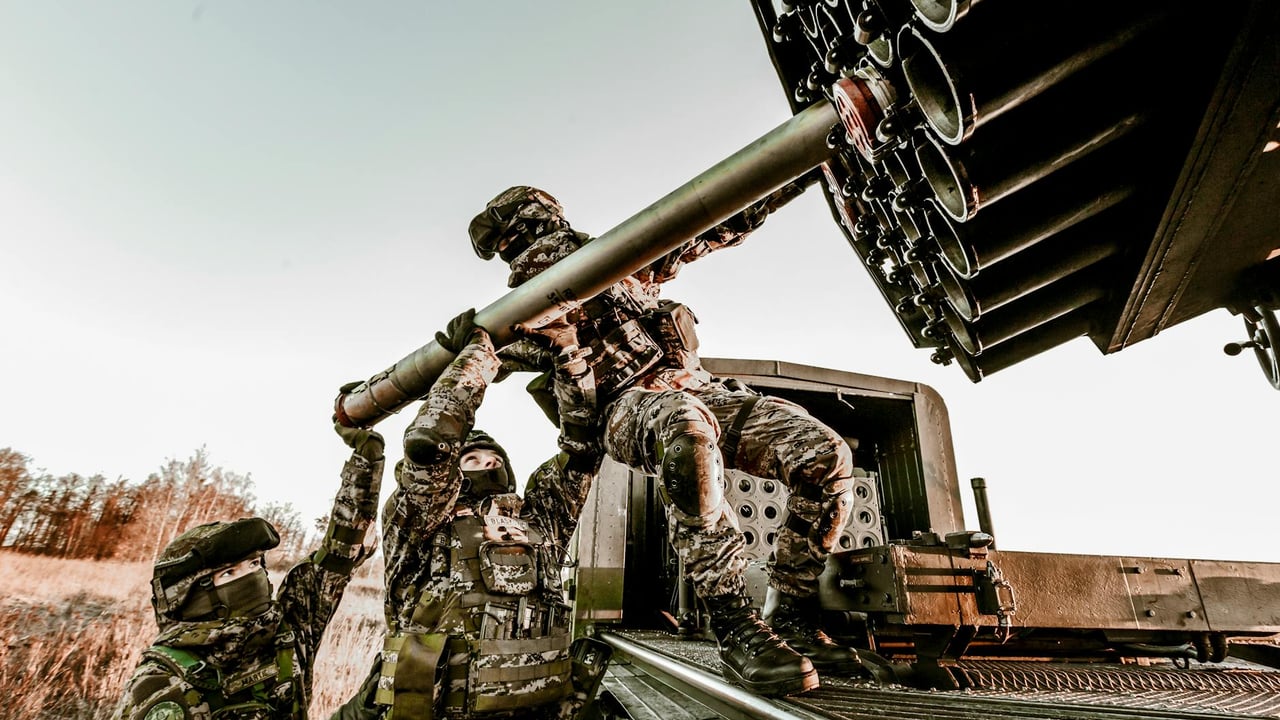

Sea wind slices through thin walls and whistles across rusting rafters. On a cold day at an improvised training site near the coast, soldiers from a rocket-artillery battalion of the Eastern Theatre Command are carrying out simulated target acquisition and fire-control drills inside an abandoned factory, their personal kit stacked on iron bunks rather than in neat barracks cubicles.
The battalion, equipped with China’s new-generation long-range containerised rocket launchers, has spent more than a year away from its home garrison. Men sleep in cramped stone houses, on vehicles, or in the shell of a factory; they keep their kit packed and say they are always ready to move at a moment’s notice. “One order and you take your rucksack and go,” the battalion political instructor tells a visiting reporter, explaining a posture of persistent mobility and readiness.
Command and control rides with them. A non-commissioned officer sits hour after hour in a command vehicle watching electronic displays, describing 24-hour shifts on the platform during missions. Others recall the sensory backdrop of coastal life—the roar of surf through drafty walls—which for some conscripts from inland provinces was the first time they had seen the sea.
Operational tempo is high. The unit has relocated between makeshift billets and training grounds, been re-subordinated within the theatre’s army brigade structure, and taken part in a major exercise at the end of 2025 codenamed “Justice Mission–2025,” where crews fired rockets at sea targets and reported full mission success. Decorations followed: the company received a collective second-class merit and several officers earned personal citations.
This small, on-the-ground portrait illustrates a wider trend in the People’s Liberation Army: the conversion of garrisoned units into highly mobile, outward-facing forces that train, manoeuvre and fight away from fixed bases. Containerised rocket systems—sometimes called “box” launchers—are central to this shift because they are easier to move, conceal and network into joint fire plans than legacy towed or fixed systems.
Politically, the battalion’s experience is framed by top-level messaging. Officers cited language from the Chinese Communist Party’s 20th Central Committee fourth plenum—“conduct struggles while preparing for war while building forces”—and a maxim that “the only thing that does not stand still is motion.” The rhetoric links the unit’s austere living conditions and constant travel to a narrative of modernization, resilience and revolutionary spirit.
For analysts, a few points matter. First, the habit of prolonged, dispersed forward deployments shortens decision cycles and complicates adversary targeting by reducing reliance on fixed bases. Second, sustained high tempo places pressure on logistics, maintenance and personnel welfare—areas that will test the PLA’s ability to convert peacetime exercises into wartime endurance. Third, public reporting of such practices serves a domestic morale and external signaling function: it demonstrates capability while normalising the sacrifices required to operate them.
There are limits. Moving large rocket systems repeatedly requires secure lines of resupply, spare parts, and trained technicians, and frequent relocations can strain cohesion and retention over time. The story of young soldiers who have not been back to their garrison for more than a year highlights both adaptability and potential human costs, from fatigue to disrupted family ties.
In sum, the battalion’s life in stone rooms, factory shells and command vehicles is more than colour: it is evidence of how China’s land forces are being reoriented toward mobility, joint operations and long-range strike. For neighbours and planners beyond China’s borders, the visible effects—containerised long-range fires, dispersed basing and rapid redeployment—are tangible signals that the PLA is refining the tactics and habits it would need in a high-end maritime contingency.