
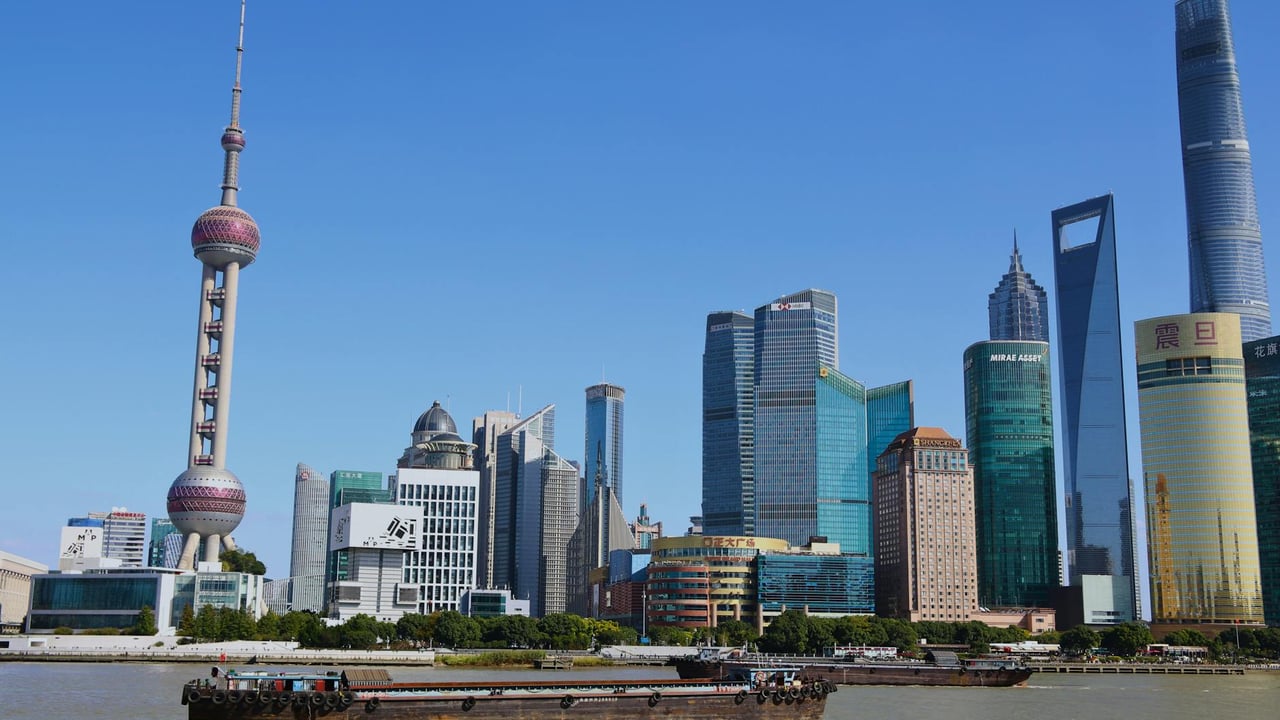

Shanghai used a high-profile industry forum on 27 January 2026 to set out an assertive plan for citywide “smart compute” capabilities, saying the total installed capacity has now topped 120,000 petaFLOPS (120 exaFLOPS). City officials framed the build‑out as part of a wider “AI+” industrial drive to digitise manufacturing, accelerate commercial AI adoption across key sectors and cultivate a domestic smart‑compute ecosystem that spans chips, networks and cloud services.
The headline figure requires context. The municipal smart‑compute estate is described as an aggregate measure of compute resources across public and private facilities; the city’s scheduling platform has brought nearly 20,000 petaFLOPS under centralised management. Shanghai officials and local integrators stressed that growth is not only about raw peaks but about building schedulable, shareable capacity that industry and research institutions can access.
Local industry actors have been mobilised into a coherent industrial strategy. A consortium led by Shanghai Instrument & Electronics (上海仪电) issued a development pledge to accelerate energy‑efficient next‑generation compute centres and to encourage coordinated deployment of domestically produced chips, large AI models and cloud services—packaged in the slogan “national chips, national models, national cloud.” China’s three big carriers and the national information research institute also unveiled a two‑pool scheme to move compute from technical demonstration to commercial use, splitting capacity into a validation pool and a commercial pool.
Practical use cases are already being prioritised. A municipal programme branded “Moulding Shanghai” targets five core industries—finance, manufacturing, healthcare, transport and energy—and six extended sectors including education, tourism and urban governance, aiming to weave large language and multimodal models into production workflows. To underpin science, the city and leading laboratories committed “ten‑thousand‑card” scale GPU access and one‑stop cloud services to lower the entry cost for academic researchers.
One striking feature of the forum was the proposal to extend the compute fabric beyond terrestrial data centres. An expert from China Communications Services argued Shanghai could explore an integrated air–space–ground architecture in which low‑earth‑orbit (LEO) satellite constellations are treated as programmable, schedulable “space server clusters.” By linking satellites with inter‑satellite laser communications and integrating them with land‑based data hubs, the design promises global coverage, low latency for selected routes and novel pathways for cross‑border data flows and urgent response scenarios.
The technical vision is ambitious, but it raises immediate trade‑offs and policy questions. Building exascale‑scale urban compute involves vast energy, cooling and real‑estate requirements and will confront grid and environmental constraints. The “national chips/models/cloud” push addresses supply‑chain security and proprietary risks, yet it also risks accelerating a bifurcated global AI stack if partners outside China perceive a closed loop. The satellite compute idea opens enticing capabilities for remote sensing and disaster response but also intersects with export controls, spectrum allocation and international data governance.
For global audiences, Shanghai’s announcements matter for three reasons. First, they signal that leading Chinese cities are pursuing compute capacity at a scale that changes assumptions about where advanced AI work can run. Second, the bundling of chips, models and cloud services into a domestic supply‑chain narrative shows how industrial policy is being operationalised at municipal level. Third, experimentation with space–ground integration points to an evolution in infrastructure thinking that could affect latency‑sensitive applications, cross‑border data routes and the economics of distributed compute.
How this ambition converts into operational, commercially sustainable infrastructure will depend on several variables: the pace of domestic chip scaling, the availability of low‑cost renewables to power centres, the ability to attract and retain top AI and systems engineering talent, and how regulators manage data flows and spectrum for satellite links. Shanghai intends to brand itself as a “smart‑compute supernode”; whether that translates into long‑term advantage will be decided by technical delivery, commercial partnerships and geopolitical headwinds.