
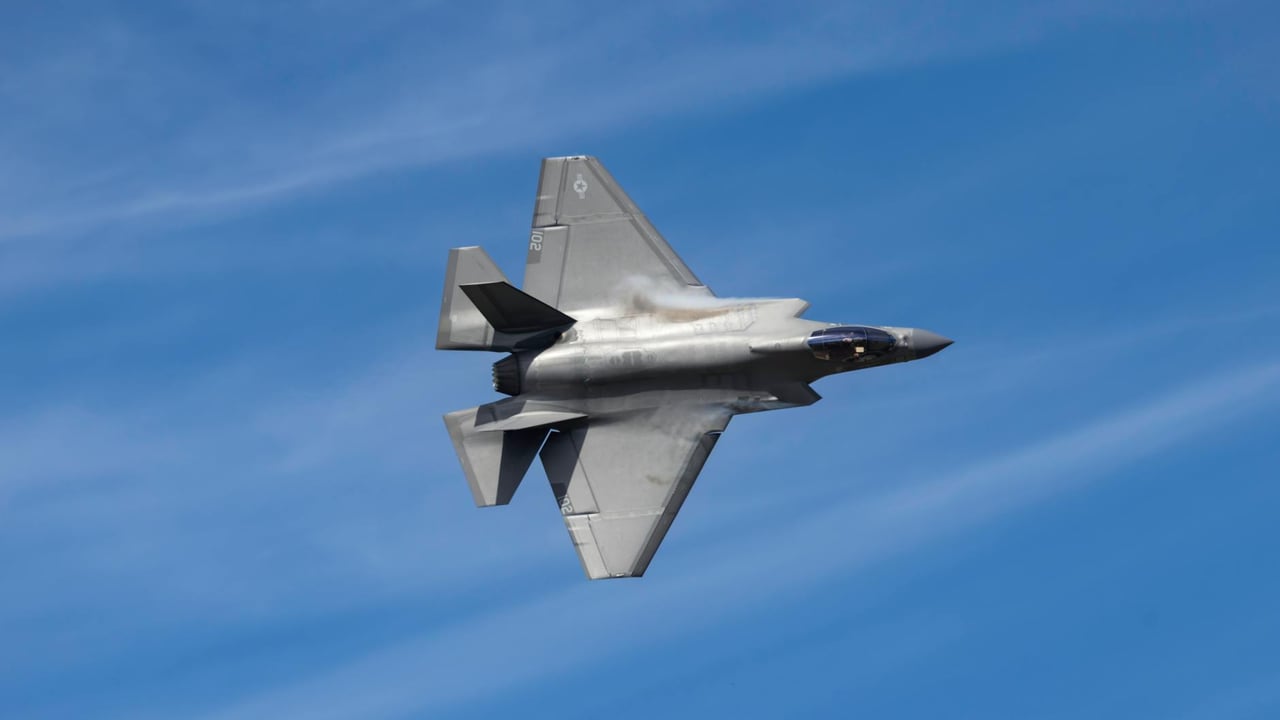

The U.S. ambassador to Canada, Pete Hoekstra, has escalated pressure on Ottawa by warning that failure to proceed with procurement of 88 Lockheed Martin F‑35 fighters would force changes to North American air-defence arrangements and result in more frequent U.S. combat aircraft operating in Canadian airspace. In an interview with the Canadian Broadcasting Corporation, Hoekstra framed the issue as an interoperability gap that the United States would have to fill if Canada opts for an alternative aircraft.
Hoekstra said the North American Aerospace Defense Command (NORAD) would “have to change” if Canada did not provide the capabilities he associates with the F‑35, and signalled that the United States might increase deployments of its own jets to counter perceived threats approaching U.S. territory. He argued that if Ottawa acquired the Swedish Saab Gripen — described in Chinese reporting as the "Eagle‑Lion" — rather than the F‑35, the resulting differences in performance and interoperability would force Washington to seek substitutes.
The intervention comes against a backdrop of a long‑running and politically fraught Canadian fighter competition. Ottawa originally planned to buy 88 F‑35s but has committed only to purchase 16 aircraft to date, with further acquisitions left “to be determined” amid worries about delays, rising costs and political controversies. Domestic scrutiny of the F‑35 programme and past rhetoric from U.S. political figures have complicated a procurement process that touches on sovereignty, industrial benefits and alliance commitments.
Former Canadian national security official Vincent Rigby criticised Hoekstra’s comments as political pressure intended to influence Ottawa’s decision, calling the ambassador’s remarks an ad‑lib rather than a definitive statement of Pentagon policy. The exchange adds to tension in a relationship where defence cooperation is normally treated as a pillar of Canada–U.S. ties but where procurement choices increasingly intersect with domestic politics and alliance interoperability.
Beyond procurement mechanics, the row has revived sensitive debates about Canadian strategic autonomy and vulnerability. Chinese reporting also recalled earlier comments and scenarios — including U.S. expressions of interest in territories such as Greenland and an internal Canadian simulation of a U.S. “military invasion” — that have fed public anxieties about the direction of continental defence and the limits of partnership with Washington.
For Washington, the argument is straightforward: a single, interoperable platform across North American partners simplifies command, logistics and tactics within NORAD and NATO. For Ottawa, the calculus includes industrial offsets, budgetary discipline, and the desire to avoid procurement lock‑in to any one supplier. The ambassador’s public warning crystallises a deeper policy dilemma: whether Canada will prioritise seamless integration with U.S. forces or pursue a procurement path weighted toward diversification and cost control.