

China’s Ministry of Industry and Information Technology (MIIT) released its 2025 telecom statistics on 28 January, revealing a sector in structural transition. Telecom revenue rose only 0.7% year‑on‑year to ¥1.75 trillion, yet the industry’s real output expanded 9.1% on a constant‑price basis, outpacing national GDP growth by 4.1 percentage points. The divergence between sluggish headline receipts and buoyant underlying volume signals a move away from traditional voice and SMS toward higher‑value digital services.
Conventional telco products continue to shrink. Revenue from voice, text and basic mobile data fell 0.5% as users and carriers increasingly shift to bundled, cloud‑centric offerings. Emerging services — cloud computing, big data, IoT and data‑centre operations — now account for 25.7% of industry income, up 4.7 percentage points and contributing 1.2 percentage points to overall revenue growth. MIIT highlighted that this new mix has become the industry’s main revenue driver.
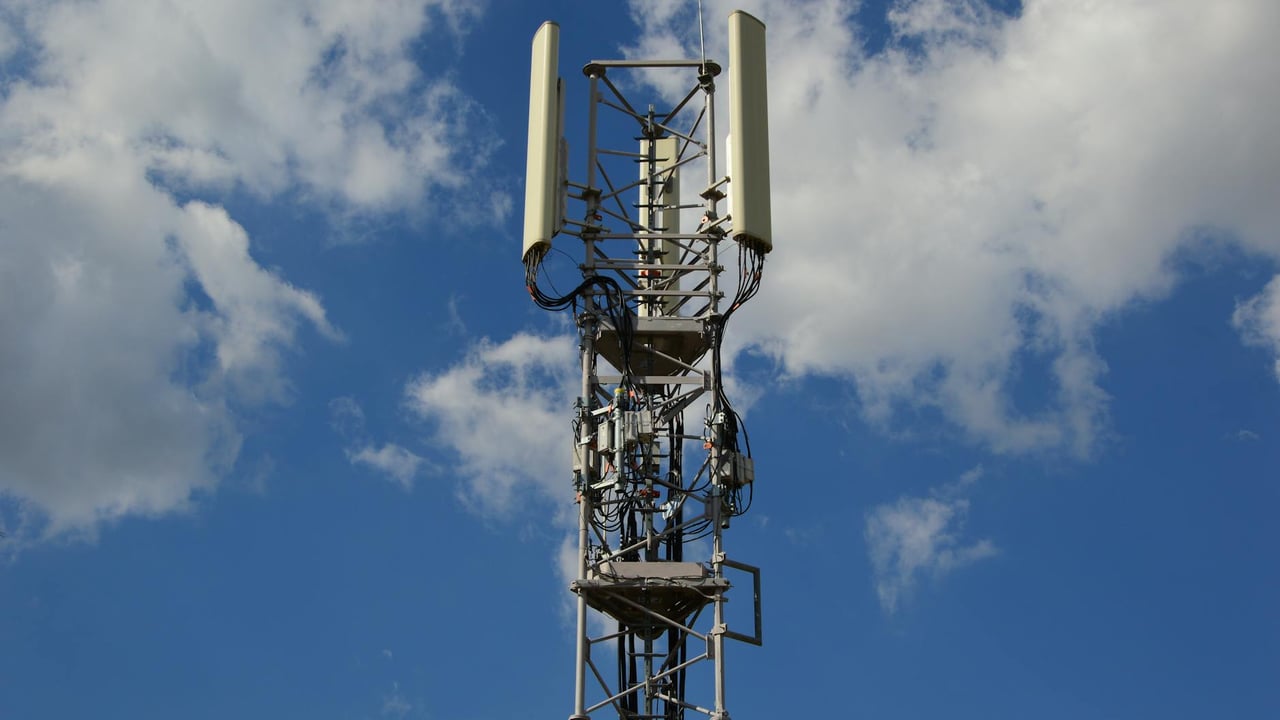
Behind the service mix change lies heavy investment in infrastructure and capacity. China ended 2025 with roughly 4.84 million 5G base stations — some 37.6% of all mobile base stations — giving an average of 34.4 5G sites per 10,000 people. The “double‑gigabit” push has deepened: county‑level gigabit connectivity is complete, all townships and more than 95% of administrative villages now have 5G, and 10G PON ports capable of gigabit home service total about 31.6 million, far exceeding mid‑term targets. Fibre, long‑haul and metro trunk routes were extended further, taking the national optical‑cable length to about 75.0 million kilometres.
Compute and data‑centre capacity expanded rapidly as carriers repositioned as providers of cloud services. The three state‑backed telcos now offer about 938,000 data‑centre racks externally, adding 108,000 racks in 2025. Dispatchable intelligent compute capacity — measured at FP16 precision — surpassed 94.4 exaflops, an 87.6% year‑on‑year increase. MIIT noted successful early trials of 5G‑Advanced (5G‑A) and the country’s first production trials combining 400G and 800G optical networks.
On the demand side, users are migrating to higher‑quality networks and devices. China’s mobile subscriber base reached 1.827 billion, a penetration of 130 SIMs per 100 people, and 5G users climbed to 1.204 billion, about 65.9% of all mobile lines. Fixed broadband connections hit 691 million, with 238 million households on gigabit or faster plans. The number of mobile IoT terminals reached 2.888 billion, representing 61.3% of connected mobile devices and underpinning rapid growth in automotive, public‑service and smart‑home applications.
MIIT also emphasised R&D and standards gains. Telecom R&D spending rose to 4.6% of industry revenue, meeting China’s 14th Five‑Year plan target, while domestic declarations of 5G standard‑essential patents account for an estimated 42% of the global total. Early work on 6G architecture and quantum communications moved from lab validation toward initial application trials, and the fusion of AI with telecoms was singled out as accelerating commercialisation.
Why this matters: the figures point to a strategic pivot. Weak headline revenue growth reflects saturated consumer markets and price competition, but the sector’s large, state‑backed investment in gigabit networks, data centres and industrial connectivity is creating capacity to monetise advanced services. That transition matters for China’s industrial policy, global tech competition, and demand for semiconductors, optical equipment and datacentre hardware — all areas where Chinese scale will influence global markets.
Risks remain. Operators must find ways to monetise upgraded networks amid intense domestic competition and regulatory constraints on pricing and cross‑subsidies. The rapid expansion of compute and fibre will raise power, land and environmental pressures, while the emphasis on home‑grown standards and patent leadership is likely to heighten frictions with foreign suppliers and governments.