
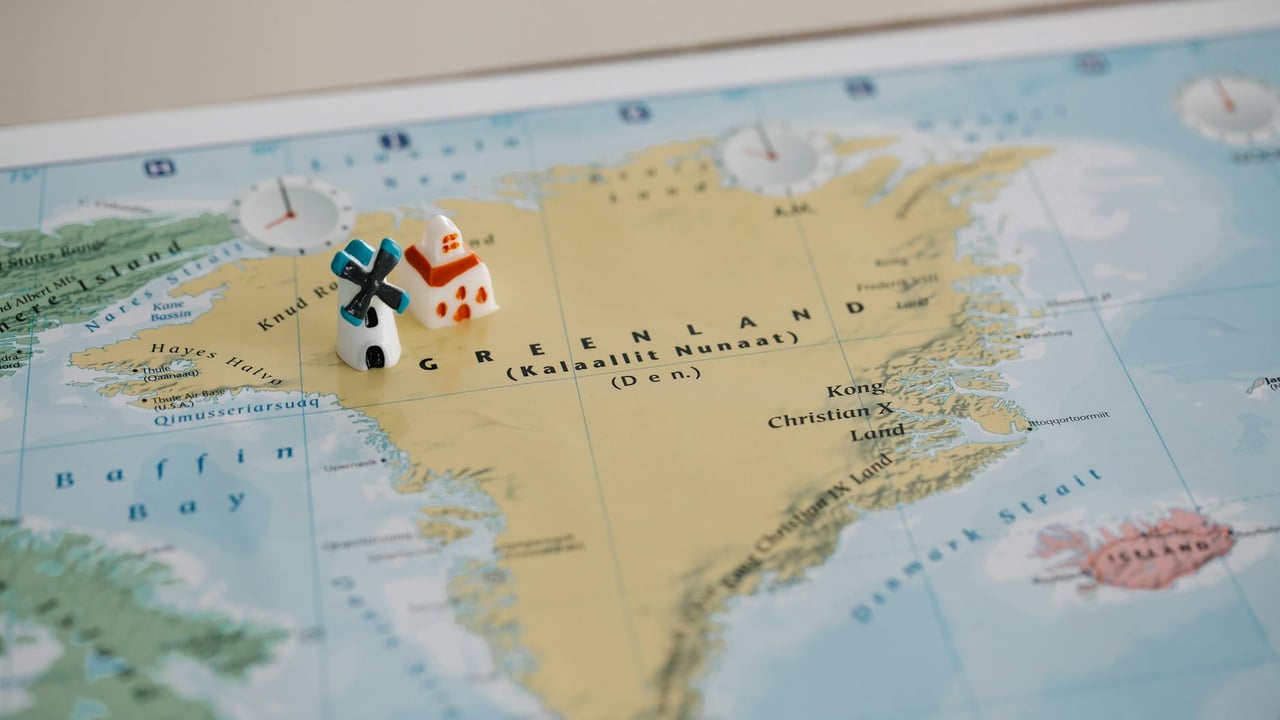

Denmark’s prime minister, Mette Frederiksen, has made an emphatic intervention in a transatlantic row, insisting that NATO has no mandate to negotiate with the United States on behalf of Denmark or Greenland. Her comments, given in an interview with German public television, were prompted by what Copenhagen described as a tentative understanding reached in Davos between U.S. President Donald Trump and Dutch Prime Minister Mark Rutte that Denmark interpreted as touching on Greenland’s status.
Frederiksen framed sovereignty as an “insurmountable red line”: any discussion of bases or territorial arrangements on Greenland must be conducted with Denmark and Greenland’s institutions, not brokered through a multilateral defence alliance. At the same time she signalled willingness to deepen bilateral security cooperation with Washington to protect the Arctic, suggesting Copenhagen wants both to preserve sovereign control and to remain a reliable partner on regional security.
The remarks come amid a flurry of diplomacy: Frederiksen met Greenland’s premier in Berlin with German Chancellor Olaf Scholz and planned talks with French President Emmanuel Macron in Paris. The meetings are meant to coordinate a European response after an episode—echoing past U.S. interest in Greenland—that has reawakened anxieties about how Arctic territory could be treated in great‑power bargaining.
The substance of the dispute matters because the Arctic is rapidly gaining strategic weight. Melting ice is opening new sea lanes, accelerating interest in mineral and hydrocarbon resources, and intensifying military competition among NATO members, Russia and China. For Denmark, which sovereignly claims Greenland while granting it broad self‑rule, guarding the legal and political prerogatives of the Kingdom is both a domestic and a strategic imperative.
Frederiksen’s censure of U.S. foreign policy under Trump went further than a narrow defence of protocol; she warned of a potential “collapse” of the global order and urged allied coordination in response. The message to European capitals was clear: Denmark will not allow alliance structures or ad hoc dealings by other governments to undercut its control over territory it regards as integral to its national interest.
The episode underscores a broader tension in the transatlantic alliance: NATO is a collective defence organisation, but its legitimacy is predicated on respecting the sovereignty of its members. Copenhagen’s public rebuke illustrates how national prerogatives can check alliance politics, even as Western governments seek common approaches to an increasingly contested Arctic theatre.