
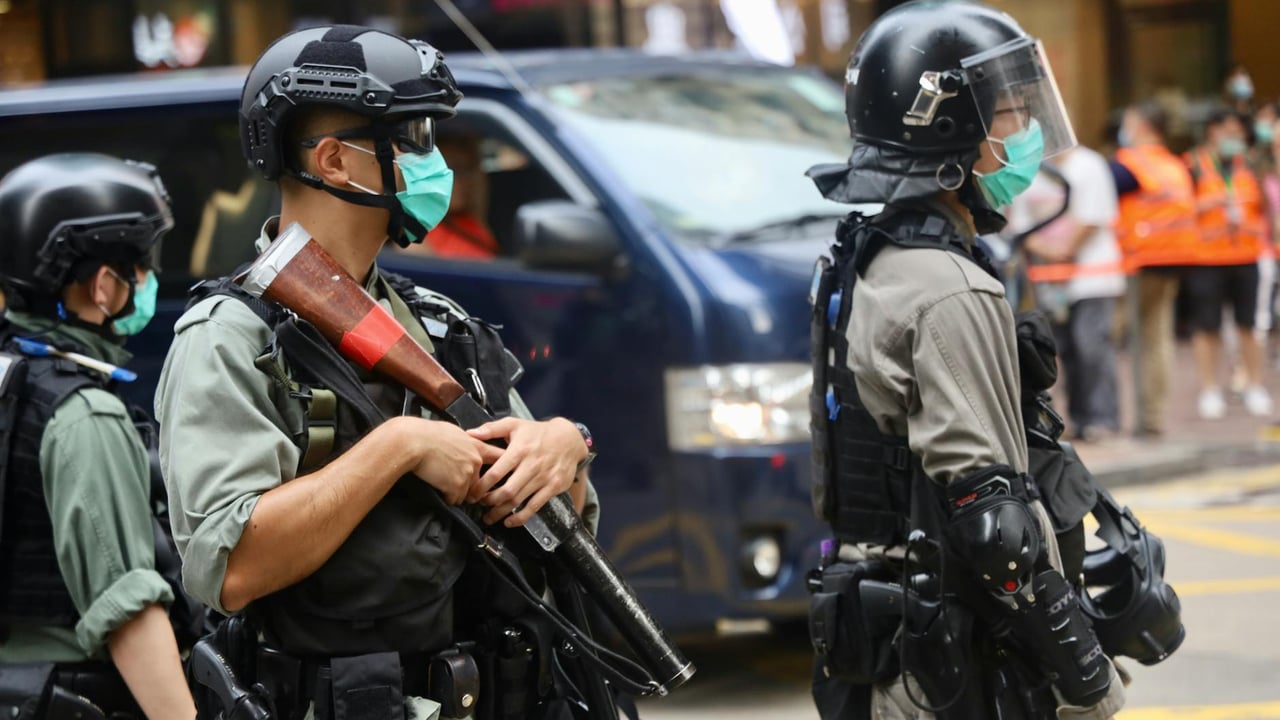

On a recent morning in Guilin, more than 50 pupils and teachers from a local primary school filed into the Guangxi detachment of the People’s Armed Police for a designated “camp open day.” The children paused before a wall of gleaming certificates and trophies, listened to veterans recount rescue operations along damaged roads and riverbanks, and watched soldiers demonstrate drill movements and weapons. The visit combined spectacle, hands‑on drills and moral lessons: students learned to fold a military bedroll, toured living quarters and handled replicas of small arms under the supervision of serving personnel.
Organizers framed the event as national‑defense education designed to broaden horizons and instill respect for service. Instructors linked routine military tasks to larger virtues—discipline, perseverance and collective responsibility—emphasizing that attention to small duties signals readiness for bigger challenges. The physical demonstrations, from orderly dormitories to precise drill displays, were staged to impress and to humanize the force for young civilians.
The unit involved is part of the People’s Armed Police (PAP), the paramilitary force responsible for internal security, disaster relief and border protection. Over the last decade the PAP has been reorganized and more tightly integrated under central military and party control, and local detachments increasingly engage in public outreach. Military open days and school visits are a frequent tool used to convey the utility and benevolence of uniformed services while cultivating a reservoir of popular support.
For foreign readers, the event is small but illustrative of a broader pattern: China has steadily expanded compulsory national‑defense education and extracurricular programming that introduces children to military life. These exercises serve multiple purposes—softening the image of armed units, preparing the next generation to accept defense imperatives, and reinforcing narratives of collective sacrifice during emergencies. They also dovetail with civic education campaigns that emphasize patriotism and the centrality of state security in public life.
There are practical rationales behind the staging. The PAP increasingly portrays itself as a first responder in natural disasters, and demonstrations of rescue stories and orderly conduct help justify its domestic role. For local commanders, the outreach strengthens relations with communities, aids recruitment indirectly, and provides a visible line of interaction that can be deployed in times of crisis. For school leaders, participating offers novelty, discipline training for pupils and alignment with official educational priorities.
Critics outside China may see such displays as normalization of militarized civic education and an early grooming of youth toward uniformed service. Supporters would argue the events foster respect for emergency responders and teach useful skills. Either way, the activity is emblematic of an era in which the state is more proactive in shaping values and civic identity, using routine, emotive encounters rather than formal instruction alone.
As China continues to prioritize national security and social cohesion, expect similar exercises to persist and multiply across provinces. The Guilin visit is modest in scale but significant in method: it uses pageantry, hands‑on experience and moral storytelling to embed a pro‑defense disposition in young citizens, making the soldier not merely a distant symbol but a familiar figure in children’s lives.