
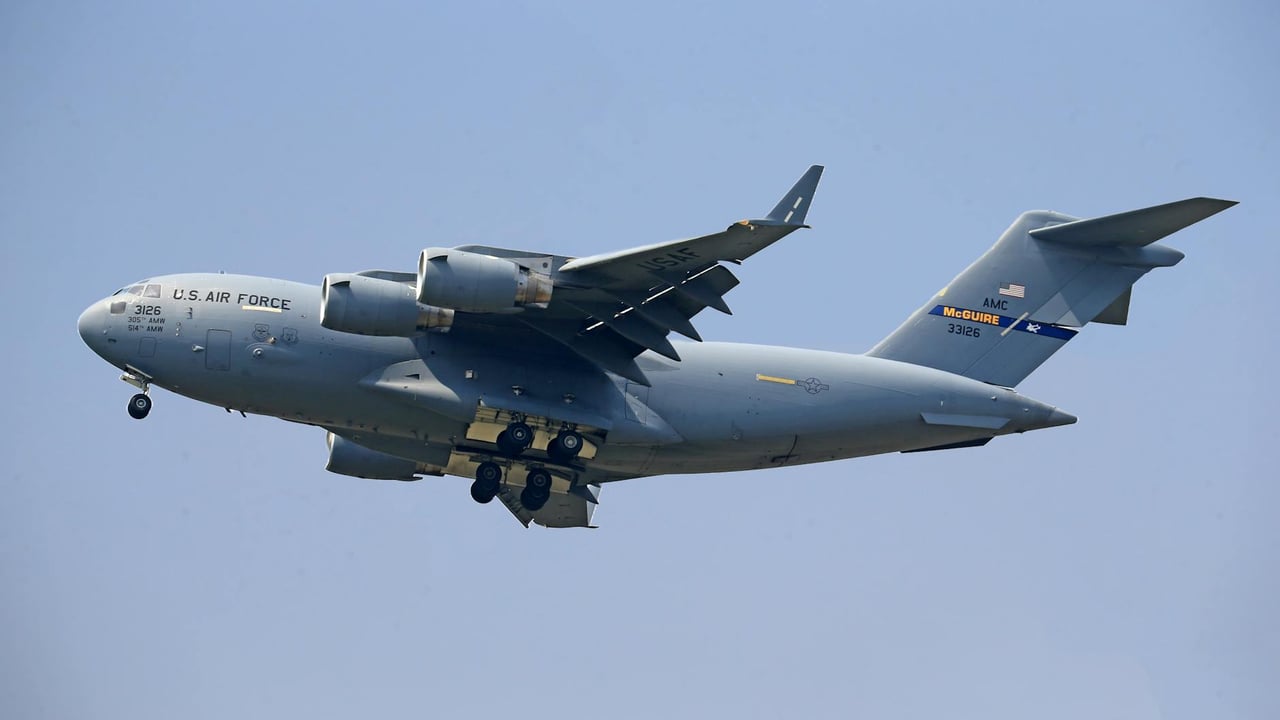

Open-source flight‑tracking data and independent analysts have identified a concentrated U.S. airlift to the Middle East: between January 18 and 26, at least 42 heavy military transport aircraft moved into the region. The movement comprised 41 C‑17A Globemaster III airlifters and a single C‑5M Super Galaxy, departing from bases in the United States and Western Europe and landing at U.S. hubs in Qatar, Jordan, Kuwait, Bahrain and Saudi Arabia.
Flight movements peaked on January 25, when multiple C‑17s and the lone C‑5M arrived in quick succession. U.S. Air Force officials have not publicly disclosed the cargo manifest for these sorties, but analysts describe the operation as one of the largest short‑term strategic airlift efforts into the CENTCOM area in recent months.
The scale and destinations of the flights fit a familiar pattern of prepositioning that U.S. forces have used to improve responsiveness: moving air‑defence systems, precision weapons, vehicles and ammunition forward reduces lead times and increases flexibility for commanders. Such logistics surges serve both deterrent and contingency purposes, signaling resolve to partners while placing matériel within reach should a rapid escalation occur.
The C‑17A is the workhorse for transcontinental delivery of armored vehicles, air‑defence units and bulk munitions; the C‑5M carries outsized and exceptionally heavy loads that other platforms cannot. Using staging points in Germany and the UK as transit nodes highlights allied interoperability and the integrated supply chain the U.S. relies on for surge deployments.
The aerial moves were accompanied by naval repositioning: the carrier strike group centred on USS Abraham Lincoln has entered Middle East waters, a deployment the U.S. president framed as a robust signal to Tehran even as he said the situation remains fluid. Iran’s foreign ministry reiterated that Tehran does not welcome war and is open to diplomacy, underscoring the dual message of deterrence and restraint playing out in public statements.
For regional capitals and global markets, the airlift matters because it changes the operational balance and shortens the timeline for U.S. action while raising the risks of miscalculation. Rapid logistics build‑ups reassure allies but also complicate de‑escalatory pathways; the presence of strategic airlift and a carrier strike group expands options for Washington but increases the chance that a localized incident could spiral into a broader confrontation.