
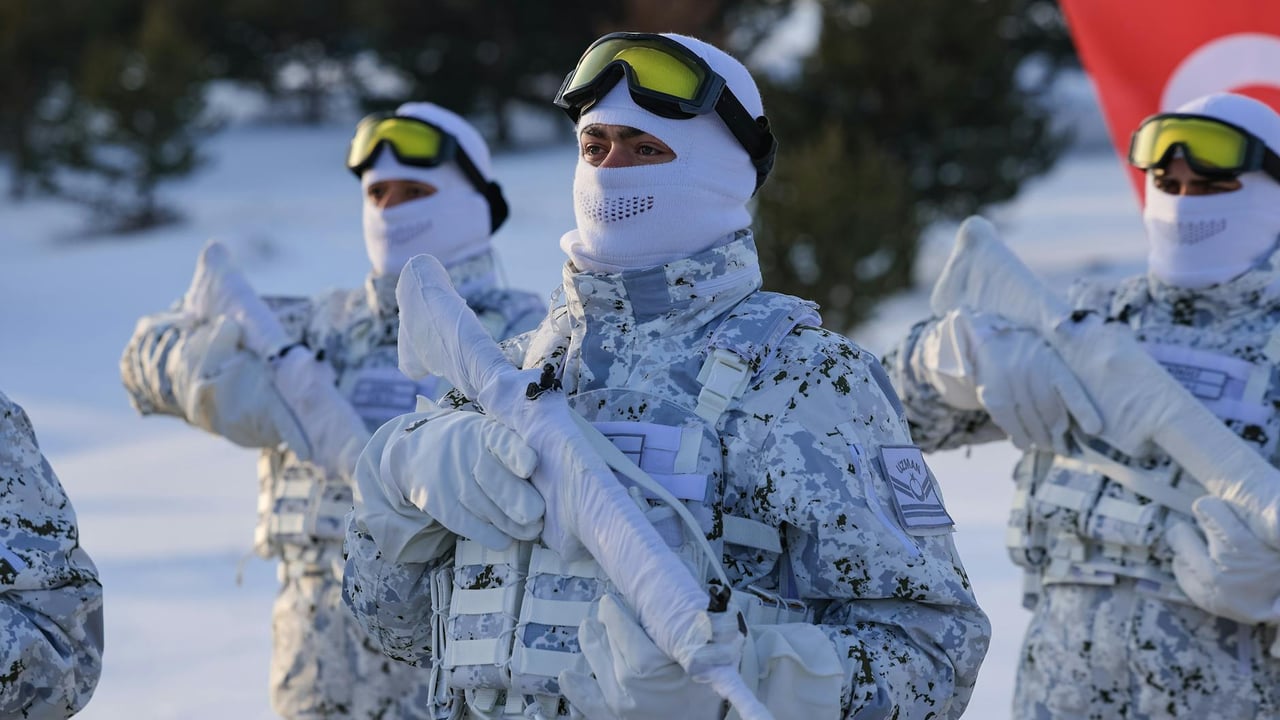

Across multiple services and regions, Chinese forces have stepped up winter training to test personnel, equipment and procedures under harsh conditions. State-published accounts and photos describe coordinated anti-air drills in the western theatre, driver retraining for a group army, cold-region medical evacuation exercises, high-altitude tactical evaluations in Tibet and a string of People’s Armed Police mountain and urban-readiness sessions in Fujian, Guangxi and Hubei.
The exercises combine realistic tactical settings with environmental stressors—snow, wind, low temperatures and fog—to rehearse tasks from rapid air-defence engagement and “search-and-transport” casualty drills to slippery-terrain infiltration, concealment and small-team maneuver. Units pushed simulated engagements that included rapid strike-and-withdraw sequences, on-the-move vehicle handling, casualty triage and snowbound patient transfer, reflecting an emphasis on operational continuity in severe weather.
Geography and unit type matter in the way the training is being shaped. The Western Theatre’s anti-air simulations and a 76th Group Army driver-retraining session focus on mechanized mobility and integrated fires in cold frontiers, while the Northern Theatre Air Force staged medevac and trauma workflows tailored to long-range winter logistics. Tibet-based exercises concentrated on high-altitude, all-element coordination, acknowledging the particular physical and logistical stresses of plateau operations.
Paramilitary People’s Armed Police units translated local climatic realities into their curricula: Fujian mountain units trained for wet, foggy and slippery conditions; Guangxi formations emphasized close-quarters tactics, ambushes and fortification work; Hubei contingents rehearsed assassination drills, light-weapons shooting and basic combat fitness. The training regimen mixes foundational skills with mission-oriented scenarios to harden units for domestic emergency responses as well as contested operations.
This pattern of winterization is not new for a military modernizing for multi-domain operations, but its breadth and public presentation are notable. Cold-weather proficiency is a practical constraint for any force wishing to operate year-round across China’s diverse theatres—from the high plateau along India’s border to the foggy, mountainous approaches off the southeast coast—and it requires doctrine, logistics and medical systems to be synchronized with combat units.
For external observers, the significance is twofold. First, routine, distributed cold-season training increases the PLA’s resilience and shortens seasonal readiness gaps that have historically constrained operations. Second, by publishing these exercises, Beijing signals internal legitimacy—showcasing disciplined troops overcoming hardship—and external deterrence, emphasizing credible, persistent capability rather than sporadic displays. Still, open-source accounts and staged media coverage provide only a partial view; scale, tempo and how these activities mesh with larger joint campaigns remain unseen and important for assessment.