
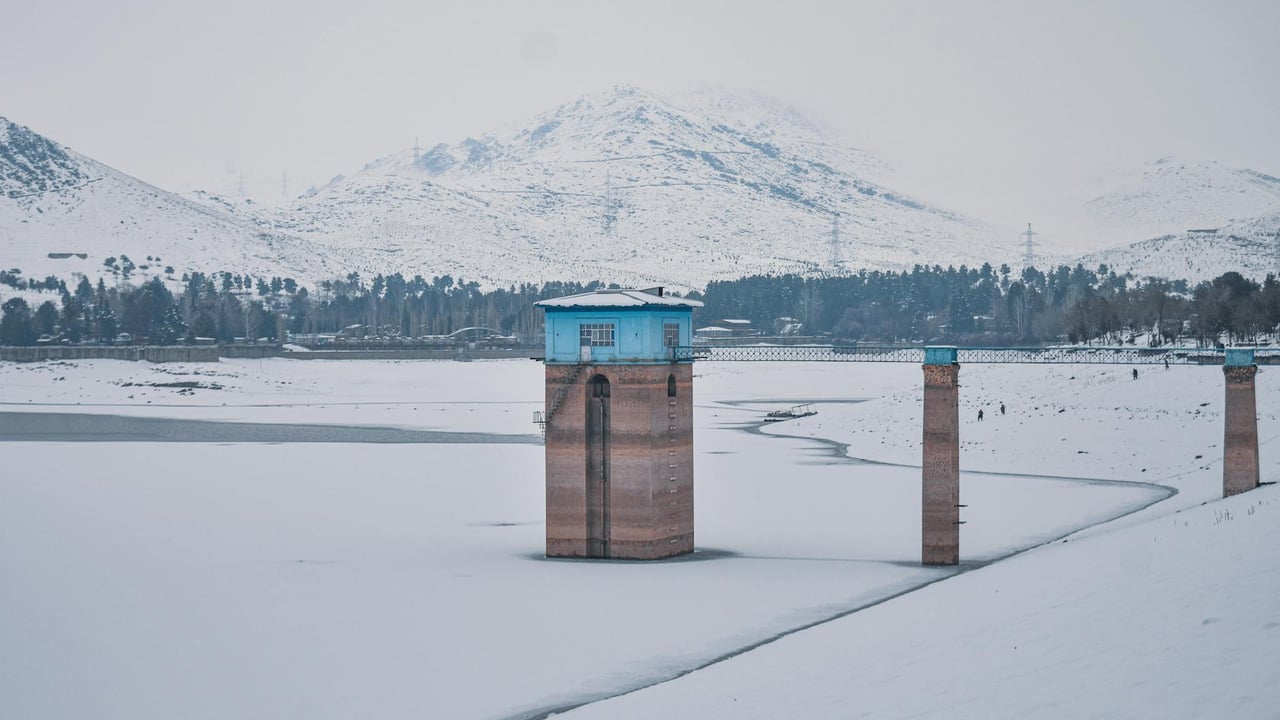

On a snowy morning in Kabul, the city’s lone Chinese restaurant — a Lanzhou beef-noodle shop in the commercial 'Flower Street' — lies blackened and empty after a bomb blast that killed seven people and injured 13. Chinese citizens were among the victims: one Chinese national was killed and five were wounded, and local media reported that the Islamic State claimed responsibility. The blast, which came three days before the capital’s first snowfall of 2026, has stunned the small but growing community of Chinese merchants who had begun to re-establish a commercial presence in the Afghan capital.
The restaurant opened in October 2024 and quickly became a hub for expatriates and Afghans craving Chinese food. Staff and regular customers described a guarded normality: multiple checkpoints around the neighborhood, armed guards at the door who screened patrons, and waiters who greeted Chinese visitors with hot tea and attempts at Mandarin. That routine of guarded commerce was shattered; Afghans who spoke with journalists insisted that the Chinese were well-liked and expressed shock and sorrow at the attack.
The explosion underscores the security contradictions of Taliban-ruled Afghanistan. Since the Taliban returned to power in 2021, many Western missions and private operators left, and only recently have some Chinese traders and aid projects reasserted a visible presence. The Taliban maintain a degree of territorial control and have delivered improvements in certain daily-life metrics, but the state’s intelligence, counterterrorism capabilities and protection of soft targets like restaurants and markets remain uneven.
For entrepreneurs, the practical obstacles to doing business in Afghanistan are as daunting as the security risks. The country is landlocked and its transport network is fragmented: road links are poor, rail is virtually non-existent, and cross-border routes are often disrupted by conflict. Trade with China faces chokepoints — a single weekly passenger flight to China limits cargo, the high-altitude Wakhan corridor is difficult for most of the year, and alternatives require long detours through Central Asia or by sea to Iran then overland, making shipments slow, costly and exposed to geopolitical uncertainty.
These economic frictions have not stopped Chinese involvement in Afghanistan. Beijing’s humanitarian and reconstruction projects — a university building in Kabul, earthquake relief tents and medical supplies — continue to reach civilians and maintain goodwill among Afghans. Those ties, combined with everyday interpersonal exchanges in markets and shops, suggest that Afghan public sentiment toward China remains broadly favorable despite the attack. Yet the bombing may alter the calculus for private Chinese investors and small traders for whom insurance, transport costs and security spending were already marginal considerations.
The blast is part of a worrying pattern: in recent months there have been multiple attacks inside Afghanistan and along its borders that targeted Chinese nationals or interests. Such incidents highlight the presence of extremist actors who oppose both the Taliban and foreign influence, complicating Beijing’s pragmatic engagement. For now, Chinese state-backed projects are likely to continue because of their strategic and humanitarian value, but private commerce — the informal networks of shops, restaurants and traders that signal normalisation — will face tougher headwinds.
The attack’s immediate human toll contrasts with longer-term strategic calculations. China must weigh the diplomatic benefits of engagement and reconstruction against the political and financial cost of protecting its citizens and goods in a volatile environment. Kabul’s burned-out noodle shop is a small, local business, yet its destruction reverberates as a signal that Afghanistan’s recovery will be fragile and that the safe return of foreign entrepreneurs is not guaranteed.