
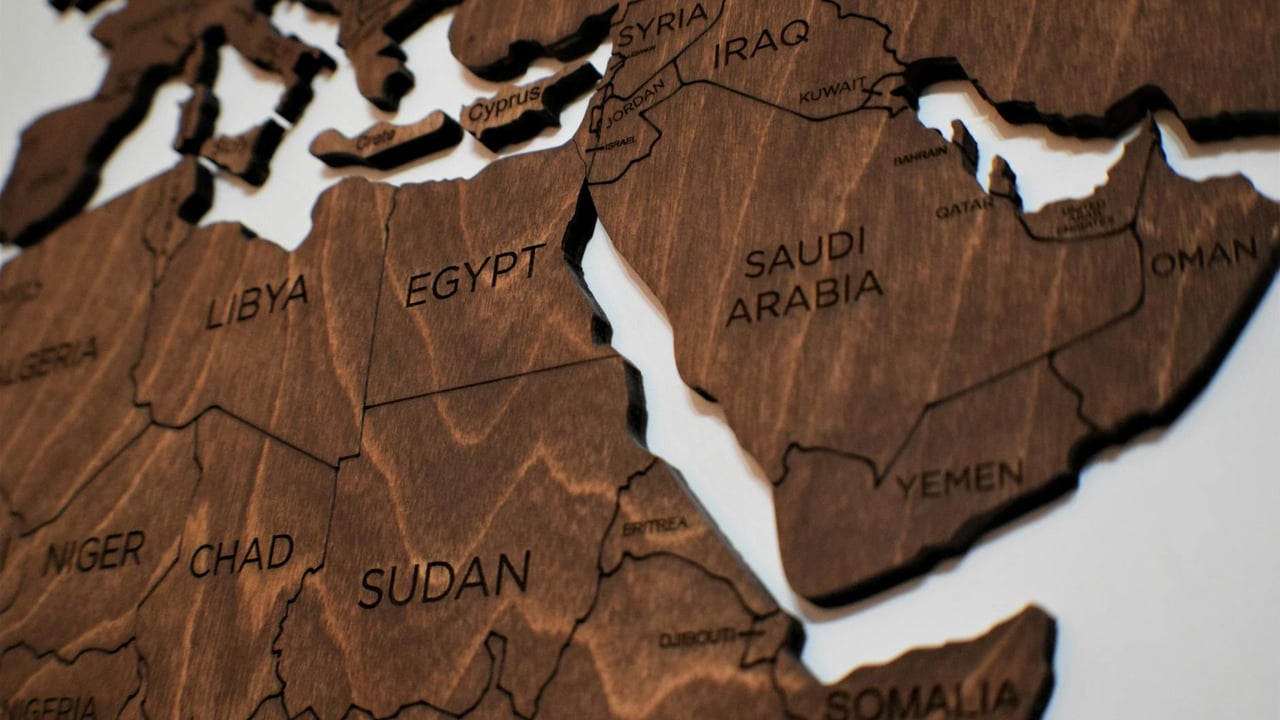

The U.S. Navy’s Abraham Lincoln carrier strike group sailed into the Western Indian Ocean on 25 January, formally deploying into the Central Command area of responsibility and signaling a stepped-up American military presence near Iran. Tehran responded by declaring its forces at the highest state of readiness, underscoring how quickly posturing can harden into perilous brinkmanship.
Washington has augmented the carrier group with Arleigh Burke–class destroyers operating in Iranian waters, redirected several U.S. Air Force planes from Europe to bases in the Gulf, and announced multi-day readiness exercises across the region. Additional Patriot and THAAD missile-defense batteries have been dispatched, producing a visible concentration of capabilities intended to deter and, if ordered, to strike quickly.
A U.S. official told journalists the Abraham Lincoln strike group could theoretically mount an operation within “a day or two,” while Chinese military analyst Teng Jianqun—cited in domestic commentary—characterized American moves as sustained pressure intended to retain leverage. Teng argued that, constrained by domestic politics and the risks of full-scale war, Washington is more likely to favour narrowly targeted, “surgical” strikes than an expansive campaign.
U.S. strategy appears aimed at preserving American influence in the Middle East and degrading Iran’s nuclear and regional capabilities, rather than permanent occupation or regime change. The recalibration follows a broader shift in strategic priorities: with the United States less dependent on Gulf hydrocarbons than in previous decades, policymakers can focus narrowly on military objectives and regional deterrence.
Israel, meanwhile, has entered heightened alert and launched preplanned exercises to prepare for “extreme scenarios.” Civil aviation authorities warned of a possible “sensitive period” around 30 January, reflecting concerns about spillover from any U.S.–Iran clash. Analysts note that Prime Minister Benjamin Netanyahu’s government perceives the Iranian program as an existential threat and may press for more robust action than Washington prefers.
Tehran has indicated that any foreign aggression will prompt responses that extend beyond attacks on bases or equipment, promising retaliation designed to make aggressors “regret” their choice. Iran’s inventory of medium-range ballistic missiles, large numbers of loitering munitions and proxies gives it asymmetric options: bolstering internal security, striking foreign military forces with missiles and drones, and targeting commercial shipping or closing the Strait of Hormuz to pressure global markets.
The immediate risk is a limited confrontation that escalates through miscalculation, asymmetric reprisals and proxy violence—particularly from groups such as Hezbollah in Lebanon or Houthi forces in the Red Sea. Such dynamics would reverberate through energy markets, raise shipping costs and spur insurance premiums, producing outsized economic effects even if fighting remains geographically contained.
For now, the situation fits a familiar pattern of deterrence and coercion: sizeable posturing on one side, forceful rhetoric on the other, and a narrow window for diplomacy to avert missteps. The international community’s capacity to restrain escalation will depend on clear communication channels, allied coordination, and rapid crisis-management mechanisms to limit the conflict’s spillover beyond the Gulf.