Chinese Team Demonstrates 2D Semiconductor Radio in Space, Claims Leap in Satellite Lifetimes

Fudan University researchers have flown a 2D semiconductor RF communications system on the Fudan-1 satellite and published results in Nature claiming dramatic reductions in power and mass and a theoretical device lifetime of 271 years. While the demonstration is an important milestone for radiation-hardened electronics, practical satellite lifetimes remain constrained by other subsystems and will require broader validation before reshaping industry norms.

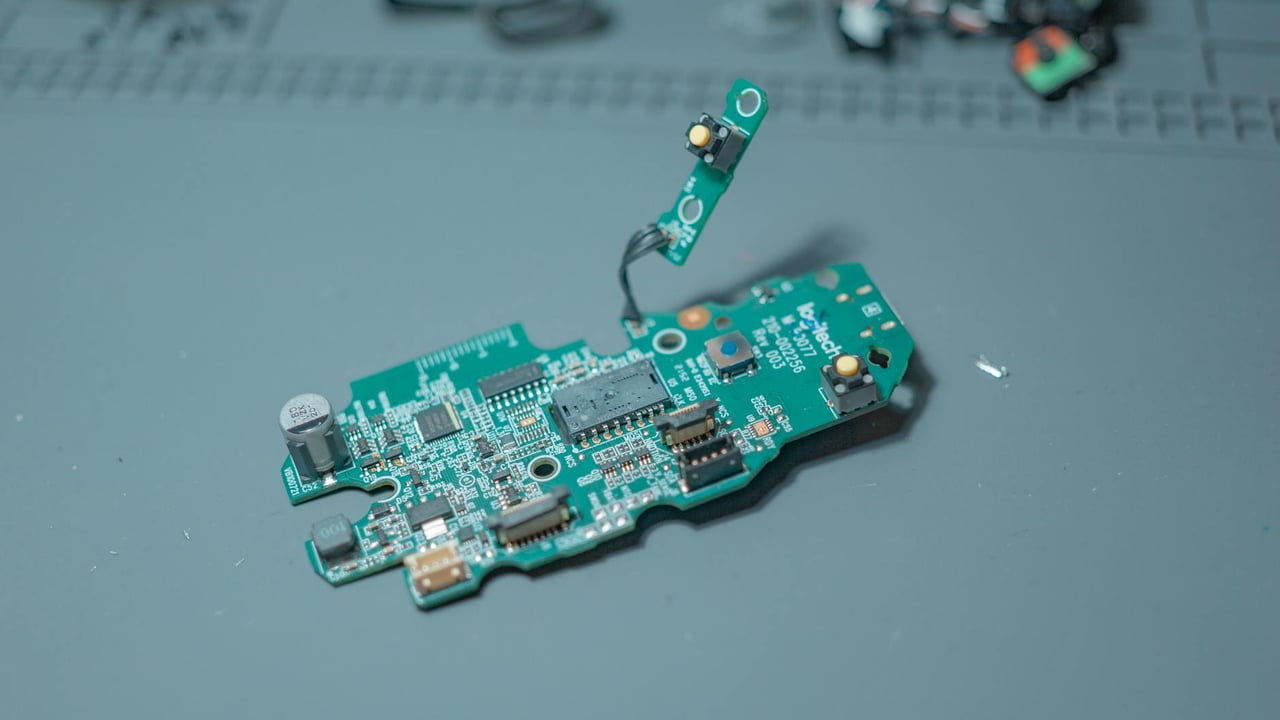
Detailed close-up of a circuit board showcasing intricate electronic components and wiring.

Key Takeaways

  • 1Fudan University’s "Qingniao" system demonstrated atomically layered (2D) semiconductor RF communications on the Fudan-1 satellite and was reported in Nature.
  • 2Researchers claim a theoretical device on-orbit lifetime of 271 years, power use reduced to ~20% of conventional designs, and mass cut to ~10%.
  • 3The team projects that satellites using this technology could see operational service lives rise from around 3 years to 20–30 years.
  • 4Claims are based on device-level radiation resilience and efficiency; whole-satellite lifetimes remain subject to other limiting subsystems and operational logistics.
  • 5The result has commercial and strategic implications for satellite economics, constellation design, and military resilience, but requires independent validation and system-level testing.

Editor's
Desk

Strategic Analysis

This demonstration is a credible technical milestone for two reasons: it moves 2D semiconductor research into an on-orbit environment, and it does so under the imprimatur of a peer-reviewed outlet. For China, the result underscores a dual-track strategy of advancing foundational materials science while reducing dependence on foreign radiation-hardened components. Commercially, operators of small satellites and constellations could see lower lifecycle costs and greater mission flexibility if component-level gains translate into system-level savings; lower power draw and lighter radios ease thermal and power budgets, enabling denser payloads or reduced launch mass. Strategically, longer-lived satellites change force-planning and sustainment: assets become harder to degrade through attrition and cheaper to keep replenished, complicating adversary calculus in contested space. Yet the most transformative claims hinge on extrapolations; propulsion, attitude control, propellant depletion, micrometeoroid impacts, and regulatory constraints on orbital occupancy all continue to shape a satellite’s effective service life. Policymakers and buying agencies should therefore treat the Qingniao result as an important proof of concept that merits accelerated independent testing and integration trials, not as an immediate panacea that rewrites satellite design rules overnight.

China Daily Brief Editorial
Strategic Insight
China Daily Brief

A research team from Fudan University has reported the first in-orbit validation of an atomically layered semiconductor radio-frequency (RF) communications system, known as the "Qingniao" system, aboard the university's Fudan-1 satellite. Published online in Nature, the results claim dramatic improvements: a theoretical on-orbit device lifetime extended to 271 years, power consumption cut to roughly one-fifth of conventional systems, and mass reduced to about one-tenth, with practical satellite service life projected to climb from roughly three years to between 20 and 30 years.

The demonstration uses two-dimensional (2D) electronic devices and systems — ultrathin semiconductors measured in atomic layers — which are intrinsically less susceptible to some forms of radiation damage and can operate at lower voltages. In space, where energetic particles degrade traditional silicon electronics, the Qingniao system's tests represent a rare example of moving 2D-device research from laboratory benches to an operational orbital platform, and of measuring behaviour under realistic irradiation conditions.

If the claims hold up under broader scrutiny, the technology would alter the economics and engineering trade-offs that underpin many satellite programmes. Lower mass and power demands reduce launch costs and ease the design of small satellites and constellations, while longer operational lifetimes would cut replacement cadence and lifecycle costs. That combination is attractive to commercial operators seeking lower total-cost-of-ownership and to state actors aiming for more resilient communications and reconnaissance assets.

Despite the excitement, several caveats temper immediate expectations. The headline 271-year figure appears to be a theoretical extrapolation tied to device degradation models under specific radiation scenarios; satellites contain numerous subsystems — propulsion, thermal control, mechanical structures and deployables — that commonly limit operational life well before electronic components fail. Moreover, claims of large reductions in mass and power need to be assessed in the context of whole-platform engineering rather than component-level demonstrations.

The demonstration nevertheless carries strategic significance. China has been investing heavily in domestically developed semiconductors and space systems; an on-orbit demonstration published in Nature gives the project both scientific credibility and potential leverage in international technology conversations. For global satellite-makers, the Qingniao result acts as a proof point that non-silicon approaches to radiation tolerance and efficiency can be matured in space — a development that will accelerate interest in material sciences, supply-chain questions and standards for long-lived spacecraft.

Share Article

Related Articles

📰
No related articles found