
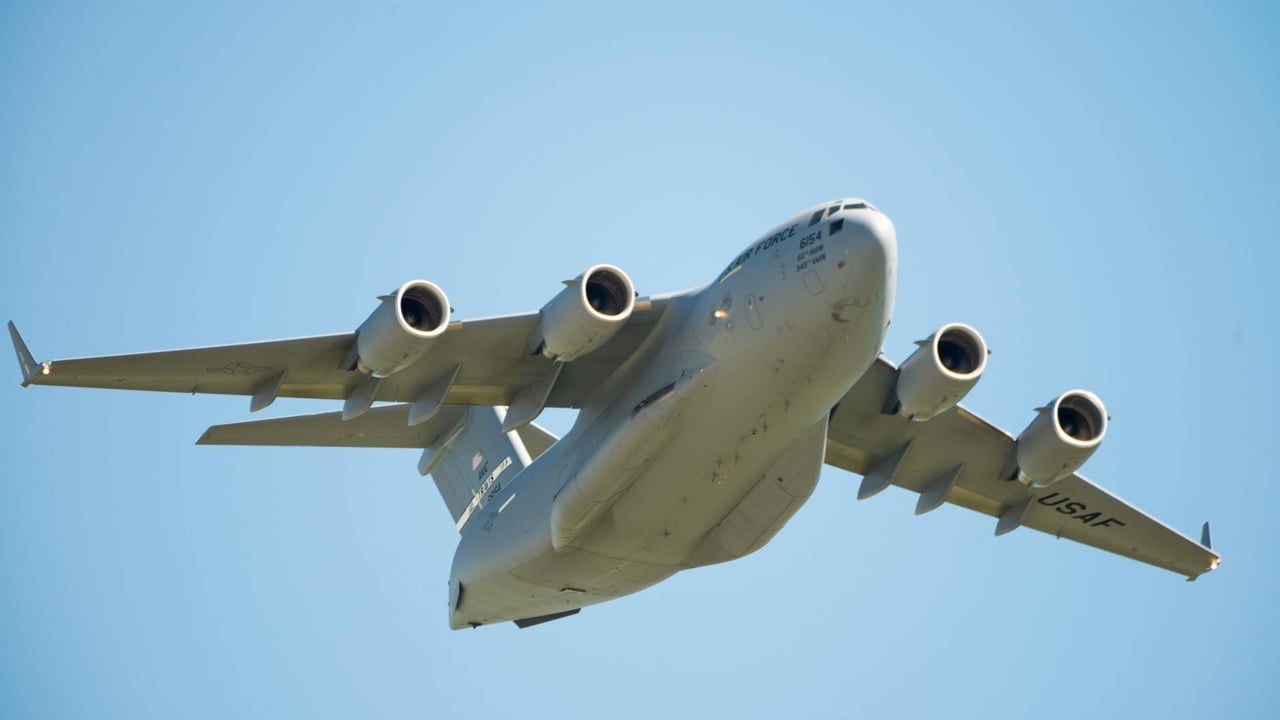

The US Air Force dispatched at least 42 heavy transport aircraft to the Middle East between January 18 and 26, according to open-source flight-tracking data collated by analysts and reported by a defence-focused outlet. The movement comprised 41 C-17A Globemaster III transports and one C-5M Super Galaxy, a concentration of strategic airlift rarely seen in such a short window. Analysts who track military air movements flagged the tempo as notable for its scale and rapidity.
Heavy airlift is the backbone of large deployments and logistics sustainment: C-17s move vehicles, palletised cargo and troops into forward bases and austere airfields, while the C-5M offers exceptional cargo volume for outsized equipment. Moving dozens of such platforms over eight days implies a sizeable influx of materiel, personnel or prepositioning of capabilities, rather than routine rotations. The precise cargo and final destinations were not disclosed in public tracking records, but the composition of the fleet points to a logistics-heavy operation rather than limited tactical airlift.
The deployment should be read against a backdrop of enduring instability across the region and the United States' interest in reassuring partners, deterring adversaries and preserving freedom of action. Large-scale strategic lift can support a variety of missions: reinforcing bases, shoring up regional partners, preparing for contingency evacuations or delivering heavy equipment for combat or humanitarian operations. At the same time, such surges send a visible signal to regional capitals in Tehran, Riyadh, Jerusalem and Ankara about Washington's capacity to move forces quickly.
There are also practical implications for US force posture and logistics. Sustained high-tempo use of the C-17 and C-5 fleets can strain maintenance cycles and reduce surge capacity elsewhere, forcing temporary trade-offs between theaters. The prominence of open-source tracking in making this movement visible underscores how transparency by commercial flight data and independent analysts now shapes strategic narratives. Observers should watch for follow-on indicators—port activity, onward ground movement, base reinforcements and diplomatic messaging—to clarify whether this was a short-term surge or the start of a longer logistical buildup.