
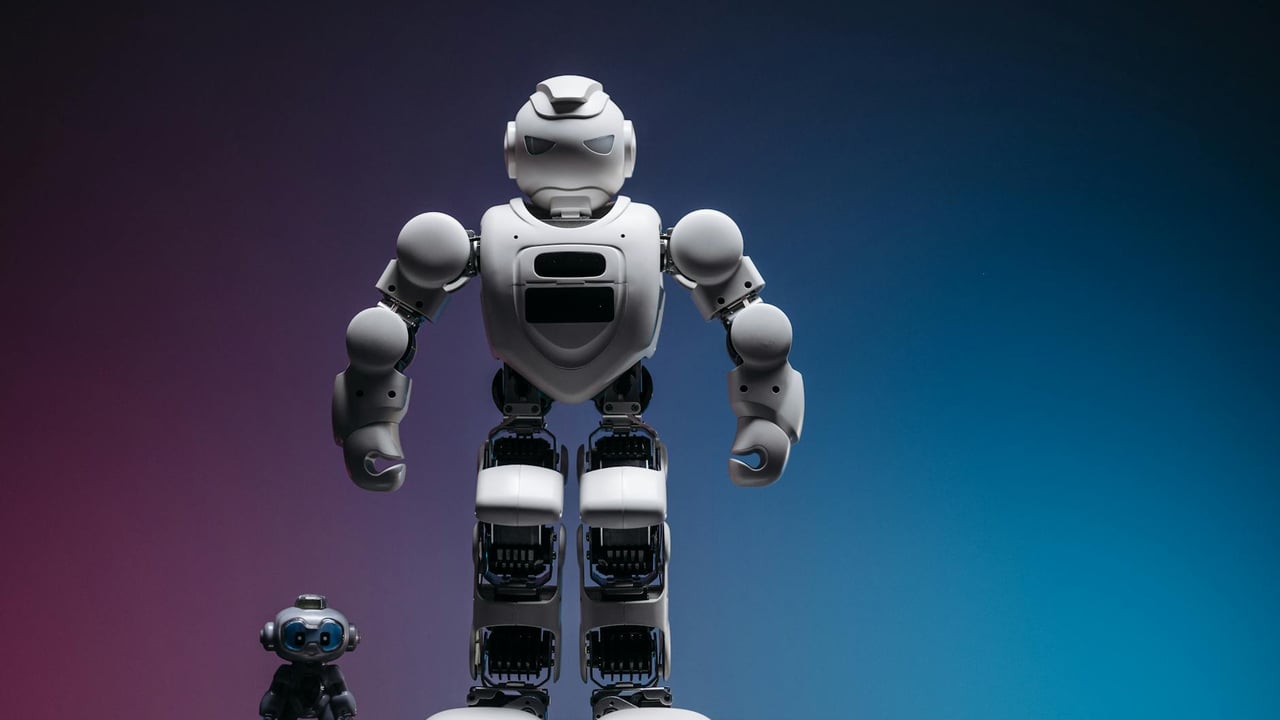

Wang Xingxing, founder of Chinese robotics firm Yushu Technology (宇树科技), used a recent interview preview to stake a striking claim: whoever can produce a large-scale AI model specifically for robots will become the world’s leading AI and robotics company — and, he quipped, would be “worthy of a Nobel Prize.” Yushu’s stated ambition is straightforward: make robots that actually work in the real world and create tangible value for people. The remark is less an academic provocation than a summation of an industry pivot from mechanics to cognition.
The idea that robots need their own “large model” reflects a growing consensus in robotics and AI: success will not come from better motors alone, but from software that integrates perception, planning, manipulation and tool use in open environments. Unlike the text- and image-focused foundation models that have reshaped natural-language processing and computer vision, a robot-centric model must fuse multimodal sensor data, physical dynamics, and action policies. That fusion is technically demanding; it needs vast embodied datasets, simulation-to-reality transfer, and tight hardware–software co‑design.
Yushu’s statement arrives amid mounting competition and experimentation worldwide. Tech giants and startups alike are racing to marry large‑scale learning with embodied systems — from the humanoid initiatives at Tesla to specialist makers of legged and industrial robots. China’s ecosystem, with close links among hardware manufacturers, large internet platforms and a permissive capital market for hard-tech ventures, has emerged as a potent incubator for this convergence. For firms like Yushu, claiming the prize for a “robot large model” is both a strategic positioning and a signal to partners and investors.
Yet the path is full of practical and commercial obstacles. Building an embodied foundation model requires not only compute and algorithms but millions of hours of physical interaction or high-fidelity simulation, expensive and safety‑conscious testing pipelines, and new benchmarks that measure real-world robustness rather than benchmark scores. Even when the software works, deploying capable humanoids at scale faces cost, reliability and regulatory headwinds that have historically slowed adoption of robotics beyond constrained industrial tasks.
If a company does succeed in producing a general, reliable “brain” for robots, the implications would be wide-ranging. Firms that control such a model could accelerate automation in logistics, eldercare, construction and services, reshaping labor markets and supply chains. They would also gain leverage over the attendant hardware and software ecosystems, and become strategic assets in technological competition between states and blocs. Wang’s Nobel quip therefore captures both the high ambition and the geopolitical subtext of today’s robotics race.
Wang’s remarks are a reminder that the next phase of AI is likely to be less about standalone algorithms and more about integrated systems that couple intelligence to bodies. The outcome is uncertain: it hinges on long-term investments in embodied data, safer testing regimes, and commercial pathways that make robots economically useful. For now, bold pronouncements like Yushu’s are as much about framing an opportunity as they are predictions of a near-term breakthrough.