
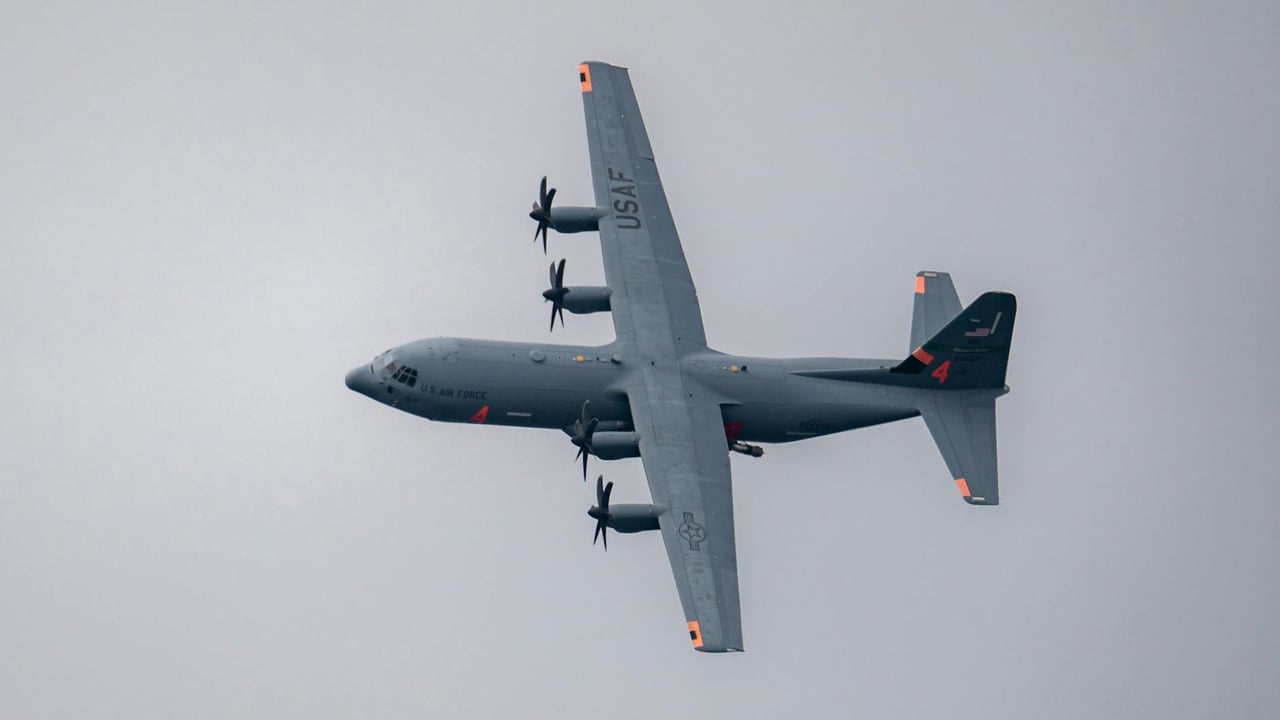

A South Korean Air Force C-130 transport aircraft made an unscheduled landing at a Japanese naval base in Okinawa on January 30 after crew detected a drop in power from one of the plane's four turboprop engines. The aircraft had been en route to the Saudi International Defence Exhibition when the crew diverted to the nearest suitable facility for an immediate touchdown; there were no injuries.
South Korean military officials said the plane departed from a naval base roughly 370 kilometres southeast of Seoul and that technicians identified and replaced the faulty component that morning. With the defect corrected, the aircraft was cleared to resume its mission and was scheduled to depart Okinawa later that afternoon.
The C-130 Hercules is a workhorse of military airlift, widely used for personnel transport, logistics and equipment delivery; the flight’s destination, a major defence expo in Saudi Arabia, underlines Seoul’s ambitions to market defence equipment abroad. Emergency landings for technical faults are not uncommon for long-range ferry flights, but they offer a small window into how armed forces manage aircraft maintenance, spare-part logistics and contingencies when operating far from home bases.
The incident coincided with a high-profile meeting between South Korea’s defence minister and Japan’s defence minister in the port city of Yokosuka earlier that day. That timing is notable because Tokyo and Seoul have in recent years incrementally rebuilt security ties after a prolonged diplomatic rift, and operational incidents such as this can highlight the practical benefits of closer defence cooperation and access to neighbouring facilities.
On the technical side, the episode raises routine questions about fleet age and sustainment. Many nations still depend on legacy transport types and must balance intensive operational use with timely maintenance and parts supply, particularly during outward deployments to international air shows or missions that require multiple takeoffs, landings and long overwater legs.
Strategically the event has limited immediate consequence: it was handled as a standard safety diversion, not a diplomatic incident. Nevertheless, it illustrates how the regional security architecture — including Japan’s bases in Okinawa and the broader U.S.-Japan alliance infrastructure — serves as a practical safety net for allied and partner forces operating in East Asia and beyond.
Officials will likely log the malfunction and review maintenance records as a matter of routine air-safety oversight. Absent broader evidence of systemic problems, the episode will be remembered mainly as a successful emergency diversion that avoided injury and allowed a high-profile defence mission to continue.