
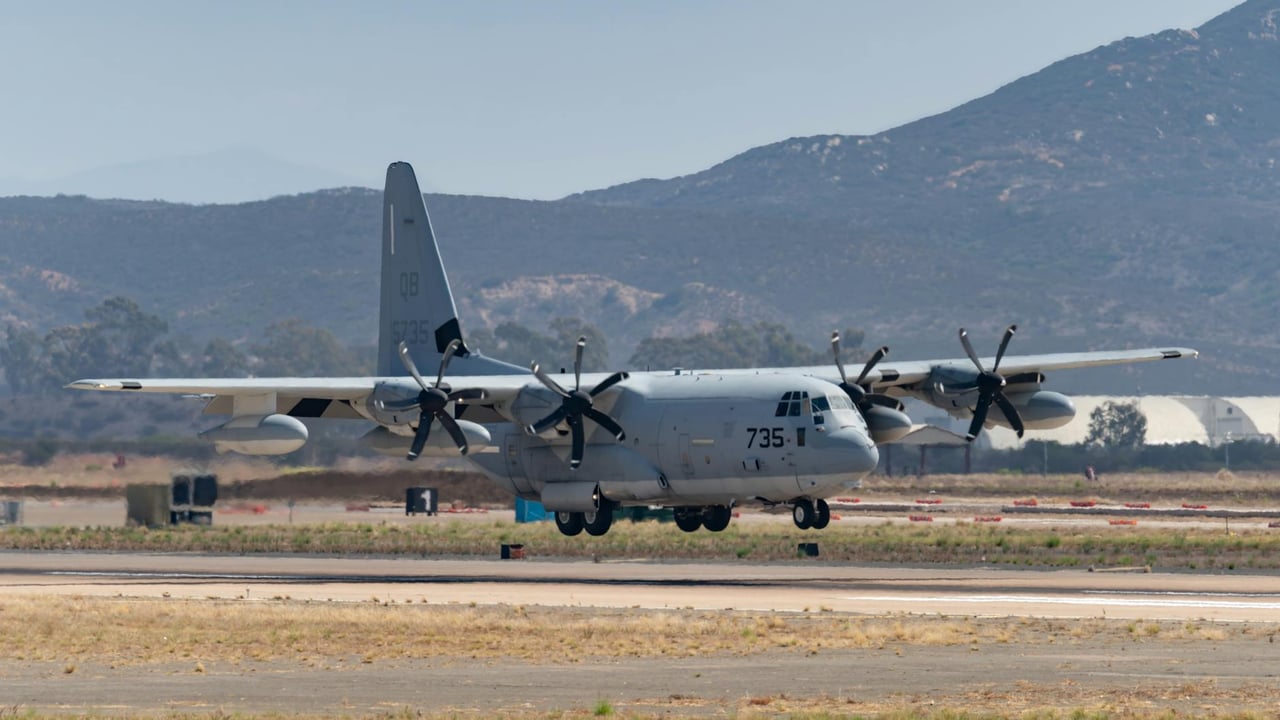

A South Korean C-130 military transport carrying personnel en route to the Saudi International Defence Exhibition made an unscheduled landing at a naval base in Okinawa on 30 January after aircrew detected a drop in output from one of the aircraft's four turboprop engines. South Korea's air force said the crew diverted to the nearest appropriate facility, technicians diagnosed the faulty component and replaced it, and the aircraft departed Japan later that afternoon. There were no injuries.
The aircraft had taken off from a naval base roughly 370 kilometres southeast of Seoul before the fault was detected. The emergency diversion took place the same day South Korea's and Japan's defence chiefs met in Yokosuka, underlining an operational moment of proximity between the two allies and drawing attention to practical arrangements for regional military movement and contingency landing rights.
The C-130 Hercules has long been a workhorse for air forces worldwide; its ubiquity makes incidents like this operationally manageable but politically and logistically significant. For South Korea, which relies on strategic airlift for overseas deployments, humanitarian missions and defence diplomacy, a midflight engine anomaly prompts routine but necessary questions about fleet age, maintenance practices and parts supply chains. That the crew and ground technicians resolved the issue quickly speaks to effective procedures, but it also highlights the mundane vulnerabilities that can shape readiness.
Geopolitically, the diversion to Okinawa is notable because the island hosts a dense network of U.S. and allied facilities and regularly functions as a regional hub for emergency diversions. The incident therefore serves as a reminder of the practical interdependence among U.S., Japanese and South Korean military infrastructures, even as political relations among those governments remain sensitive and occasionally fraught. Because no casualties occurred and the aircraft resumed its mission, the episode is unlikely to cause diplomatic friction, but it adds a data point to defence planners' assessments of operational resilience.
Expect Seoul to conduct a follow-up technical review and to recheck similar airframes for comparable faults; such inspections are normal after engine anomalies and help preclude repeated occurrences. In public terms the story is a muted one — an emergency handled as designed — but for defence logisticians and regional security watchers it is a useful illustration of how everyday maintenance and contingency arrangements underpin broader alliance capabilities.