
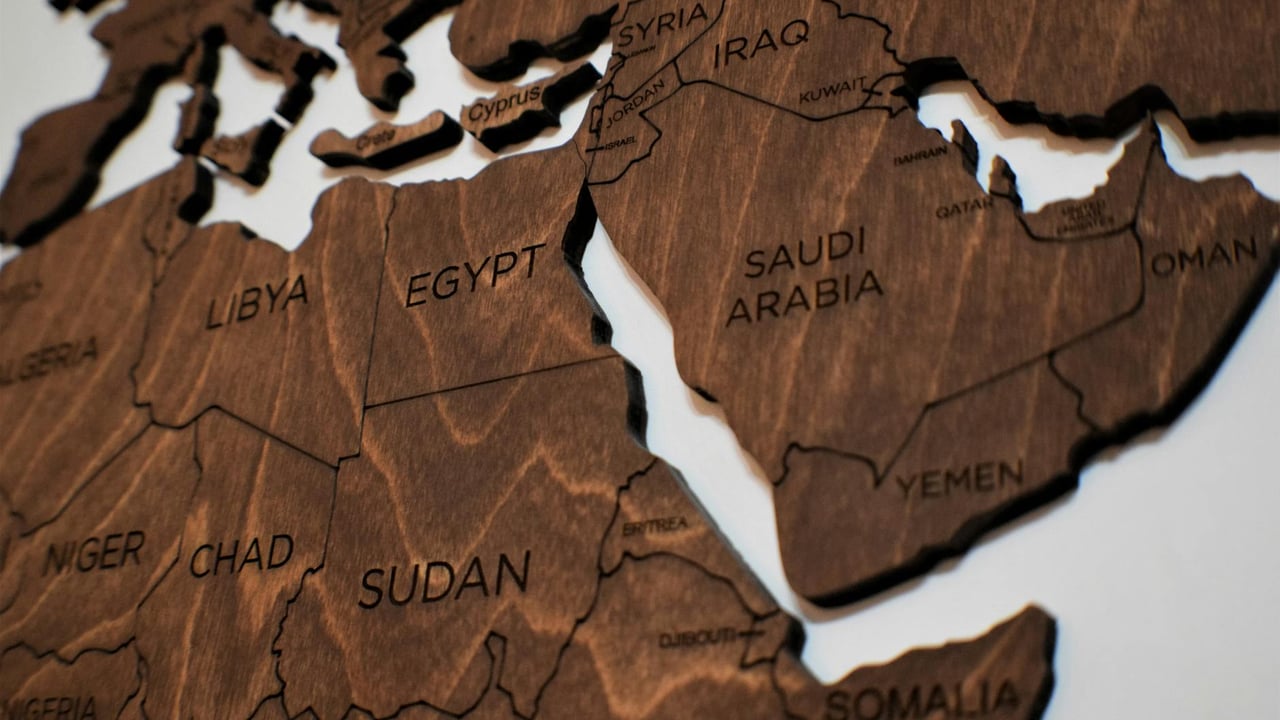

The US Navy's Abraham Lincoln carrier strike group moved into the Central Command's West Indian Ocean area on January 25, and Washington confirmed the formation is deploying toward the Middle East. Tehran responded by declaring it has entered the highest state of military readiness, turning a regional standoff into an international watchpoint that risks spillover into global trade and energy markets.
Washington has escalated its posture beyond a single carrier. US destroyers Mitchell and McFaul are operating near Iranian waters, at least three US Air Force aircraft have been repositioned from Germany to bases in Kuwait and Qatar, and the Pentagon has dispatched Patriot and THAAD air‑defence systems while conducting readiness exercises across the region. An anonymous US official told reporters the carrier strike group could, in theory, launch strikes within a day or two if ordered.
Chinese military analyst Teng Jianqun, quoted in the original report, interprets the build‑up as deliberate pressure rather than a precursor to large‑scale invasion. He argues US leaders face political constraints — notably an intense election cycle in the United States — that make sustained ground operations unlikely and favour limited, precision strikes if kinetic action is ordered. The broader stated aim, Teng adds, is to constrain Iran's nuclear programme and limit its regional influence while signalling continued American leverage in the Middle East.
Israel has its own calculus. The Israeli Defence Forces have entered heightened alert, launched pre‑planned exercises focused on extreme contingencies, and the country's civil aviation authority warned of a "sensitive period" around the end of January. Analysts note the Netanyahu government views Iran's capabilities as an existential threat, making Israel more willing than Washington to press for forceful action and to use political influence inside the United States to shape American policy.
Tehran has signalled several reciprocal options it can employ. Iranian officials vowed that any aggression would not be met only on US bases or with conventional tit‑for‑tat responses. Outside analysts point to Iran's large inventories of short‑ and medium‑range ballistic missiles and swarming suicide drones as the core of its retaliatory toolkit, alongside asymmetric measures such as attacks on shipping and attempts to disrupt energy flows through the Strait of Hormuz.
The practical risks are clear. A targeted US or Israeli strike could provoke missile and drone attacks on bases and ships, operations by Iran‑aligned militias across Iraq, Syria and Lebanon, and maritime harassment by proxy forces or Iranian naval units. Disruption to oil and gas shipments would lift prices and strain global markets; miscalculation or accidental engagements could escalate a limited confrontation into a broader regional war.
For international observers, the episode illustrates a new strategic ecology in which high‑visibility military posturing, domestic politics and regional alliances interact. Washington appears intent on deterring Tehran while avoiding a costly occupation; Jerusalem seeks to maximise pressure on Iran to remove what it sees as an existential peril; and Tehran is prepared to use asymmetric tools to impose economic and political costs. The balance is precarious, and the coming weeks will test both restraint and resolve.