
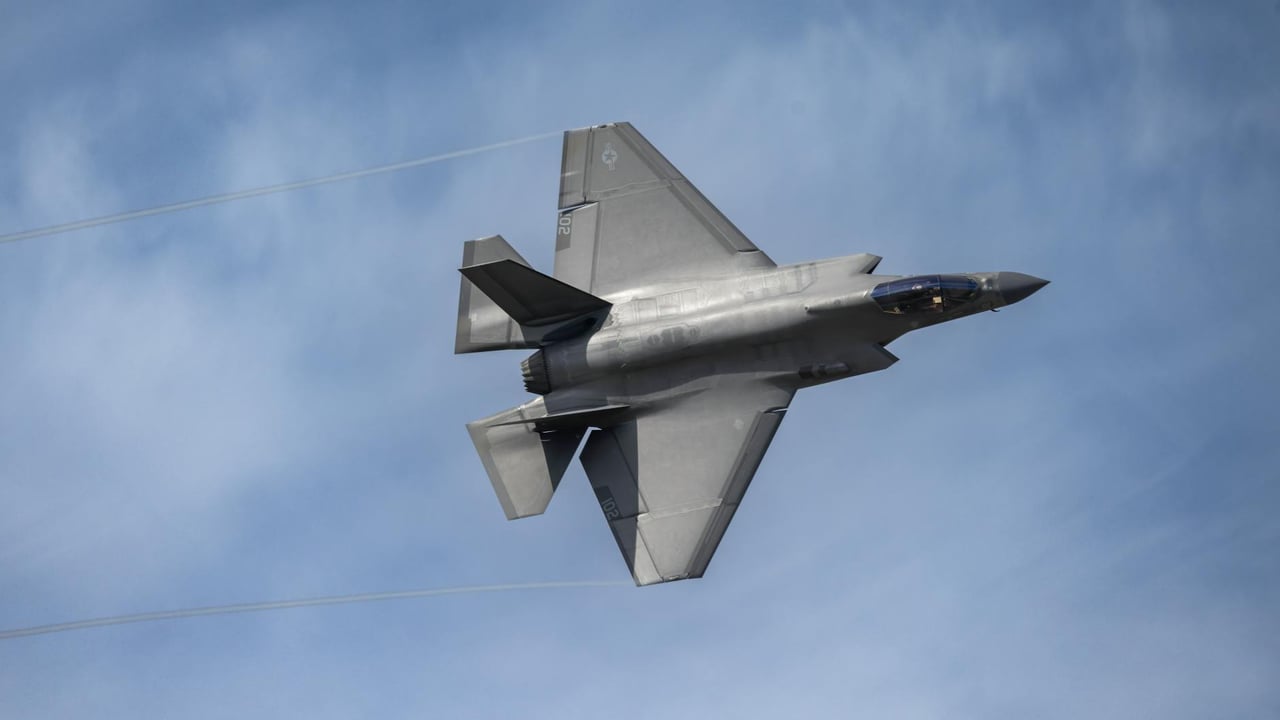

After more than a decade of fits and starts, Canada’s search for a successor to its CF-18 fleet has reopened into an argument about strategy as much as hardware. A revived F-35 purchase remains on the table, but a new push from Sweden’s Saab — proposing a mixed fleet that pairs a retained tranche of F-35s with 72 Gripen E fighters and six GlobalEye airborne early-warning aircraft — has injected fresh momentum into a debate that pits interoperability with the United States against industrial autonomy, cost control and Arctic surveillance needs.
The procurement history is instructive. Ottawa first signalled an F-35 buy in 2010, prompting a political backlash after the auditor general warned the lifecycle cost of 65 jets would far exceed earlier estimates. The purchase stalled, a limited stopgap of used F/A-18s filled a capability gap, and a 2017 open competition narrowed eventually to two contenders: Lockheed Martin’s F-35 and Saab’s Gripen E. Ottawa approved an 88-aircraft F-35 package in 2023 but that decision was placed under renewed review in 2025 amid trade tensions with Washington and sharply rising cost estimates. The defence ministry has so far moved ahead only with 16 F-35s, having paid in full for four, while the remaining 72 remain in limbo.
Saab’s recent pitch is tailored to those political and fiscal fault-lines. Its plan would keep the 16 already-produced F-35s for high-intensity work and NATO missions, while supplying lower-cost Gripen E jets and GlobalEye platforms for day-to-day patrols, Arctic monitoring and maritime security. Saab promises local assembly lines and parts production in Ontario and Quebec, knowledge transfer on maintenance and upgrades, and the possibility of turning Canada into a Gripen manufacturing and sustainment hub — all arguments meant to appeal to lawmakers anxious about jobs and sovereign defence capability.
Saab also foregrounds cost. The company’s figures, presented to Ottawa, claim the procurement price for 72 Gripen E fighters would be around CA$4.32 billion and that a mixed fleet could reduce annual operating costs by at least CA$2 billion, cutting lifecycle expenses by some 30 percent. Those numbers contrast sharply with government estimates for the full F-35 programme, which have ballooned over time — recent reviews put the total price tag for previously announced buys far higher than initial figures, and base upgrades to host F-35s have added to the bill.
Beyond invoices, the core choice for Canada is strategic. Buying the F-35 aligns with long-standing North American and NATO interoperability, reinforcing continental defence ties and ensuring commonality with allied forces that might be decisive in a high-end conflict. Conversely, shifting to a European-led mix would advance Canada’s industrial autonomy and reduce dependence on U.S. software, supply chains and political influence — but could complicate joint operations and risk political pushback from Washington at a sensitive moment in trilateral relations.
The mixed-fleet model is not untested. Countries such as Switzerland and Finland have relied on combinations of fifth-generation and legacy or lower-cost fighters to balance high-end requirements with peacetime patrols and budget constraints. Yet the success of such arrangements depends on a realistic assessment of tasking, basing, logistics and command-and-control integration. For Canada, long-range Arctic patrols, limited runway infrastructure, and the need to sustain NATO commitments make implementation details decisive: promised savings on paper may be offset by integration costs and interoperability frictions in practice.
The immediate political arithmetic will determine the outcome. Conservatives in Ottawa have historically favoured the F-35 for its alliance logic, while Liberals and domestic industrial lobbies have been more receptive to alternatives that promise local jobs and technology transfer. Any move away from the F-35 will require not only parliamentary consensus but also careful diplomatic management with the United States. At the same time, a prolonged procurement limbo risks leaving Canada with capability shortfalls at a time when Arctic security is receiving increased international attention.