
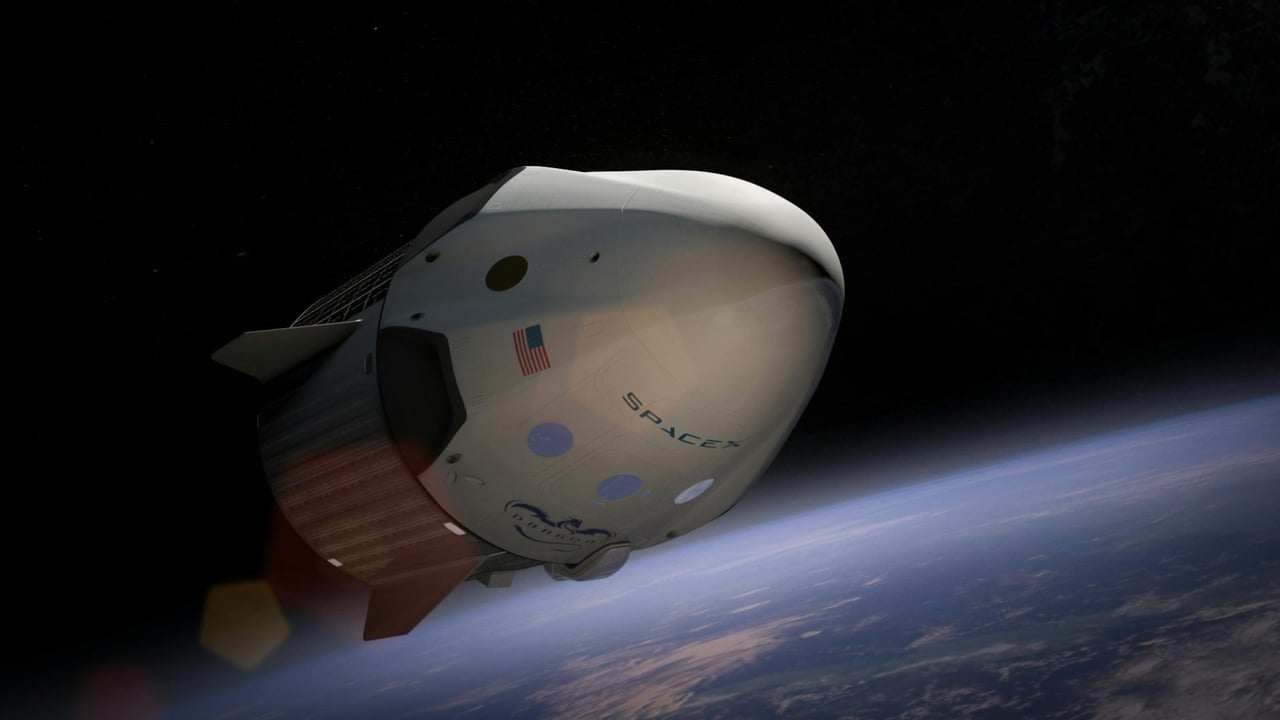

SpaceX has applied to the US Federal Communications Commission to deploy as many as one million satellites to form an “orbital data centre” network designed explicitly to provide massed compute for advanced artificial‑intelligence models. The company’s eight‑page filing, submitted on 31 January 2026, envisions thin layers of satellites, each no more than 50 kilometres thick, that would host unprecedented on‑orbit processing capacity to deliver AI inference and data services to billions of users worldwide.
The proposal represents a conceptual shift away from the conventional promise of low‑Earth‑orbit constellations — ubiquitous connectivity — toward placing substantial compute where latency is lowest and line‑of‑sight global coverage is easiest to ensure. If realised, orbital data centres could accelerate applications that are sensitive to latency and bandwidth, from real‑time language models to autonomous systems, while creating new markets for space‑grade servers, power systems and inter‑satellite networking.
But technical and regulatory hurdles are substantial. Deploying and operating hundreds of thousands — or millions — of satellites raises acute questions about orbital congestion, collision risk and space debris. Spectrum use and orbital slot coordination involve not only the FCC but international bodies such as the International Telecommunication Union, where early movers can lock in favourable allocations under a "first‑come, first‑served" regime. Powering, cooling and maintaining AI accelerators in vacuum will require novel engineering and hefty ongoing capital outlays.
The filing immediately reverberated through Chinese markets and strategy circles. Domestic brokerages are increasingly framing commercial space as a defining theme for 2026. Analysts at Dongwu Securities argue that a recent leap in Chinese launch capability — epitomised by the December 2025 success of the Zhuque‑3 rocket — has removed a long‑standing bottleneck: the mismatch between the appetite for satellites and the ability to put them into orbit. That in turn could catalyse an industry cycle encompassing rockets, satellite manufacture and space‑centric services.
Chinese broker notes set out a broader investment thesis. They expect 2026 to see a confluence of technical maturity, accelerated order flows and policy support that will lift valuations across the space supply chain. Recommendations range across launcher manufacturers, satellite makers, payload electronics, space photovoltaics and companies offering "space compute" hardware, while cautioning that global events — such as SpaceX’s own maiden flights of larger reusable vehicles and US policy moves to legally underpin lunar resource extraction — will intensify competition and geopolitical stakes.
The market context is mixed but constructive. Domestic securities houses also flagged that the 2026 spring market may be a “slow bull”, with pockets of strength in technology and non‑ferrous metals carrying momentum from January into February. Macro variables such as continued long‑term inflows from insurance funds and a likely easing bias from the US Federal Reserve later in the year are expected to underpin risk appetite, though near‑term monetary decisions may have only muted effects on early‑2026 moves.
Taken together, the SpaceX filing and the domestic reaction highlight a global inflection: the race is no longer simply to connect the world, but to occupy orbital real estate with compute, sensors and infrastructure that confer economic and strategic advantage. Realising that future will require enormous capital, tighter international coordination on space governance and fresh engineering to make high‑density on‑orbit data centres reliable, safe and commercially sustainable.
For investors and policymakers the immediate tasks are clear. Regulators must weigh license criteria against orbital safety and spectrum fairness. Industry players must demonstrate economics at scale — the unit cost of placing, operating and refreshing satellite compute must fall dramatically for the model to work. And governments will have to decide how much of this new orbital architecture they want to treat as subject to national security controls or to open commercial competition.