
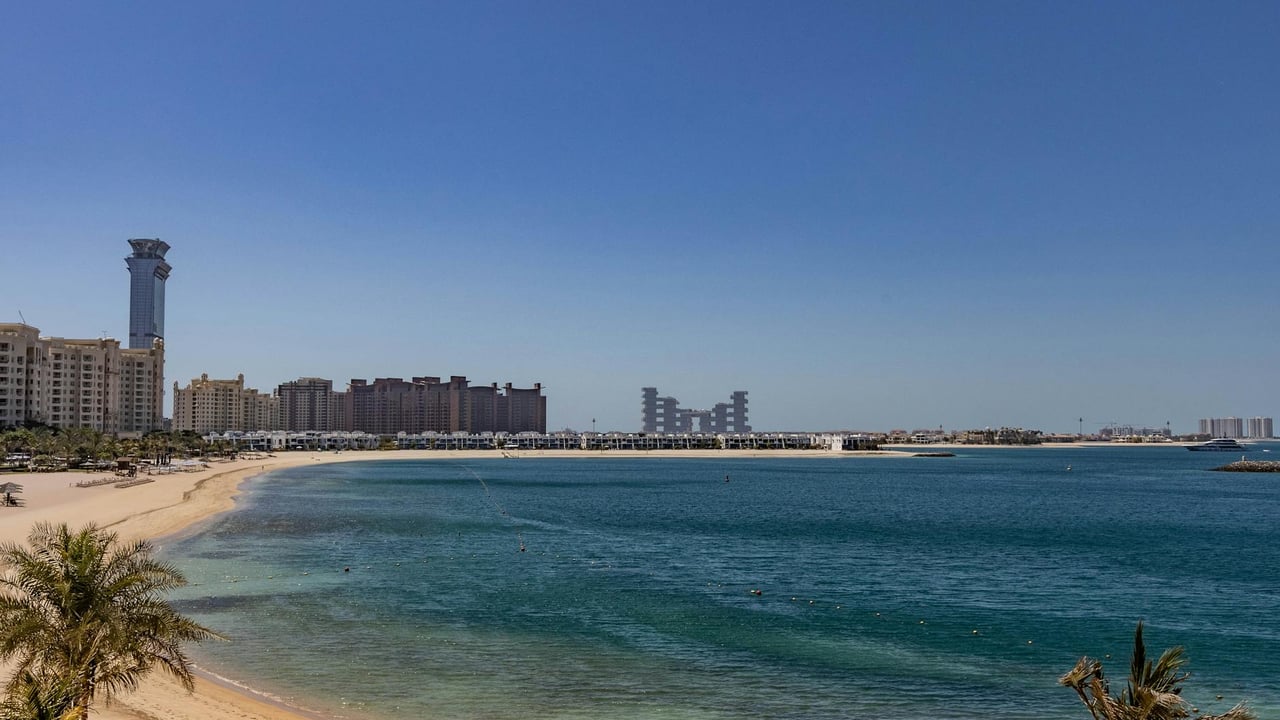

A three-day summit of the world’s leading scientists opened in Dubai on 1 February, assembling 71 laureates and prize-winners — including 39 Nobel Prize laureates, six Turing Prize winners and seven Wolf Prize recipients — to debate the role of basic science in confronting long-term global challenges. Convened under the theme “Basic Science: Addressing Humanity’s Future Challenges”, the meeting is notable both for its cast of high-profile participants and for its location: the first time the World Summit of Top Scientists has taken place in the Middle East.
The summit’s agenda was organised around four pillars: the interaction between artificial intelligence and fundamental research, the co-evolution of scientific progress and social development, pathways for global open-science collaboration, and the design of future scientific cooperation systems. Those topics reflect immediate preoccupations in the research community — from how AI reshapes discovery to how scientific institutions must adapt to geopolitical stress and demands for openness.
Dubai’s role as host is itself a signal. The United Arab Emirates has been investing heavily to position itself as a global technology and research node, using high-profile events to accelerate partnerships, attract talent and burnish soft power. Hosting this congregation of eminent scientists — and staging it in tandem, for the first time, with the World Government Summit — blurs lines between scientific peer review and policy influence, creating new channels for science diplomacy.
The summit’s focus on AI and basic science is practical as well as symbolic. Speakers emphasised that advances in machine learning are altering how foundational questions are asked and answered, speeding data analysis and modelling while raising questions about reproducibility, interpretability and the distribution of computational resources. There was a clear push to think beyond short-term technological spin-offs to the longer, infrastructure-driven needs of foundational work: data stewardship, public repositories and training in theoretical methods that are not automatically accelerated by AI.
Equally prominent was the discussion of open science and international collaboration. Delegates flagged both the benefits and limits of openness: global sharing speeds discovery but can be constrained by export controls, national security concerns and uneven access to computing and laboratory infrastructure. Several participants argued for new multilateral mechanisms to support under-resourced regions and to make collaboration less brittle in periods of geopolitical tension.
The confluence with the World Government Summit highlights an important trend: policymakers increasingly seek direct access to elite scientific advice, while scientists are keen to influence governance frameworks for emerging technologies. That proximity could improve policy making, yet it also raises questions about independence, agenda-setting and which voices are heard — in practice, who benefits from the partnerships born at such high-profile forums.
For the UAE and other non-traditional hosts, the summit is a faster track to scientific credibility. For the global scientific community, Dubai offered a chance to broaden networks and to test new governance proposals. For governments and the private sector, the summit served as a marketplace for research priorities and investment commitments, with potential to shape funding flows and collaborative programs in the coming years.
Ultimately the event underscored a simple but consequential point: the shape of 21st-century science will be decided not only in laboratories and universities but in the political and diplomatic arenas where resources, rules and international trust are negotiated. How those negotiations evolve — whether toward more equitable, rules-based collaboration or toward fragmented blocs with competing standards — will determine how effectively the world can marshal science to meet long-term challenges such as climate change, pandemics and the societal impacts of AI.