
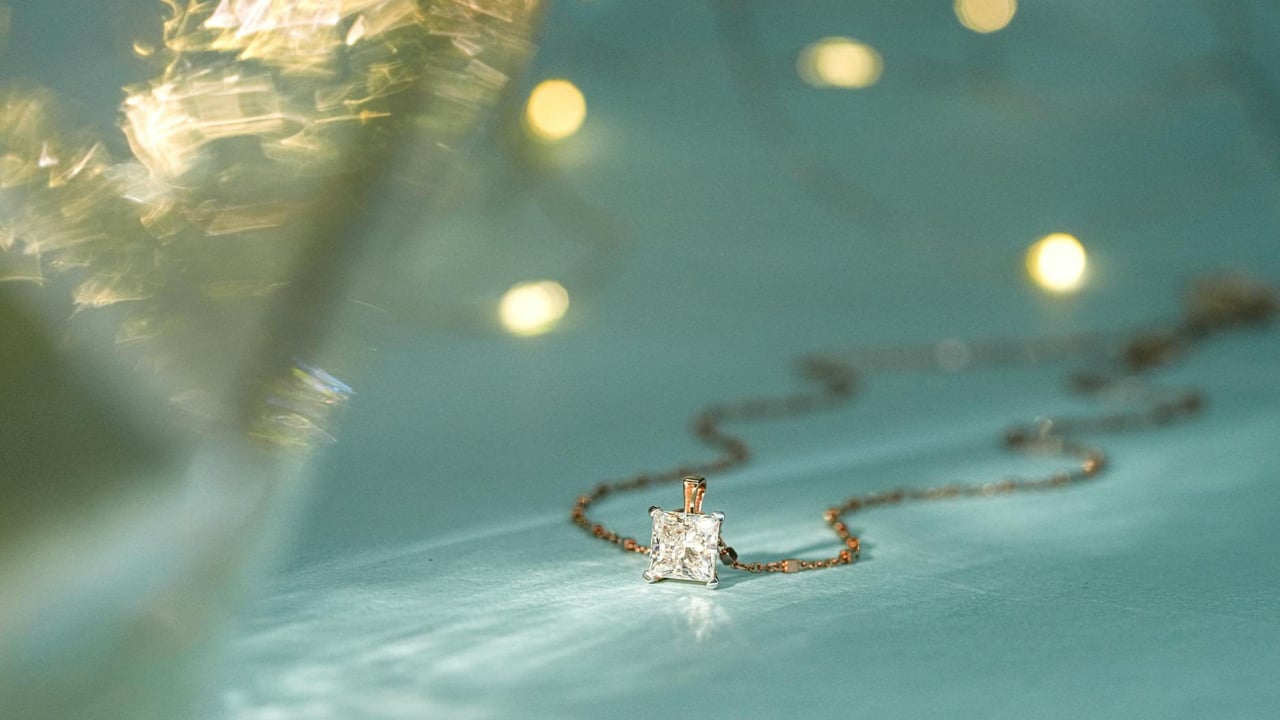

The global diamond market is undergoing a convulsion. Once a near-sacrosanct store of sentimental and monetary value, natural diamonds have seen prices tumble by more than 40% from their 2022 peak, forcing miners, traders and luxury jewellers to confront a reality shaped as much by factories in central China as by geology.
On 20 January, De Beers, the long-time price-setter in the industry, cut prices for rough stones larger than 0.75 carats and signalled further falls of 10–15%. The move followed an already bruising year: by the end of 2024 De Beers carried roughly $2 billion of unsold inventory, the largest stockpile since the 2008 financial crisis, and had trimmed prices by about 25% across 2024 to try to shift supply.
The human consequences are stark. In China, a woman in Xichang reportedly watched two wedding rings she bought for 14,000 yuan a decade earlier fetch less than 200 yuan at resale — a 99% nominal loss. At the same time, retail prices for 3-carat natural stones still fetched hundreds of thousands of yuan for good-quality material in 2024, while certain premium cuts could top one million yuan; but those figures are now being undercut by lab-grown alternatives priced a fraction of the natural equivalents.
That price divergence is driven by a massive expansion in laboratory diamond production, centred in Henan province. China produced more than 22 million carats of diamond rough in 2023 — over 70% of the global total — with approximately 80% of that capacity concentrated in Henan. The province's factories now turn out industrial diamonds measured in billions of carats annually and can produce a three-carat polished stone in about a week.
The technology is not new but has been industrialised. High-pressure, high-temperature (HPHT) presses pioneered in Zhengzhou in the 1960s — six-sided machines that boosted throughput over earlier designs — have been iteratively refined into highly efficient production lines. The results are scale and quality: lab-grown diamonds match natural stones in chemical, physical and optical properties, and require laboratory-grade spectroscopy and imaging to distinguish the two reliably.
Price data underline the disruption. Independent trackers such as Zimnisky reported that by the second quarter of 2025 a three-carat lab-grown diamond could trade for as little as 27,000 yuan. At the raw-material end, unpolished stones from some Henan factories have been reported at roughly 100 yuan per carat. Such downward pressure has eaten into margins and revenues for retailers that built brands around the rarity and romantic value of mined diamonds.
DR (Di'ao) illustrates the commercial stress. Its parent company floated in 2021 to a market valuation of roughly 66 billion yuan after a strong debut, only to see revenues plunge from about 4.6 billion yuan in its peak year to roughly 1.5 billion in 2024; net profit collapsed almost 96% over the same period. The company has since rebalanced inventories, cut diamond procurement and shifted toward gold and other products, seeing some recovery in 2025 but still operating in a tougher market.
For the incumbents — miners, legacy brands and exchanges that long relied on controlled supply to sustain prices — the choices are stark. Some have begun to cut prices to move inventory, others are redoubling efforts at branding, traceability and labelling that distinguish natural stones, and a few are diversifying into gold and other categories that have performed strongly: gold rallied roughly 70% in 2025 on an annual basis, underscoring investor and consumer appetite for tangible value.
The shift raises strategic and regulatory questions. Certification regimes, gemological laboratories and disclosure protocols will matter more as lab-grown product quality converges with natural stones. Supply-chain concentration in one Chinese province creates geopolitical and trade vulnerabilities for a market that historically relied on widely dispersed mining and trading networks. Finally, environmental and energy considerations — lab-grown production is electricity-intensive — will enter the debate as producers and consumers assess true costs.
For consumers, jewellers and investors, the takeaway is clear: the era when diamonds uniformly represented an unassailable store of value is ending. Technology-driven supply growth from Henan has made diamonds more accessible and cheaper, but it has also stripped some of the mystique that underpinned premium prices, forcing an industry-wide reappraisal of what consumers are paying for — and why.