Eight Mostly Muslim Foreign Ministers Condemn Israel, Warning Ceasefire at Risk

Eight foreign ministers — from Saudi Arabia, Jordan, the UAE, Qatar, Indonesia, Pakistan, Egypt and Turkey — issued a joint denunciation of Israeli violations of a Gaza ceasefire, blaming the incidents for over 1,000 Palestinian casualties. The uncommon cross-regional statement warns that continued breaches could derail the ceasefire's second phase, undermine reconstruction and escalate regional tensions, while renewing calls for Palestinian self-determination and a political solution.

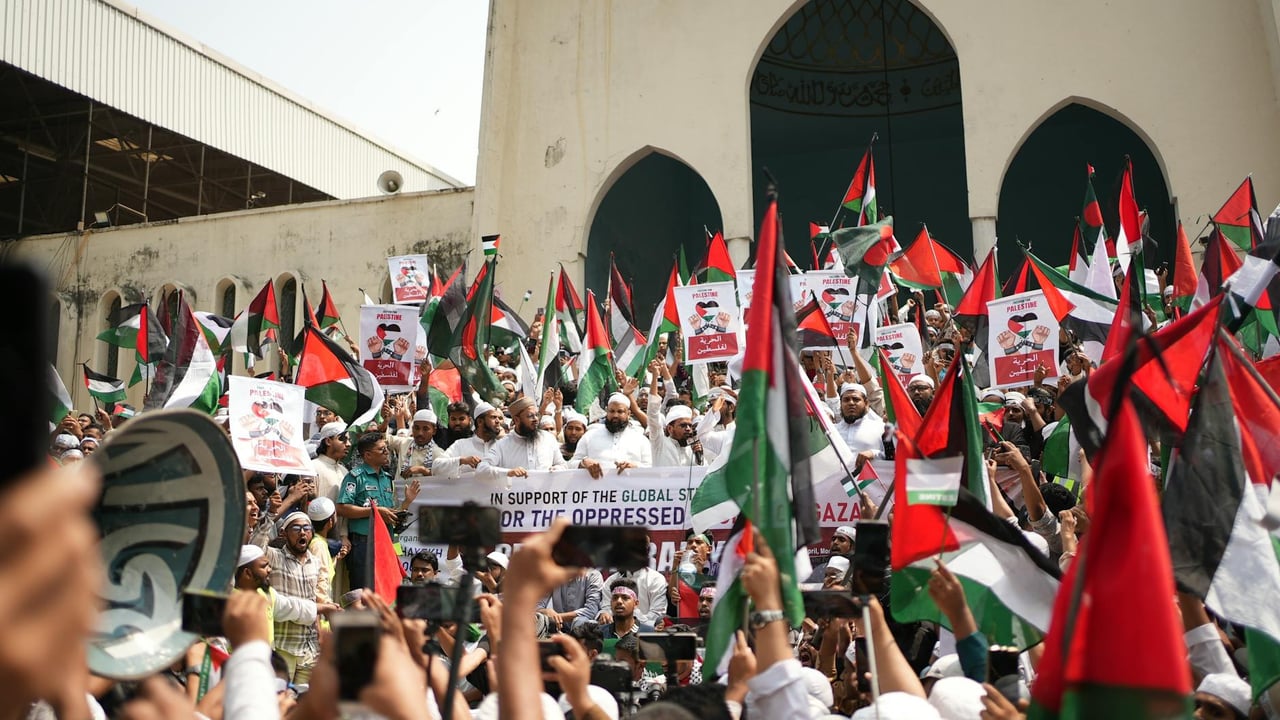
Large Pro-Palestinian demonstration in Dhaka with flags and banners supporting freedom and solidarity.

Key Takeaways

  • 1Eight foreign ministers issued a joint statement condemning Israel for repeated violations of the Gaza ceasefire and citing over 1,000 Palestinian casualties.
  • 2Signatories include Gulf states that have recently warmed to Israel, alongside long-time critics and countries without relations, signalling broad regional concern.
  • 3Ministers warned that violations risk undermining the second phase of the ceasefire, derail reconstruction and heighten regional tensions.
  • 4The statement links stabilization, humanitarian access and reconstruction to progress toward Palestinian self-determination and statehood.
  • 5The coordinated diplomatic rebuke increases pressure on Israel and international mediators and complicates regional normalization efforts.

Editor's
Desk

Strategic Analysis

This joint statement is as much about politics as it is about immediate battlefield dynamics. By assembling a diverse group of states — from Gulf monarchies exploring various forms of engagement with Israel to neighbours and vocal critics — the message is calibrated to maximise diplomatic pressure while preserving mediation channels. If ceasefire violations continue, the costs will not be limited to Gaza: momentum for limited normalisation and bilateral cooperation with Israel could stall, regional mediators may lose leverage, and international actors will face intensifying calls for stronger measures to protect civilians and secure a political track. The near-term test will be whether the declaration translates into coordinated diplomatic or material steps — such as conditionality on aid, joint diplomatic démarches, or referrals to international bodies — or remains primarily a rhetorical salvo that signals elite frustration without forcing policy changes on the ground.

China Daily Brief Editorial
Strategic Insight
China Daily Brief

Eight foreign ministers from across the Middle East and the Muslim world jointly condemned Israel on February 1 for repeated violations of a Gaza ceasefire that they say have produced more than 1,000 Palestinian casualties. The statement — issued by the foreign ministers of Saudi Arabia, Jordan, the United Arab Emirates, Qatar, Indonesia, Pakistan, Egypt and Turkey — warned that continued Israeli action threatens to unravel efforts to consolidate the truce and restore stability in Gaza.

The ministers said breaches of the ceasefire could intensify tensions and derail the second phase of the agreement meant to move the enclave from active hostilities toward a more durable pause. They urged all parties to exercise maximum restraint, to fulfil their responsibilities under the ceasefire and to avoid any measures that would jeopardize reconstruction, humanitarian access and steps toward political progress.

The joint statement is significant because it brings together a mix of states with differing relationships to Israel. Gulf monarchies that have taken tentative diplomatic steps toward Israel in recent years stood alongside long-time critics and countries with no formal ties, signalling a rare, unified regional rebuke when Palestinian civilian suffering rises sharply.

Egypt and Qatar have played direct roles as mediators and facilitators of negotiations and humanitarian flows in and out of Gaza; Jordan is a neighbour with a large Palestinian population and a peace treaty with Israel. Their participation in the condemnation amplifies diplomatic pressure on Tel Aviv while underscoring regional fragility: mediation and normalisation can be swiftly tested by spikes in civilian casualties.

Beyond immediate diplomacy, the ministers framed their call in political terms, reiterating support for Palestinian self-determination and a state based on recognized rights. By linking ceasefire compliance, reconstruction and a two-state political horizon, the group sought to shift attention from discrete military incidents to the broader question of how to translate pauses in fighting into lasting outcomes.

The declaration increases pressure on international actors engaged in the crisis, from Washington and European capitals to the United Nations and regional organizations. If breaches persist, the statement suggests Arab and Muslim governments may have less political room to pursue closer ties with Israel, and more incentive to press for accountability, expanded humanitarian access and a clearer political track toward Palestinian statehood.

Share Article

Related Articles

📰
No related articles found