
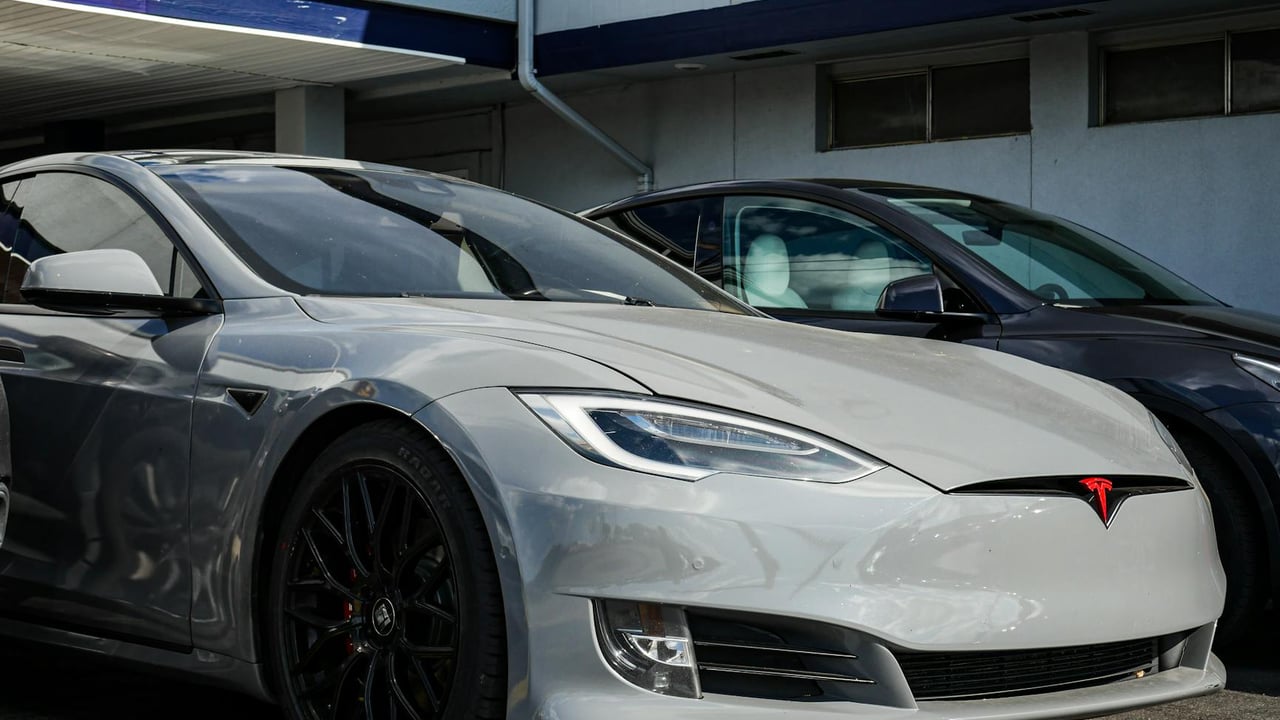

When Tesla unveiled time‑limited 5‑year 0% and 7‑year ultra‑low interest purchase plans in early January 2026, it did more than sharpen competition in the new‑car market. The move reset what consumers consider the monthly and up‑front cost of ownership, and within weeks rival manufacturers — from Xiaomi and Li Auto to Xpeng, Great Wall, Geely Galaxy and Lantu — matched or extended financing terms. The result has been a pronounced shift in buyer behaviour: many potential purchasers who would once have considered used electric vehicles are now enticed by longer, cheaper new‑car credit, eroding demand and prices in the secondary market.
Used‑car dealers in Beijing and elsewhere report the impact in stark terms. A dealer who has sold used cars in Beijing’s Huaxiang district for eight years said enquiries for Tesla models plunged after the new financing offers; his shop sold two used Teslas in January 2026 versus seven in the same month a year earlier. Another dealer in Henan posted a video of a showroom full of unsold Teslas under the headline “the sky is falling”, likening the policy to a shockwave that unbalanced price comparisons between new and used stock.
Smaller dealerships have reacted by cutting prices: the asking price for a 2022 Tesla Model 3 spotted by reporters fell from about 146,000 RMB to 137,000 RMB (roughly $20,000 to $19,000) over 20 days. Larger used‑car groups have tried to match the new‑car financing appeal with modest bank partnerships, offering, for example, 100,000 RMB (≈$14,000) loans at 12 months interest‑free for a handful of popular models. Those measures have had some success: one dealer sold three cars within five days after launching in‑house financing targeted at previously hesitant buyers.
The shockwaves are not limited to Tesla. Dealers say price comparisons force adjustments across brands: a 2023 Li Auto L7 Pro with 20–30k km is now quoted around 190,000 RMB, slightly below late‑2025 levels. Underlying the price moves is a structural reality of electric vehicles: rapid technological churn, concerns about battery degradation and the growing gulf in advanced driver assistance systems (ADAS) mean older EV models lose appeal quickly. NIO, for example, was cited by an owner who bought an ES6 for about 440,000 RMB in 2023, only to see market valuations clustered near 120,000 RMB after roughly two years and 60,000 km — a loss exceeding 70%.
Macro data show the secondary market is large but still maturing. In 2025 China’s used‑car transactions reached about 20.1 million vehicles, with total turnover near 1.29 trillion RMB (≈$180 billion). New‑energy vehicles (NEVs) accounted for roughly 1.6 million of those transactions, or 7.9% of volume — a rising share but still a small slice of the market. Industry participants say that for NEV secondhand stock the inventory clock is short: 45 days is described as an “absolute death line”, 30 days as reasonable and 21 days as normal, forcing dealers to be precise about acquisitions and quick to resell.
The financing tug‑of‑war shifts risk around the value chain. Extended low‑cost credit makes new cars more affordable on a monthly basis, compressing residual values of used vehicles and straining margins for trade‑ins and independent dealers. Lenders implicitly underwrite extended repayment horizons that depend on continued consumer appetite and stable resale markets; if residual values drop faster than expected, banks and finance arms take on greater credit and collateral risk. For consumers the offers can be tempting, but they also encourage longer indebtedness on assets that may depreciate more quickly than conventional cars.
Dealers’ responses point to an evolving secondary market: larger groups will expand financing partnerships and experiment with promotional credit, while smaller dealers will be forced either to specialize in fast‑turn models or accept lower prices. Manufacturers may further weaponize financing as a market‑share tool, or alternatively move to protect resale markets with certified pre‑owned programmes, buyback guarantees or warranties that shore up residual values. Regulators and banks will watch closely for signs of rising consumer leverage and weakness in collateral values that could ripple into broader credit quality concerns.