
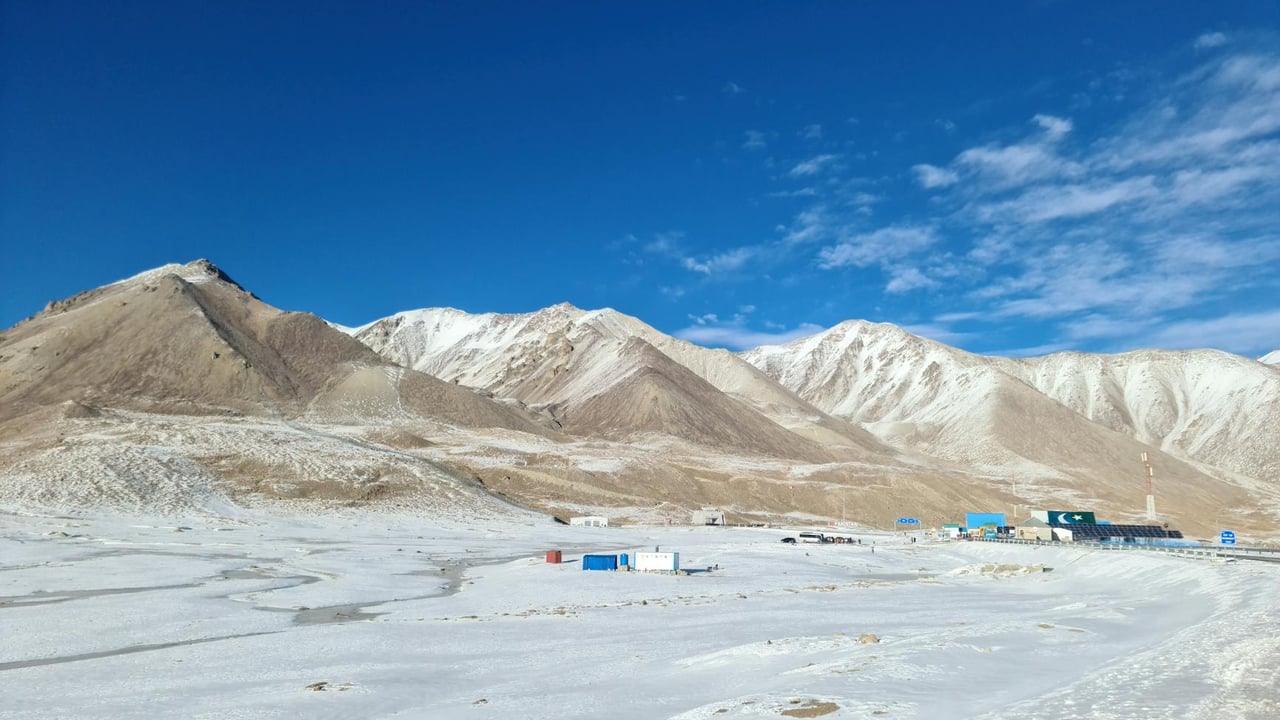

A striking image published by Chinese state media this week showed border troops in Xinjiang conducting winter patrols on a mix of motorized sleds and on foot, traversing snowy terrain to keep remote frontier areas under surveillance. The photograph, credited to a military photographer, captures soldiers clearing tracks and moving between posts in deep snow as part of routine border security duties.
The combined use of motorcycle-style snow sleds and pedestrian patrols reflects a pragmatic approach to mobility in harsh winter conditions: mechanized teams extend range and speed while foot patrols secure areas inaccessible to vehicles. Such operations are aimed at maintaining a constant presence along sparsely populated borderlands where weather and terrain complicate movement and detection.
Xinjiang sits at the crossroads of Central and South Asia and shares long frontiers with several neighbors, giving border security a heightened strategic dimension for Beijing. Patrols are part of a wider set of responsibilities that include deterring cross-border crime, disrupting smuggling and human trafficking, and enforcing Beijing’s internal security priorities in a region long viewed as sensitive.
The winter patrols also illustrate a broader trend within China’s armed forces toward improving cold‑weather readiness and flexible logistics. Mobility solutions adapted to snowbound conditions complement surveillance networks, outposts and occasional aerial assets, allowing units to sustain presence and quick reaction in remote sectors for longer periods.
Beyond operational necessity, the photographs serve a domestic and external messaging purpose. For a Chinese audience they reinforce narratives of order and protection; externally they signal persistent state capacity to control and monitor distant frontiers. The visual vignette is a small but telling example of how routine constabulary duties are being professionalized and publicized as part of Beijing’s year‑round border posture.