
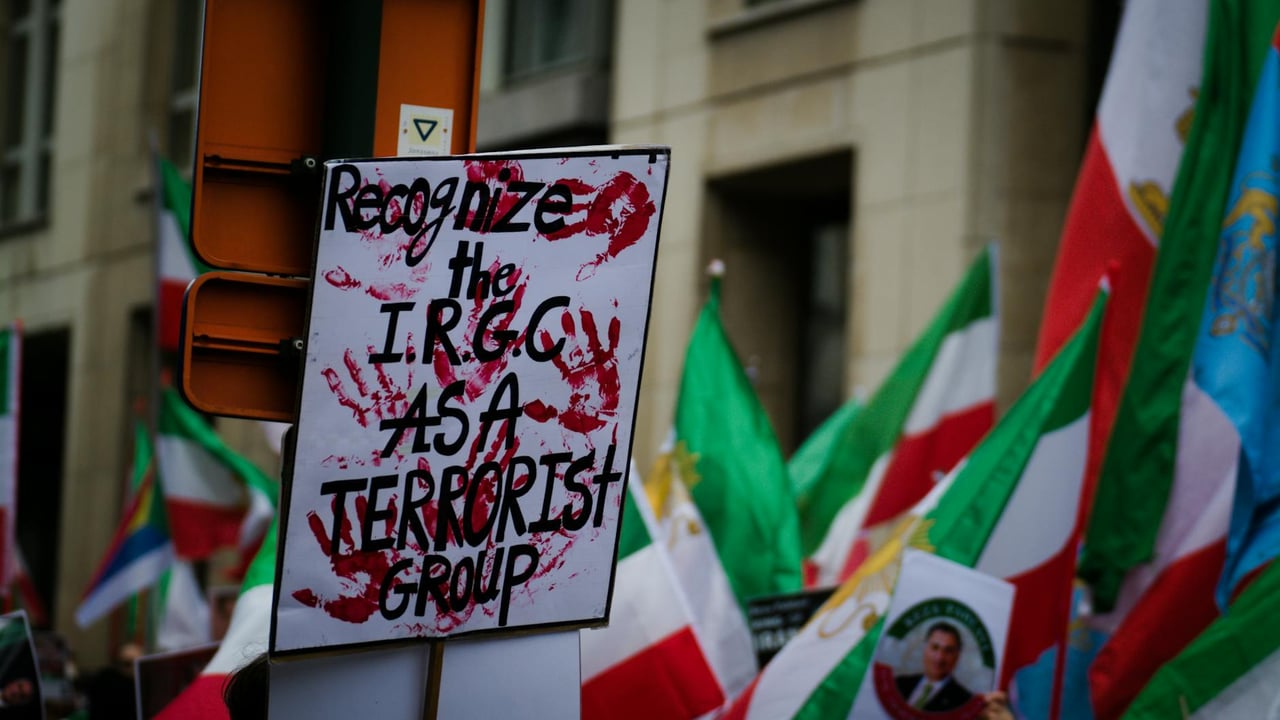

Iran’s parliament speaker, Mohammad Bagher Ghalibaf, has declared that Tehran will regard the armed forces of European countries as “terrorist organisations” following the European Union’s decision to add the Islamic Revolutionary Guard Corps (IRGC) to its terrorist list. The statement, carried by Iranian state-aligned Mehr news agency, frames the move as a legal response to what Iranian officials portray as an unjust and externally driven provocation.
The EU’s designation on January 29 marked a significant shift in European policy: diplomats described the decision as a “decisive step” by member-state foreign ministers. Tehran’s response was swift and unified in tone. The Iranian foreign ministry and general staff issued sharp condemnations, and senior adviser Ali Larijani warned that any country participating in the EU’s decision could have its armed forces treated as terrorist entities by Iran.
Ghalibaf openly blamed the United States and Israel for prompting the EU action, accusing them of manipulating European governments. He insisted that such pressure would only consolidate domestic support for the IRGC and strengthen its standing inside Iran. This rhetoric meshes with a longer-running narrative in Tehran that external hostility fortifies internal cohesion and validates the IRGC’s centrality in politics and security.
The move raises immediate legal and practical questions. Under international law, designating a state’s uniformed military as a terrorist group is unprecedented and would complicate ordinary rules of engagement, status-of-forces arrangements, and diplomatic immunity. In practice, Iran’s declaration is likely to be more rhetorical than immediately actionable; treating conventional European troops as terrorists would risk reciprocal measures and rapid escalation without clear legal precedent to justify attacks on accredited military personnel.
The dispute must be seen in a broader context. The United States designated the IRGC as a foreign terrorist organisation in 2019, a step that already complicated diplomacy and regional security. The EU’s 2026 decision signals growing European concern about the IRGC’s activities — ranging from proxy support to involvement in regional conflicts — but also exposes a gap between symbolic punitive measures and calibrated risk management.
For Europe, the risks are tangible. Several EU member states maintain military personnel or naval assets in the wider Middle East and eastern Mediterranean for counter‑terrorism, anti‑piracy and training missions. Tehran’s declaration injects uncertainty into those deployments, complicates insurance and rules-of-engagement discussions, and could chill diplomatic channels at a time when back‑channel talks over nuclear and regional issues remain fragile.
Domestically in Iran, the response underscores factional politics. Hardline officials such as Ghalibaf benefit from a narrative of external threat that delegitimises moderates and rallies public support around the IRGC. At the same time, Tehran’s leaders must balance posturing with the need to avoid military confrontation that would hurt the economy or invite harsher sanctions.
The coming weeks will test whether this exchange of designations becomes a lasting rupture or remains a high-stakes rhetorical confrontation. European capitals must weigh the political benefits of signalling toughness against the operational risks to their forces and the wider goal of de‑escalation in a volatile region. For Tehran, aggressive rhetorical tit-for-tat provides domestic dividends but narrows diplomatic options and raises the cost of miscalculation.