
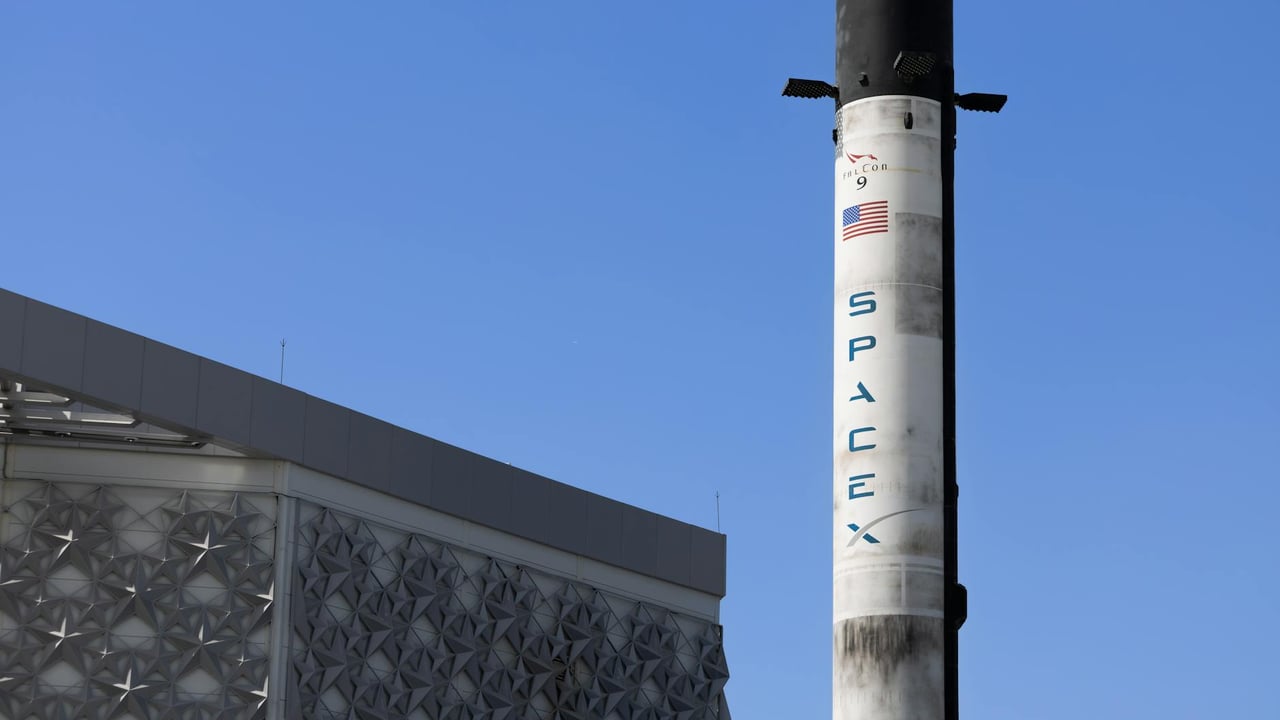

Elon Musk stunned the tech world by folding his private AI startup xAI into SpaceX in a stock-swap deal that the companies say creates a new entity valued at about $1.25 trillion. The transaction, carried out by exchanging xAI shares for SpaceX equity at a 0.1433 conversion ratio, preserves the two brands for now but signals a strategic fusion: rockets and satellites as physical infrastructure for large-scale AI compute.
The rationale Musk offers is starkly pragmatic. Modern AI consumes prodigious amounts of electricity and cooling capacity; on current trajectories, ground-based datacentres will place growing strain on grids and environments. By placing compute hardware into near‑Earth orbit—powered by near-constant solar irradiance and cooled by the vacuum of space—Musk argues the industry can break through terrestrial energy and heat constraints.
The technical vision he set out is ambitious. SpaceX plans to use Starship and in‑orbit refuelling to lift very large masses, deploy a constellation of up to one million satellites acting as an "orbital datacentre," and ultimately exploit lunar resources to manufacture and launch still more compute platforms. Musk has even described an ultimate aim of harnessing stellar energy at scales evocative of a Kardashev II civilisation—a rhetorical flourish that underscores how far-reaching the proposal is.
For employees the deal is materially generous. xAI staff were told their equity will convert into SpaceX stock at the stated ratio and that they will be able to redeem holdings with the company; internal directives also limit cross‑access to certain internal systems while allowing selective tool sharing. For investors and markets, the combination converts SpaceX from a launch-and-satellite operator into a potential AI-infrastructure champion, shifting the company’s narrative from contractor to platform owner and setting up an IPO push expected later this year with fundraising aims in the tens of billions of dollars.
The merger changes competitive geometry in both aerospace and cloud services. No incumbent cloud provider has a vertically integrated constellation, launch capability and a rapidly evolving large language model — the unique asset set Musk now assembles with SpaceX, xAI, Starlink, Tesla energy storage and Tesla/Optimus endpoints. That integration, proponents say, could dramatically lower the marginal cost of AI compute and accelerate deployment into consumer devices and robotics.
Yet the plan is fraught with technical, economic and political hurdles. Launching and operating millions of satellites at the scale Musk sketches would require orders of magnitude increases in manufacturing, orbital traffic management, in‑orbit servicing and cybersecurity. Building datacentres in orbit introduces new maintenance paradigms and raises questions about resilience, latency, and data sovereignty. Regulators may balk at a near-monopoly bundle of launch, communications, compute and consumer endpoints controlled by a single private owner.
Capital markets have already begun to price the implications: SpaceX’s private valuation had been reported around $800 billion, xAI’s earlier rounds were valuing it in the low hundreds of billions, and the combined headline figure of $1.25 trillion places the new group among the largest technology enterprises by enterprise value. Musk’s stated plan to pursue an IPO and raise a substantial war chest will test investor appetite for a company whose business plan simultaneously spans consumer products, national infrastructure and what Musk frames as civilisation-scale ambitions.
The deal therefore matters for two reasons beyond headline size. First, it recasts the locus of competition for advanced AI: not merely between silicon, data centres and algorithms, but among actors who can supply integrated physical infrastructure in space. Second, it raises urgent governance questions about how societies regulate and safeguard compute capacity, data flows and critical communications when they can be concentrated in orbital assets beyond straightforward terrestrial control.
Whatever the timetable, the merger marks a turning point: a billionaire entrepreneur has explicitly connected machine intelligence, satellite networks and mass launch into a single strategic program. That gambit could accelerate AI deployment in ways that are transformative for industry and geopolitics — or it could confront practical constraints that limit its reach. Either outcome will reshape how governments, competitors and investors think about the future of compute.