
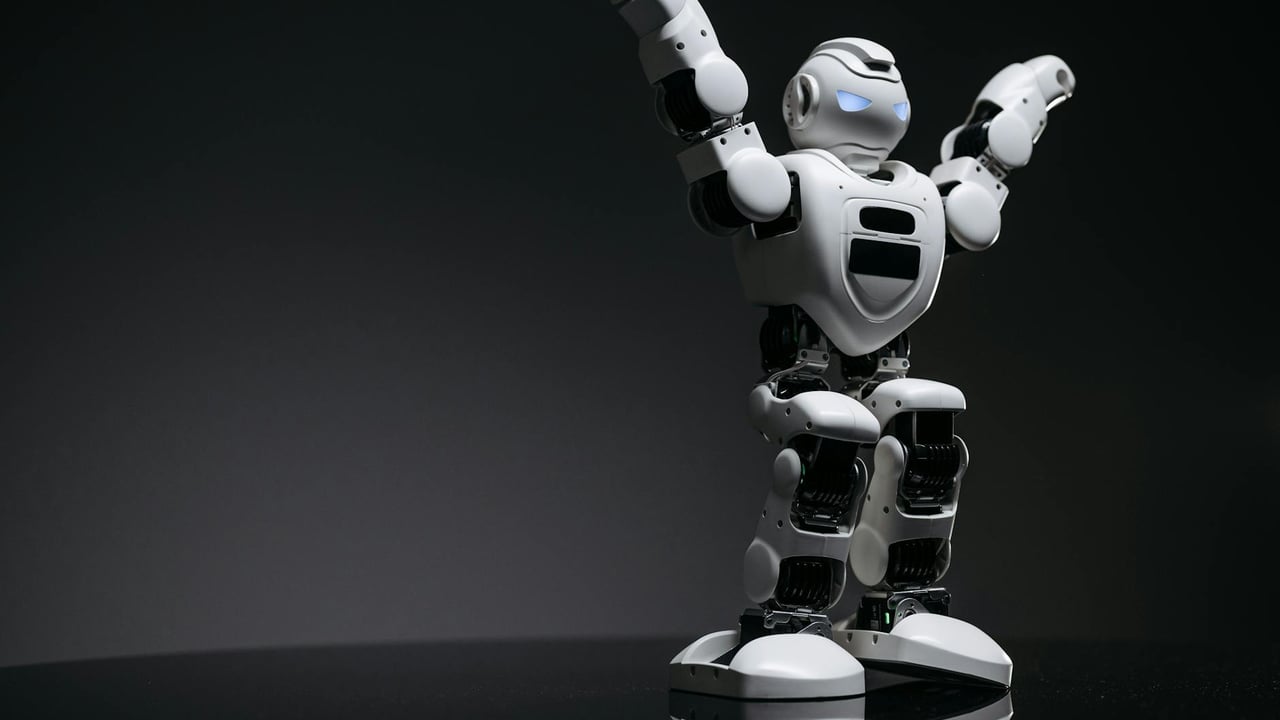

Beijing-based robot developer Zhongke Huiling (中科慧灵) has signed a three‑party framework agreement with materials supplier Guangda Tongchuang (光大同创) and AI firm Delos (迪洛斯人工智能科技) to joint‑develop lightweight new materials for the structural “skeleton” and exterior “skin” of humanoid robots. The deal, announced on Guangda Tongchuang’s corporate channel, frames research and production as a combined technological and capacity problem: the partners say they will bind R&D and manufacturing closely to move Zhongke Huiling’s CASBOT Lingbao series closer to engineered, scalable delivery.
The announcement is short on technical detail but clear in intent. By targeting the two most hardware‑intensive elements of humanoid design—structural components that must be strong yet light, and outer appearance or skin that must be durable, safe and manufacturable—the partners aim to shave weight, reduce power consumption and cut production costs, three of the principal bottlenecks in turning humanoid prototypes into commercial volume products.
This alliance sits inside a broader, global scramble to make humanoid robots practical beyond demonstrations. For developers the core challenges are multi‑disciplinary: high‑density batteries and efficient actuators, perceptual software and control, and materials that combine stiffness, resilience and low mass. Materials innovation is often overlooked in headlines about AI “brains,” yet it dictates payload, battery life, safety and the unit economics that will determine whether humanoids remain engineering curiosities or become deployable service platforms.
The partners’ emphasis on a “technology–capacity” linkage signals a lesson learned across advanced manufacturing: breakthroughs matter only if they can be produced at scale. By tying the material supplier closely to the robot designer and an AI technology partner, the consortium aims to shrink the gap between lab prototypes and assembly lines, reducing iteration times and helping assure quality in high‑volume runs.
That said, material advances alone will not guarantee commercial success. Companies still face substantial hurdles on control systems, perception, software robustness, and regulatory and safety frameworks for robots operating around people. Market demand is also uncertain: use cases such as logistics, hospitality and elderly care are frequently cited, but unit prices, reliability and after‑sales ecosystems will determine adoption rates.
For Chinese industry policy and supply chains the deal is nevertheless notable. It reflects a push toward deeper domestic integration across the robotics stack—linking component suppliers, manufacturers and AI developers—and reduces dependence on foreign specialist materials or tooling. If the partnership succeeds in lowering costs and accelerating delivery, it could hasten consolidation in the domestic robotics market and set higher technical bar for entrants.
Investors and observers should watch two things closely: whether the consortium produces demonstrable materials with measurable weight or cost advantages, and whether it can translate those gains into repeatable, factory‑level processes. Success in both would help close the last mile from laboratory demos to broad commercial availability; failure would underline how much of the humanoid promise still rests on batteries, actuators and software rather than the outer shell.