
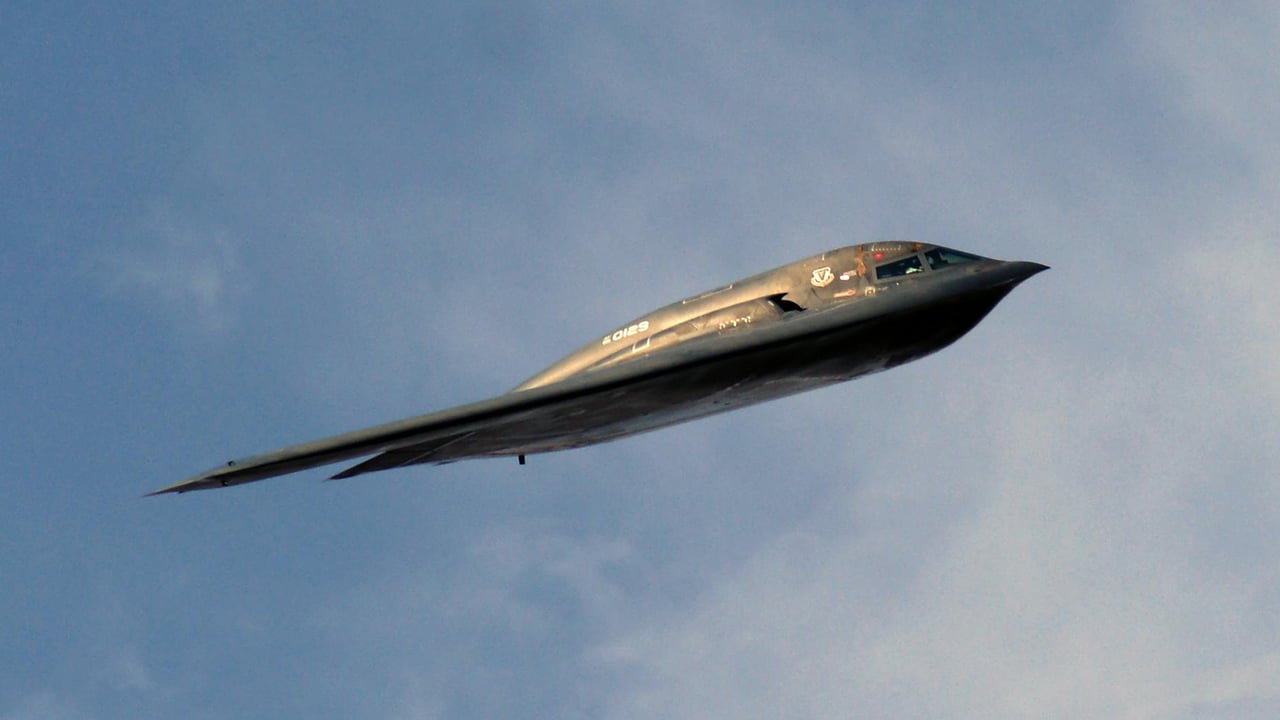

The 2021 AUKUS pact promised a transformational shift in Australia’s naval posture: with US and UK assistance Canberra would field nuclear‑powered attack submarines to project power in the Indo‑Pacific. But five years on the grand design looks creaky; rising costs, technical bottlenecks and political frictions have prompted Western analysts to think laterally about alternatives. One suggested substitute that has entered debate is far from subtle — acquiring US B‑2 stealth bombers to deliver a long‑range, high‑end strike capability while the submarine programme languishes.
AUKUS was sold as a multi‑decade, high‑technology investment — Chinese coverage pegged it at roughly $368 billion — centered on delivering one of the hardest defence capabilities to transfer: nuclear‑propelled submarines. That ambition has collided with realism. Building, transferring and sustaining SSNs requires not only shipyards and reactors but a prolonged industrial and training effort. Political appetite in partner capitals, shifting US defence priorities and domestic budgeting pressures in Canberra have all slowed progress and amplified doubts about the timetable.
The B‑2 proposal, raised in Western security circles, reflects two basic calculations. First, a stealth bomber gives Australia an immediately usable, regionally relevant means of long‑range strike and deterrence without the protracted lead time of submarines. Second, it signals alliance solidarity and could be framed as a more politically tractable, lower‑risk transfer of capability compared with nuclear propulsion technology. Put bluntly, a bomber is a different kind of weapon from an SSN: it projects strike rather than persistent undersea presence.
Practical, legal and political obstacles make a B‑2 sale far from straightforward. The B‑2 Spirit is a strategic, nuclear‑capable platform the United States has never exported; sustainment and basing costs are steep and the type is scarce. Canberra would face heavy investments in infrastructure, training and long‑term logistics to operate the aircraft effectively, and Washington would confront an unprecedented choice about transferring or co‑operating with a strategic bomber. Any such move would also raise sensitive questions about non‑proliferation norms and regional escalation dynamics.
Strategically, the debate over bombers underscores a deeper dilemma for allies: how to preserve credible deterrence while managing the political and industrial realities of high‑end military procurement. For Beijing, proposals to arm Australia with long‑range stealth strike capability would be read as an escalation and could harden regional security competition. For smaller regional states, the conversation reveals the limits of a single, platform‑heavy approach to deterrence and points to alternative mixes of air, maritime and missile capabilities that could achieve similar aims at lower cost and with faster timelines.
In short, the B‑2 idea is less a likely procurement path than a diagnostic: it shows how fraying confidence in AUKUS is prompting policymakers and analysts to reassess what forms of deterrence are politically feasible, militarily effective and diplomatically sustainable. Whether Canberra sticks with the submarine dream, pivots to other conventional capabilities, or presses Washington for novel arrangements will shape the next phase of alliance strategy in the Indo‑Pacific.