
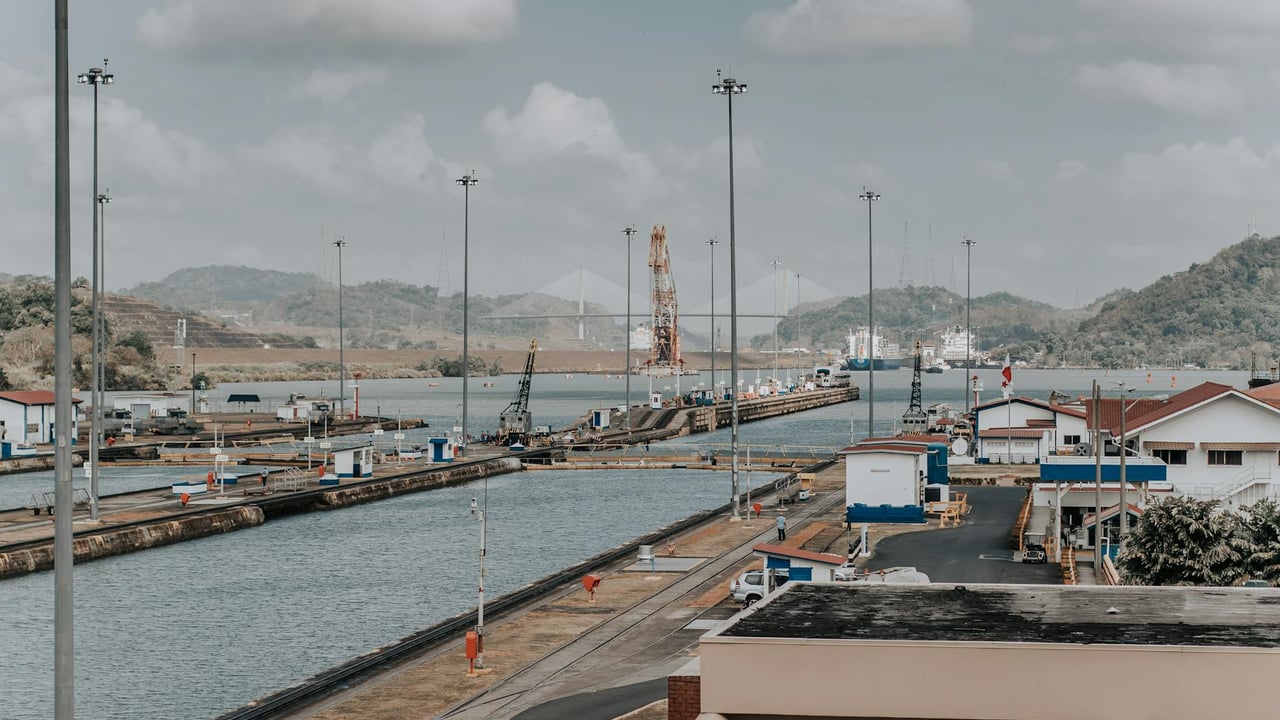

Panama's Supreme Court this month declared renewal of concession agreements for two ports serving the Panama Canal unconstitutional, nullifying a near‑30‑year operating relationship between those terminals and a Hong Kong company. Beijing and the Hong Kong Special Administrative Region government responded with immediate condemnation, saying the decision disregards contractual facts, breaches the spirit of commercial law and will grievously harm a long‑standing foreign investor.
Chinese state bodies framed the ruling as both legally baseless and politically motivated. The government note cited audits and oversight by Panamanian regulators that had previously certified the port operator's substantial compliance with contract terms, and pointed out that the concession had generated more than US$1.8 billion in local investment and thousands of jobs. China warned it would take “all necessary measures” to defend the lawful rights of its enterprise and signalled that the judgment sent a warning to the international investor community about Panama's ability to guarantee legal stability.
Beijing's statement blended legal critique with geopolitical accusation. The commentary argued the court decision amounted to capitulation to external “hegemonic” pressure and warned that weaponising concepts such as national security to rescind commercial accords undermines international trade rules and Panama’s credit as an investment destination. Hong Kong's government likewise protested, saying any foreign government's use of coercion or pressure in international commerce is unacceptable and damages legitimate business interests.
The case exposes several fault lines. For investors, it is a reminder that long‑standing contracts can become collateral in geopolitical contests. For Panama, the ruling risks immediate economic consequences: lost revenue from port operations, damage to confidence among multinationals and potential job losses in a sector that depends on stable logistics arrangements. For shipping and global trade, shifts in management of transshipment points linking the Atlantic and Pacific have the potential to ripple through supply chains that rely on the canal’s efficiency and the terminals that feed it.
Analysts will watch two vectors closely. The first is Panama's domestic politics: assertions of judicial independence collide with executive and congressional approvals the concessions previously received, creating uncertainty about inter‑branch relations and policy continuity. The second is Beijing’s response: while its immediate posture is to protect national and Hong Kong enterprise interests diplomatically and legally, any escalation — from trade steps to restrictions on Panamanian economic ties — could broaden the dispute beyond a bilateral commercial quarrel.
The dispute also feeds a wider pattern in which infrastructure and port ownership have become strategic flashpoints between the United States and China. Where Washington frames certain asset transfers or foreign presence as security concerns, Beijing frames punitive or selective enforcement as geo‑economic coercion. Neutral investors and smaller states worry that such contests erode neutral commercial law and make contract enforcement contingent on shifting geopolitical winds.
In the near term, Panama faces a choice between upholding the court decision and trying to mollify investor alarm. International shipping lines and logistics firms will be assessing operational continuity at the affected terminals; multinational companies routing cargo through the canal will be recalculating risk premiums. The longer‑term balance will hinge on whether Panama can demonstrate judicial clarity and predictable enforcement, and whether both sides find a legal or political path to limit spillover into broader bilateral ties.