
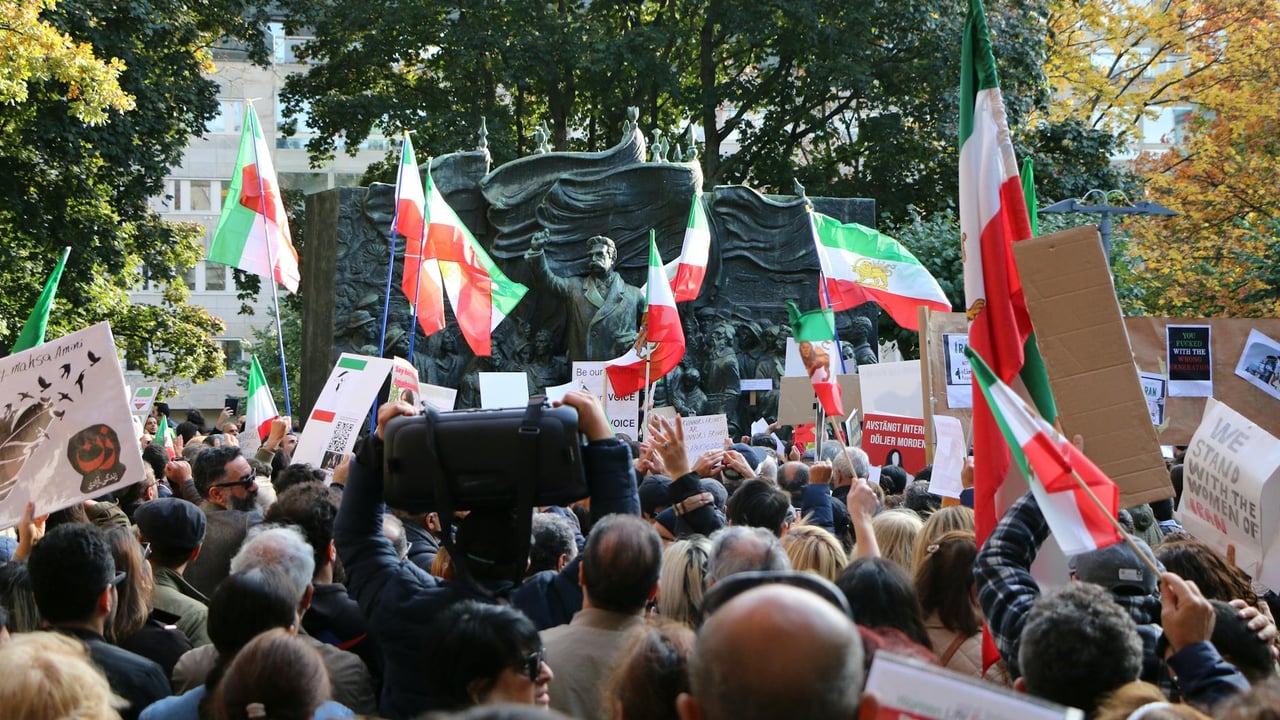

Since December 2025 Iran’s official economic statistics have resembled a disaster bulletin. The rial has plunged to roughly 1.42 million to the dollar, more than three times weaker than three years ago; December alone saw monthly inflation of about 42 percent, food prices up 72 percent year‑on‑year and medical supplies up roughly 50 percent. A fuel subsidy cut at year‑end triggered the largest street unrest since 1979, the central bank governor resigned, and young unemployment is soaring.
The obvious diagnosis—collapse of an oil‑dependent state battered by sanctions—is correct but incomplete. Iran’s oil exports have been squeezed progressively since Washington’s withdrawal from the nuclear accord in 2018, falling from near 2.5 million barrels per day at their peak to roughly 400,000–500,000 barrels. After renewed strikes on Tehran’s shadow tanker networks in mid‑2025, and a U.N. mechanism that froze overseas assets later that year, the government’s foreign‑exchange lifelines all but dried up.
Cut off from dollar revenues, Tehran has resorted to printing money, swelling liquidity and destroying currency credibility. The result is hyperinflationary pressure that hits every household: with about 72 percent of food consumption imported, a collapse in foreign exchange means empty shelves and runaway prices. Ordinary Iranians face shrinking real wages, rising poverty and growing resentment while essentials become harder to obtain.
The economic toll is compounded by long‑running environmental crises that the state can no longer afford to address. Tehran’s winter smog routinely shutters schools and factories, and healthcare systems strain with respiratory cases; capital relocation proposals remain politically and fiscally unviable. Even more acute is water scarcity: rivers and lakes are shrinking, irrigation has become unreliable and formerly fertile provinces such as Khuzestan see harvests fail and livelihoods vanish.
These visible failures, however, coexist with a vast subterranean economy that sustains the regime’s core. The Islamic Revolutionary Guard Corps has long morphed from a military force into a commercial cartel, estimated by analysts to directly or indirectly control about a third of Iranian economic activity. Alongside the IRGC are the Bonyads—large, opaque charities and foundations tied to the supreme leader—which enjoy tax privileges and command large swathes of wealth and industry.
The consequence is a bifurcated economy: the official ledger shows collapse while a parallel, semi‑informal system continues to circulate capital. Iranian researchers acknowledge that unregistered activity amounts to about a quarter of official GDP, and informal employment accounts for roughly 42 percent of the workforce. Those shadow flows do not cushion the general population so much as fund and insulate the political and security elite.
Shadow finance stitches the subterranean economy to the outside world. A single, recently exposed case offers a blueprint: three brothers who controlled exchange houses—GCM, Berelian and Zarrin Ghalam—used offshore bank accounts, forged invoices and sham third‑country trades to funnel sanctioned oil proceeds back to Tehran. That network reportedly delivered roughly $10.4 billion in liquidity over one summer in 2025 before U.S. sanctions targeted over thirty related entities.
Sanctions have not closed the taps but reshaped them. Operators dissolve and reconstitute entities faster than blacklists can keep up, while the IRGC, Bonyads and informal dealers maintain internal settlement systems and privileged procurement channels. The net effect is a strategic mismatch: sustained external pressure inflicts the greatest pain on ordinary citizens, while the regime’s core preserves access to funds and the means to coerce.
This explains Washington’s current posture and its limits. The United States retains military options—as a June 2025 strike showed, elite platforms can be hit—but regime change by force would be ruinous and uncertain. Iran is populous, geographically complex and militarily robust; an invasion or occupation would risk massive regional spillovers. Thus U.S. policy has leaned toward ‘‘contain and squeeze’’—incrementally degrading Tehran’s external revenue streams while hoping domestic strains produce political fissures.
That hope is neither guaranteed nor immediate. The regime’s durability rests on three pillars beyond raw coercive capacity: a security apparatus (IRGC and the Basij) with vested economic interests; an extensive subsidy and patronage network that binds impoverished rural constituencies to the state; and a conservative religious establishment whose fate is entwined with the Islamic Republic. Even succession after the aging supreme leader would likely trigger internal elite bargaining rather than instant collapse.
The plausible trajectory is slow attrition, not sudden implosion. Economic pain will continue to accumulate across years, deepening social grievance and environmental stress until some indeterminate tipping point arrives. Until then, the ‘‘whales’’ beneath Iran’s ice—shadow capital, opaque foundations and armed economic actors—will keep the regime breathing even as life for most Iranians deteriorates.