
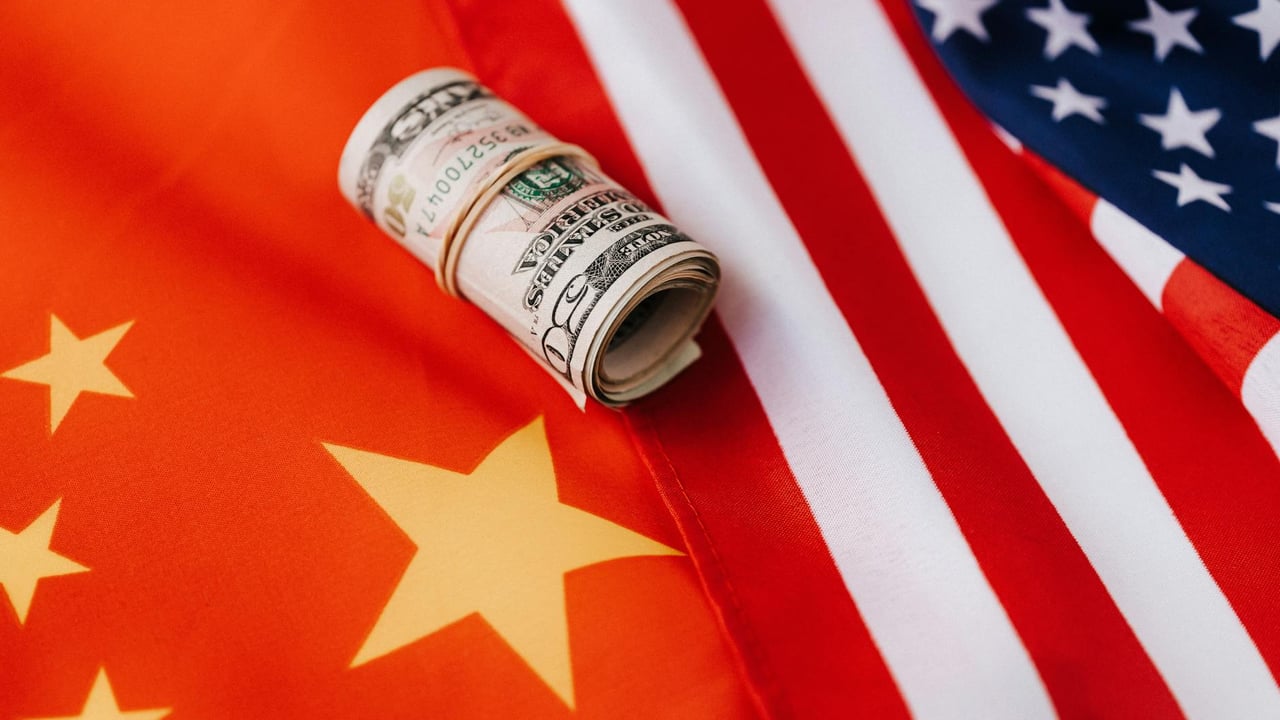

Yao Yang, dean of the Dishui Lake School of Finance at Shanghai University of Finance and Economics and a visiting professor at Peking University, told a NetEase think‑tank interview that 2026 should bring a period of relative stability in Sino‑US relations while China’s domestic economy will hinge on the direction of property prices.
Yao framed the current state of bilateral ties as a study in appearances versus substance. He acknowledged visible "decoupling" trends in personnel flows and high technology — fewer flights (about 20% of pre‑pandemic levels) and the emergence of more autonomous technology ecosystems — but argued that behind the headline figures the United States remains heavily dependent on Chinese supply chains. He pointed to a shift in export routes and production footprints rather than a disappearance of Chinese content: companies have moved manufacturing and processing to ASEAN nations, Mexico and other third countries while continuing to rely on Chinese inputs, so measures of country‑of‑origin masks enduring links.
On geopolitics, Yao attributed much of the change in Washington’s stance to deep domestic political evolution in the United States. He argued that the current shift toward conservatism and retrenchment will reduce the volatility of US foreign policy, making a formal "trade freeze" between the two countries more likely to hold and, in his words, producing “only good news, not bad news” for the relationship over the coming years. For Beijing, a steady bilateral relationship would act as an external anchor, widening strategic space for domestic and international economic policy.
Yao was less sanguine about the health of the US economy. He described valuations in American technology stocks as "absurd," noting that a handful of companies now carry market capitalisations comparable to the GDP of the world’s largest economies. That concentration, he warned, embeds systemic risk. He expects political pressure — including from former President Trump — to push the Federal Reserve toward easier policy, and he conceded that interest‑rate cuts could sustain US equity markets for a few years even as underlying vulnerabilities remain.
Turning to China’s domestic outlook, Yao argued that headline GDP growth is an increasingly blunt instrument for assessing economic momentum because nominal expansion has been depressed by falling prices. He estimated that some 1.2–1.4 percentage points of recent growth came from deflationary price declines, with exports contributing a further 1.1–1.2 points, leaving domestic nominal demand growth at roughly 2–2.5 percent. For him, the single most important indicator for 2026 will be housing prices: they are tightly correlated with producer prices (PPI), which have been negative for several months, and with overall domestic demand.
Yao described two "large watermelons" — the downdraught in property values and the weakness of local government spending — as explaining roughly half of aggregate demand shortfall. He recommended a far more assertive fiscal response, urging Beijing to expand support to local governments, explicitly count and issue special central government bonds for fiscal relief, and consider annual issuances of 3–4 trillion yuan for up to three years to clear on‑balance‑sheet liabilities and speed payments to firms. In his view, that would revive a substantial share of dormant demand and provide grounds for a durable recovery.
On education and employment, Yao maintained that higher education still offers strong lifetime returns: a university degree, he said, yields an annualised return near 10 percent and raises four‑year earnings by roughly 40 percent relative to high‑school graduates. He also urged a cultural shift away from tournament‑style credentialism: gig work or delivery jobs taken by graduates need not be shameful if chosen freely, and family pressure to chase elite university brands fuels counterproductive "involution." The policy implication is familiar — nurture diverse talents and avoid squeezing all social mobility through a handful of elite institutions.
For international observers, Yao’s mix of optimism on geopolitics and caution on domestic demand matters. If Washington’s foreign policy does indeed stabilise, it would lower one axis of risk for investors and exporters. But the bigger determinant of China’s near‑term recovery remains internal: a rebound in housing prices or a credible fiscal programme to shore up local government balance sheets would have outsized spillovers to commodities, regional trade and global growth expectations, while failure to act could leave manufactured exports propping up nominal GDP without restoring domestic demand.