
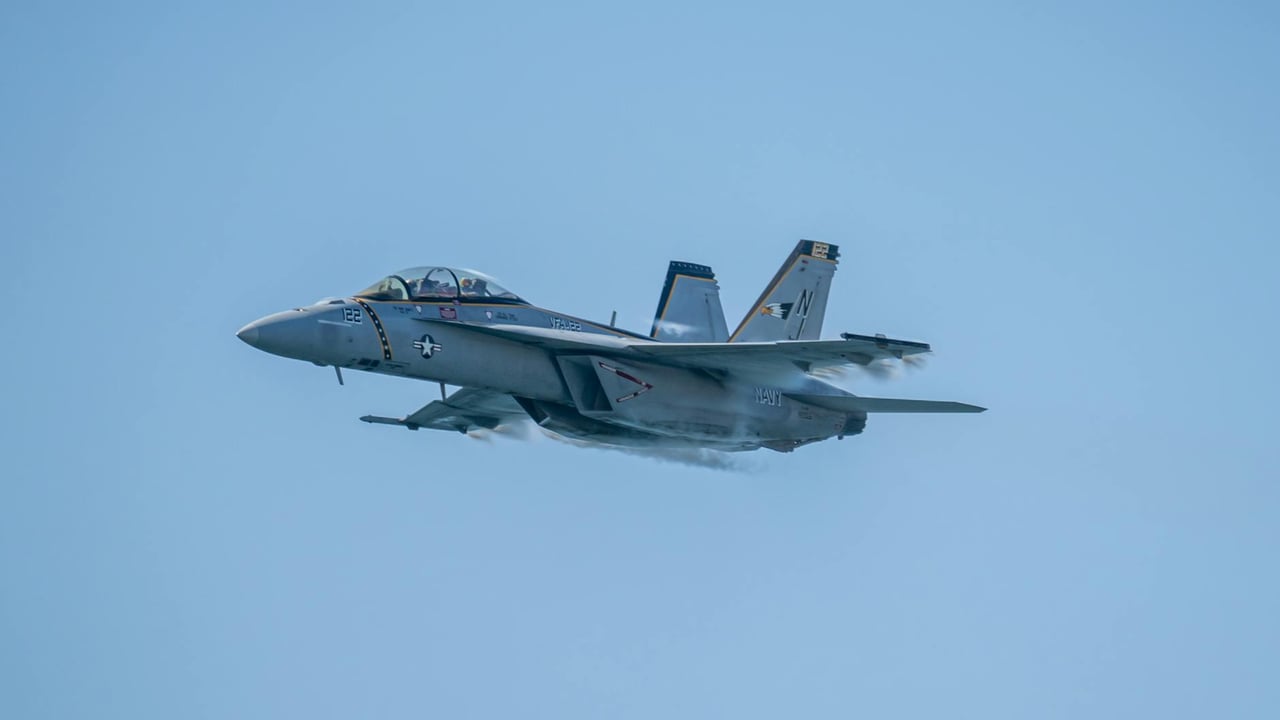

An F-35C launched from the USS Abraham Lincoln shot down an Iranian unmanned aerial vehicle roughly 500 miles off Iran’s southern coast after the drone approached the carrier strike group in international waters, U.S. Central Command said. The U.S. described the intercept as a defensive action to protect the carrier and its crew; CENTCOM said no personnel or equipment were damaged.
Tehran acknowledged that one of its drones "lost contact" while conducting routine reconnaissance, and said imagery had been successfully transmitted to ground controllers before communications were interrupted. Iranian state outlets disagreed on the model, variously identifying the aircraft as Shahid-129 or Shahid-139 — both medium-altitude, long-endurance designs that Tehran markets as capable of intelligence, surveillance and strike missions.
The weapon used by the F-35C has not been publicly confirmed. In similar anti-drone roles the carrier variant can employ AIM-9X short-range or AIM-120 medium-range air-to-air missiles, a 25mm gun pod, or precision-guided munitions; past operations in the region show U.S. fifth-generation platforms increasingly tasked with counter‑UAV missions.
The shootdown came on the same day CENTCOM said two Islamic Revolutionary Guard Corps navy vessels, accompanied by an Iranian drone, made threatening approaches to a U.S.-flagged tanker transiting the Strait of Hormuz. The guided-missile destroyer USS McFaul provided escort and U.S. air assets supported the response, underscoring how quickly maritime encounters can escalate into kinetic action.
The episode undermines a core operational benefit the U.S. had been counting on: the mobility and relative inscrutability of carrier strike groups. U.S. media and naval analysts had noted that the Lincoln’s transit to the region involved shutting off its transponders to mask movements; Iran’s ability to locate and close with the carrier suggests Tehran’s surveillance and targeting networks retain reach and sophistication even in non‑combat conditions.
Drones alter the risk calculus between Tehran and Washington. Remotely operated systems lower the political and human cost of probing or provocative acts, but they also increase the chance of miscalculation when one side elects to shoot them down. The Middle East has seen similar dynamics before: Iranian and proxy drones have filmed U.S. carriers and warships at close range in recent years, while Houthi strikes and other strike attempts have forced U.S. forces into urgent defensive operations.
Beyond the immediate encounter, Tehran appears to be accelerating preparations for a broader conflict. Social media images and flight-tracking data show increases in Russian-made hardware movements to Iran, including what observers identify as Mi-28NE attack helicopters and multiple Il-76 transport flights. Regional militaries, notably Israel, are also conducting large-scale exercises that simulate massive missile barrages, reflecting a wider anticipation of conflict contagion.
For now, the confrontation ended without casualties. But the incident highlights a precarious equilibrium: U.S. naval power projects deterrence from the sea, yet that mobility does not guarantee invisibility, and drones provide low-cost means for rivals to contest U.S. presence. The line between measured response and unintended escalation is thin, and both sides will find it difficult to probe without increasing the risk of a larger clash.