

Elon Musk used a wide‑ranging three‑hour interview to stitch together a single, ambitious thesis: compute will migrate off Earth, robots will recursively build the economy, and China’s manufacturing depth poses an existential competitive test for the United States. He argued that energy—not raw compute—is the near‑term hard constraint for AI expansion on Earth and that orbital solar arrays, paired with massive launch cadence, could become the cheapest way to power large‑scale AI within 30–36 months.
Musk framed the argument with blunt engineering arithmetic. Surface solar is hamstrung by night, weather, permitting and grid inertia; space is perpetually sunlit and avoids terrestrial permitting hurdles. He sketched a future in which a rapid cadence of Starship launches places solar‑powered AI racks in orbit, shifting the bottleneck from utility approvals and transformers to chip and memory production.
On AI alignment Musk offered a philosophical rather than technical prescription: xAI’s mission must be “to understand the universe,” a formulation he says will bias models toward curiosity and the propagation of conscious intelligence rather than obedience to politically curated axioms. He warned that trying to control systems far smarter than humans is “foolish”; the practical task is to instil productive objectives and transparency into model internals so flaws can be found and fixed.
Commercially, Musk pitched xAI’s route to revenue as the digital emulation of human labour. “Digital humans” that can perform desk‑based cognitive work—customer service, software, design tasks—could unlock trillions of dollars of economic value, he said, far outstripping today’s market caps because much of the world’s value already sits in digital outputs rather than physical goods.
Optimus, Musk’s humanoid robot, is central to his industrial counter‑strategy. He described three multiplicative exponentials—software intelligence, AI chip capability and mechatronic dexterity—whose product will yield robot systems that can build robots and therefore scale manufacturing in a recursive surge. He called Optimus an “infinite money glitch,” while conceding that hands and real‑world intelligence remain the hardest engineering problems and supply chains do not yet exist for many bespoke components.
The interview was also a geopolitical cautionary note. Musk complimented China’s manufacturing prowess as “another level,” citing dominant shares of ore refining and solar component production and forecasting Chinese electricity generation to outstrip the United States by multiples. He warned that prolonged American complacency, combined with demographic headwinds and a low birth rate, means that without breakthrough innovation—robots and space compute among them—the global production centre of gravity could shift decisively toward China.
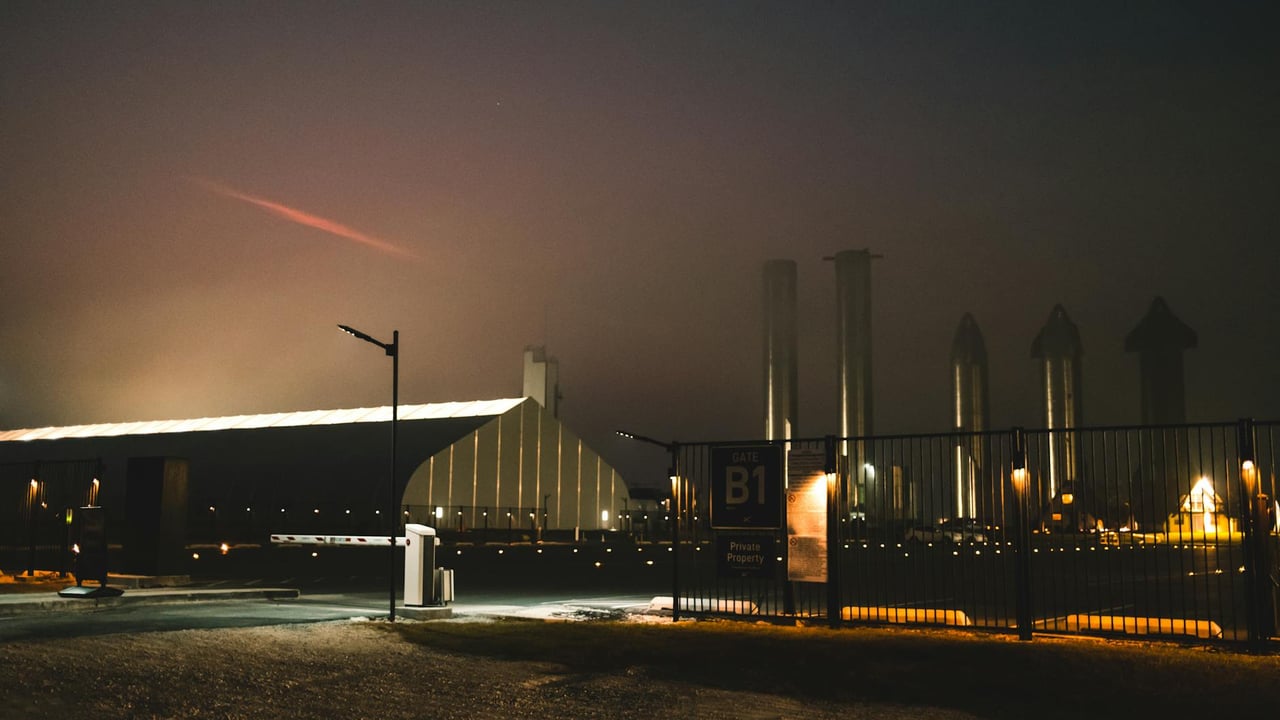
Musk mixed managerial anecdotes with doctrine. He explained decisions like switching Starship’s primary material from carbon fibre to stainless steel as the product of focusing relentlessly on limiting factors: cost, manufacturability and schedule. His recurring managerial prescription was to identify and smash the constraint, set aggressive yet achievable deadlines, and conduct frequent, deep technical reviews with frontline engineers.
At the level of industrial policy and supply chains, Musk warned of two looming walls: an “electricity wall” that will prevent newly manufactured chips from being switched on at scale, and a chip‑supply wall driven by the limited throughput of fabs and memory makers. He floated the idea of a “TeraFab”—a trillion‑scale semiconductor foundry complex to produce logic, memory and packaging at orders of magnitude beyond today’s capacity—and said he expects memory shortages to be the immediate impediment.
Musk was candid about the practicalities and limits of his plans. Deploying large AI clusters in orbit will demand extraordinary launch rates and materials logistics; manufacturing chips at the required scale requires novel factory architectures and likely cooperation or procurement from the small set of firms that dominate semiconductor equipment. He acknowledged that many of these projects could fail, but argued that the systemic risks of inaction—economic decline, loss of industrial autonomy, runaway concentration of AI control—justify the gamble.
The interview also touched on governance. Musk cautioned that governments, not private companies, may present the greater risk if they weaponise AI and robotics, arguing that constrained government power and institutional checks are preferable to untrammelled state control. He proposed technological transparency—debuggers that reveal model internals down to fine‑grained units—as a practical line of defence against reward‑gaming and deceptive behaviour by advanced models.
For international audiences the substance is double edged. On one hand, Musk offers a coherent portfolio of technologies—orbital solar arrays, humanoid robotics, next‑generation fabs—that, if they succeed, would massively expand global productive capacity and create new industries. On the other, his timetable and assumptions—rapid, huge increases in launch cadence and fab throughput, and the economic viability of orbital racks—depend on breakthroughs in logistics, manufacturing scale‑up and geopolitically fragile supply chains.
Whether or not investors or policymakers embrace Musk’s timelines, the interview crystallises the central strategic themes of the coming decade: energy constraints shape compute economics; robotics are the missing multiplier that converts digital intelligence into physical production; and industrial policy and supply‑chain resilience will determine who captures the fruits of automation. The immediate takeaways for governments are mundane and urgent—accelerate permitting, shore up domestic refining and upstream materials capacity, and think seriously about memory and foundry expansion—because the race, Musk argues, already has a velocity of its own.