

China’s car market opened February with two contrasting signals: a large-scale safety recall by a leading joint venture and the activation of a locally hosted AI training facility by a major EV maker. Together they capture the current duality of the industry — rapid technological ambition amid intensifying scrutiny over manufacturing quality and regulatory fit.
One of China’s longest-standing foreign–local carmakers, FAW‑Volkswagen, has filed a recall for 206,012 domestically produced Audi Q2L vehicles. The recall, logged under number S2026M0020V and effective from 6 February, covers cars built between 2 August 2018 and 19 January 2025. The fault lies in a domestically supplied structural adhesive bonding the inner and outer skins of the C‑pillar cover: under prolonged high‑temperature, high‑humidity conditions the glue can hydrolyse, weakening the bond and, in extreme cases, allowing the outer skin to detach while the car is in motion.
FAW‑Volkswagen will instruct Audi authorised dealers to replace the affected C‑pillar assemblies free of charge; vehicles that previously received the updated part are exempt. The episode highlights a practical problem of rapid localisation: substituting imported parts with local alternatives can reduce cost and complexity but exposes manufacturers to new failure modes unless the supply chain and material specifications are requalified for China’s climatic extremes and high production volumes.
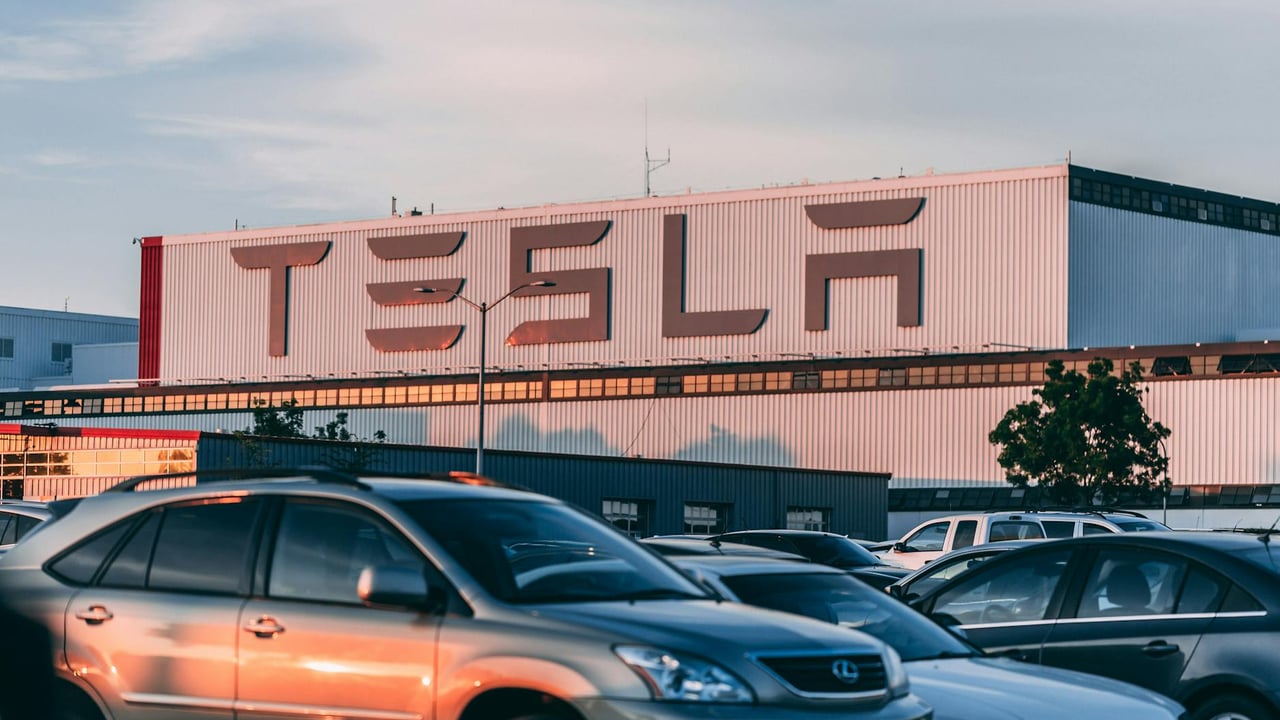
At the other end of the spectrum, Tesla has quietly brought an on‑shore AI training centre into service to support its China‑specific driver‑assist and AI features, according to Tesla vice‑president Tao Lin. He said the facility is already in use and offers sufficient compute for current needs, though Tesla has not disclosed its scale. Localised training capabilities allow automakers to tailor perception and control models to Chinese roads, traffic behaviours and regulatory requirements while addressing data residency and operational latency concerns.
The two announcements are not unrelated. China is now the world’s largest electric‑vehicle market and the leading source of global NEV volumes, but that scale amplifies both the benefits of localised innovation and the consequences of any quality lapses. Domestic firms and newcomers are racing to deploy higher levels of automation: Xpeng has begun L4‑level road tests for its GX SUV, Pony.ai has signed compute partnerships to accelerate model training, and robotaxi operator WeRide has expanded cooperation with Uber for a 2027 Middle East rollout. Those moves underscore growing demand for local computing capacity, specialised tooling and hardware that can be validated against China’s unique driving environment.
For foreign automakers operating through joint ventures, the recall is a reminder that reputational capital can be fragile. Large recalls erode consumer confidence and invite regulatory attention at a time when Chinese policymakers are promoting both greener vehicles and tighter safety supervision. For Tesla and other firms investing in China‑based AI infrastructure, on‑shore training reduces friction with authorities and can speed localisation of driver assistance, but it also commits firms to larger, longer‑term capital investments and to navigating local data and labelling regimes.
Investors and policymakers should watch three vectors closely: the pace at which manufacturers harmonise local component sourcing with robust qualification processes; the build‑out of domestic AI and compute ecosystems that support high‑fidelity model training; and how regulators balance encouragement of homegrown technology with stricter safety and data oversight. The interplay among these forces will determine whether China’s auto industry translates its scale into durable technological leadership or simply accelerates the cycle of innovation and recall.