
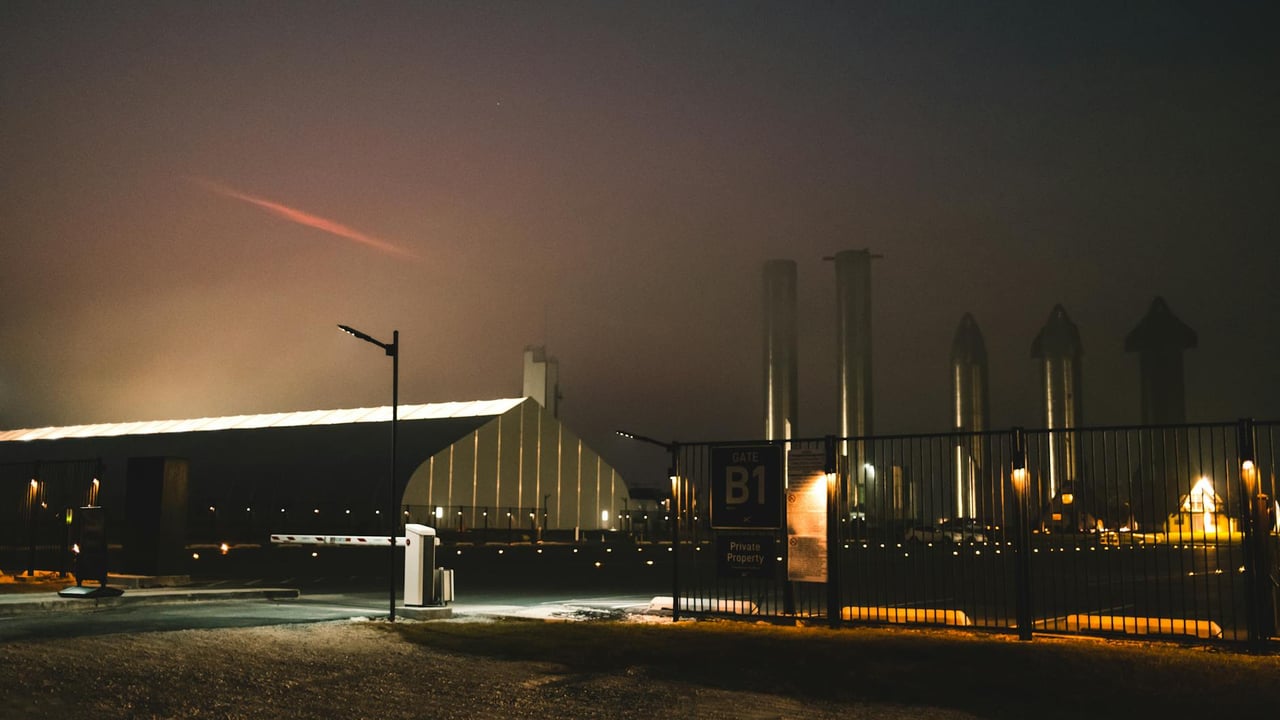

Chinese financial wire Cailian reported that SpaceX has informed investors it will postpone a planned Mars departure this year and instead prioritise an uncrewed lunar landing, aiming for March 2027. The move, if real, represents a tactical shift by the private rocket company as it prepares for a possible public listing and responds to pressure from US space officials to focus on near-term lunar needs.
SpaceX had previously signalled an audacious plan to launch five Starship vehicles toward Mars at the end of 2026 to take advantage of a favourable Earth–Mars alignment. The new timeline would defer that ambition until ‘‘later,’’ while concentrating engineering and operational resources on demonstrating a lunar landing capability without crew next year. Neither SpaceX nor Elon Musk has publicly confirmed the investor briefings cited by the Chinese outlet.
The reported pivot overlays other recent signals from Musk and the company. In a memorandum accompanying a proposed rapprochement between SpaceX and Musk’s xAI, he reiterated a long-term vision of a permanent lunar presence and a moon-based logistics hub that would support deeper space settlement. In a January podcast interview Musk also tempered expectations about a Mars launch this year, calling it technically possible but ‘‘low probability’’ and ‘‘distracting.’’
Washington has also been nudging the timeline. US officials, including then-acting transportation secretary Sean Duffy last autumn, suggested more competition and progress were needed from firms bidding to deliver crew to the moon. Citing that backdrop, the report says SpaceX submitted a so-called ‘‘simplified route’’ to NASA intended to recalibrate efforts toward returning humans to the lunar surface.
The engineering hurdle that underpins both lunar and Martian ambitions is in-space refuelling: moving and storing very cold, easily evaporating cryogenic propellants in vacuum. Engineers regard long-duration cryogenic storage and transfer as one of the most difficult technical problems left to solve before reusable Starship-class systems can reliably refuel in orbit and extend missions beyond Earth orbit.
For investors and competitors the implications are immediate. A successful unmanned lunar landing in 2027 would be a high-profile demonstrator that reduces near-term technical risk and creates commercial and contractual momentum around lunar infrastructure. Conversely, delays to a Mars campaign slow the timeline for human settlement narratives that have driven public enthusiasm and differentiated SpaceX’s strategy from legacy contractors.
What to watch next is straightforward: any confirmation from SpaceX or Musk; NASA’s response to a shifted schedule; subcontractor and launch cadence changes; and technical milestones on cryogenic propellant management. Together these signals will determine whether the reported realignment is a temporary reprioritisation or a durable strategic pivot toward the moon as the staging ground for future Mars ambitions.