
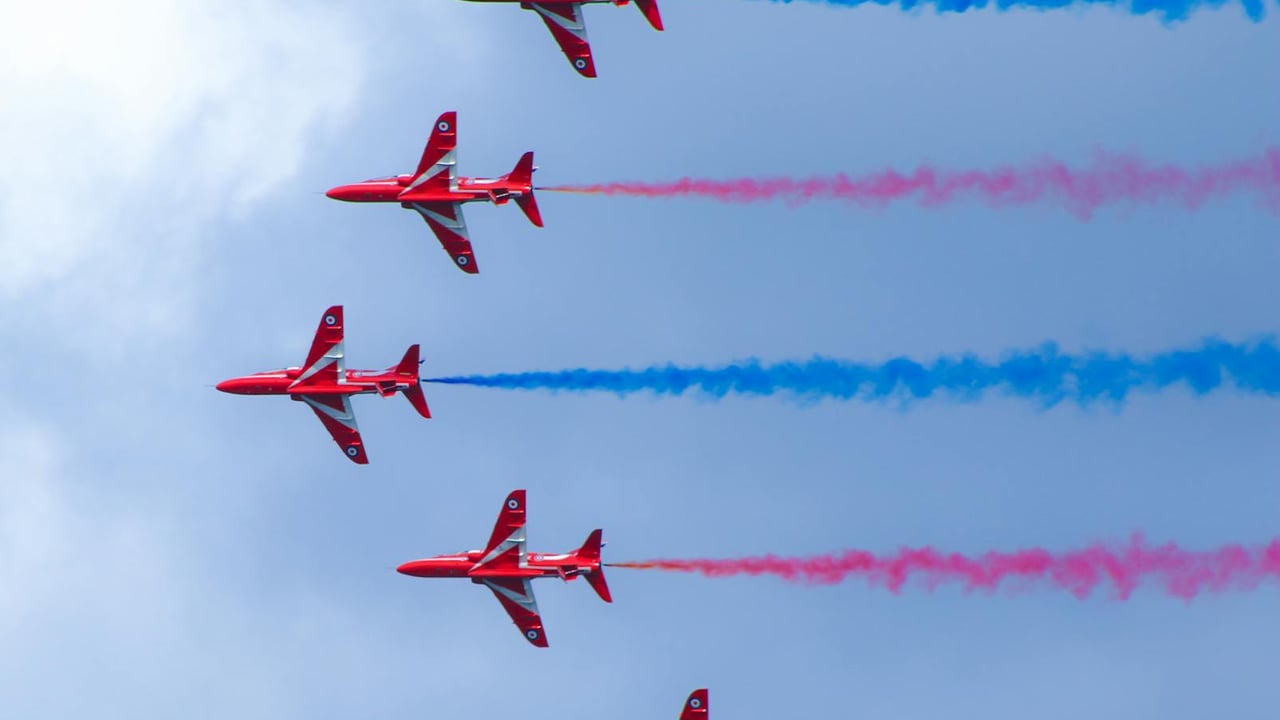

On 7 February, the People’s Liberation Army Air Force (PLAAF) Bayi aerobatic team performed at the Singapore Airshow, drawing large crowds at the Changi Exhibition Centre and featuring photographic coverage by Chinese state media. The brief, precision flying routines and formation work offered a polished public display of pilot skill and aircraft handling that is emblematic of modern air-show diplomacy.
The Bayi team’s appearance in Singapore is primarily symbolic: aerobatic teams showcase training standards and professionalism more than they reveal specific combat capabilities. Nevertheless, such displays serve as a visible manifestation of China’s defence modernization and an exercise in soft power, intended to reassure foreign audiences about the professionalism of the PLA while also normalizing its presence at major international aviation events.
Singapore’s airshow is a premier regional platform where governments and defence firms meet, and hosting the Bayi team underscores Singapore’s role as a hub for military-to-military contact and defence commerce. For Beijing, participation offers an opportunity to advance defence industry ties, boost the profile of Chinese aviation technology, and maintain open channels with Southeast Asian states that often seek to balance relations between great powers.
The event has geopolitical overtones. Public appearances by Chinese military units in Southeast Asia are read by regional capitals and extra‑regional actors alike as signals about Beijing’s confidence and intent. For Southeast Asian audiences the display can be read two ways: as reassuring proof of professionalism and as a demonstration of growing reach and influence in the skies above the region.
Beyond optics, the airshow context advances commercial objectives. Manufacturers use these gatherings to court buyers and build partnerships, and the Bayi team helps put a human face on China’s aviation sector. The presence of PLA performers alongside international exhibitors also smooths avenues for defence engagement, training exchanges, and potential sales, which in turn factor into broader Chinese efforts to integrate its military-industrial base with global markets.
Watch for follow-up activity. Repeated public performances, joint flights, or expanded participation by Chinese industry at regional events will deepen the message implicit in this single display: Beijing seeks both recognition of its military proficiency and greater normalisation of its defence ties in Asia. How regional states and outside powers react—whether with engagement, acquiescence, or counter-posturing—will shape the strategic texture of Southeast Asia’s airspace in the months ahead.