
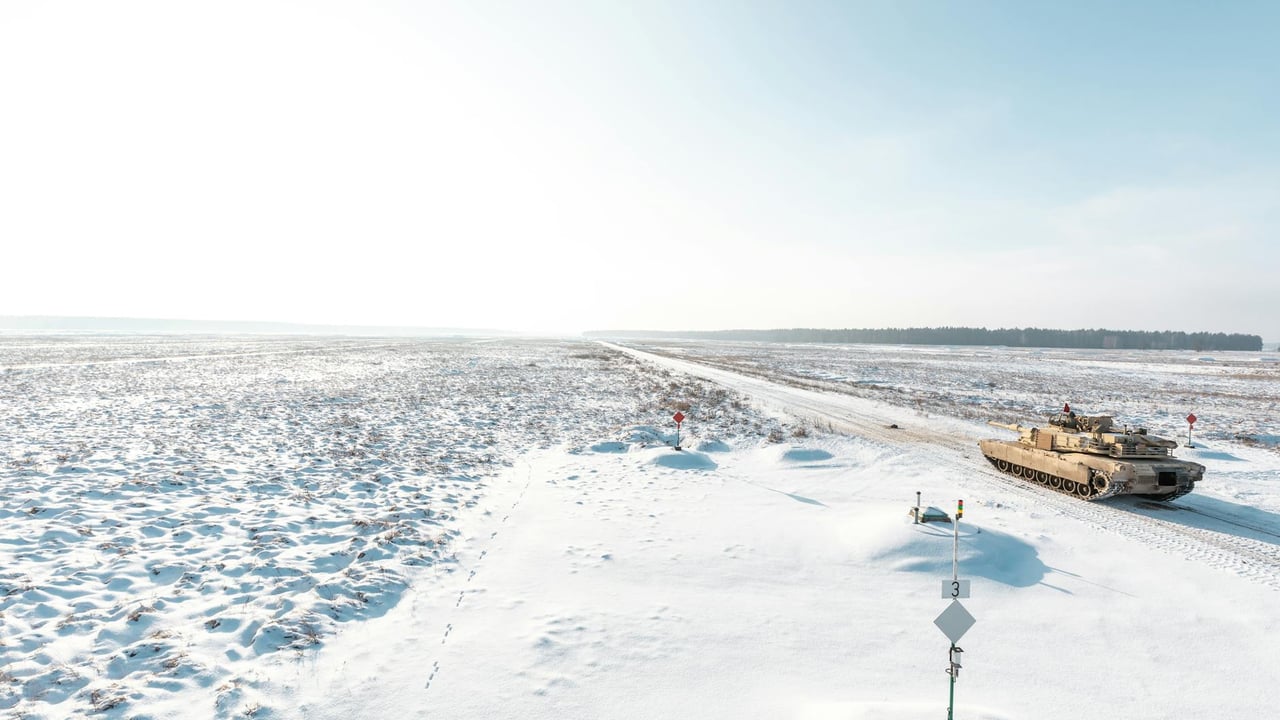

A dozen tracked vehicles thundered through an Arctic-blue dusk as a Rocket Force unit began a night-time mobility exercise some 100 kilometres from its garrison. Temperatures around minus 23°C, snow-packed ground and the smell of diesel set the scene for a series of realistic drills designed to test crews' ability to operate, hide and recover in extreme winter conditions.
Orders were crisp and the tempo relentless: mount up, conceal on drone warning, repair a punctured wheel under driving snow, and continue. Small contingencies were introduced on the move—an unmanned aircraft overflight, a simulated attack that disabled a tyre, and later a chemical-biological alarm that forced immediate donning of protective gear—to condition soldiers for the kinds of disruptions likely in a contested environment.
Leaders emphasised that winter cold is a ‘‘natural whetstone’’ for testing the unit's capacity to move under pressure and survive when equipment degrades. A company commander who had pre-surveyed the training area provided detailed route notes down to potholes and signposts, allowing crews to thread ice-rutted tracks that would otherwise slow or endanger the column.
The exercise drew attention to familiar practical problems: vehicle systems that stiffen at low temperatures, snow-buried ruts, slower donning of protective ensembles, and the need for rapid field repairs. Commanders used those frictions to hone small-unit habits—breaking complex tasks into rehearsed micro-steps so that actions become near-automatic when time and visibility run out.
For the Rocket Force—the branch that fields China's strategic and conventional road-mobile missiles—mobility, concealment and rapid recovery are operational imperatives. Mobile launchers are inherently survivable only if they can move, hide and be sustained under attack or in harsh weather; training like this signals an effort to extend those capabilities across seasons and threat environments.
The drills also reflect a broader appreciation within the PLA of multi-domain risk: unmanned aerial systems, electronic surveillance, and even chemical and biological hazards are treated as integrated threats that can complicate logistics and targeting. By rehearsing contingencies under stress, units both reduce procedural errors and produce routinised behaviours that are harder to disrupt in a real crisis.
This unit's disciplined night movement—tracks vanishing into forested ridges and officers keeping vigilant watch beneath a cold moon—was framed not merely as technical preparation but as a ‘‘spiritual mobility’’: the cultivation of reflexes and organisational resilience that shorten the gap between training and combat. Even small metrics mattered: a ten-second lag in full-body protection was logged as a significant shortfall to be corrected.
Taken together, the exercise is a reminder that improvements in the human and procedural elements of force employment can matter as much as hardware. For external observers, repeated public coverage of such winter manoeuvres is both reassurance of rising proficiency and a signal that China is investing in ways to make its strategic and long-range conventional assets harder to locate, target and disable.