
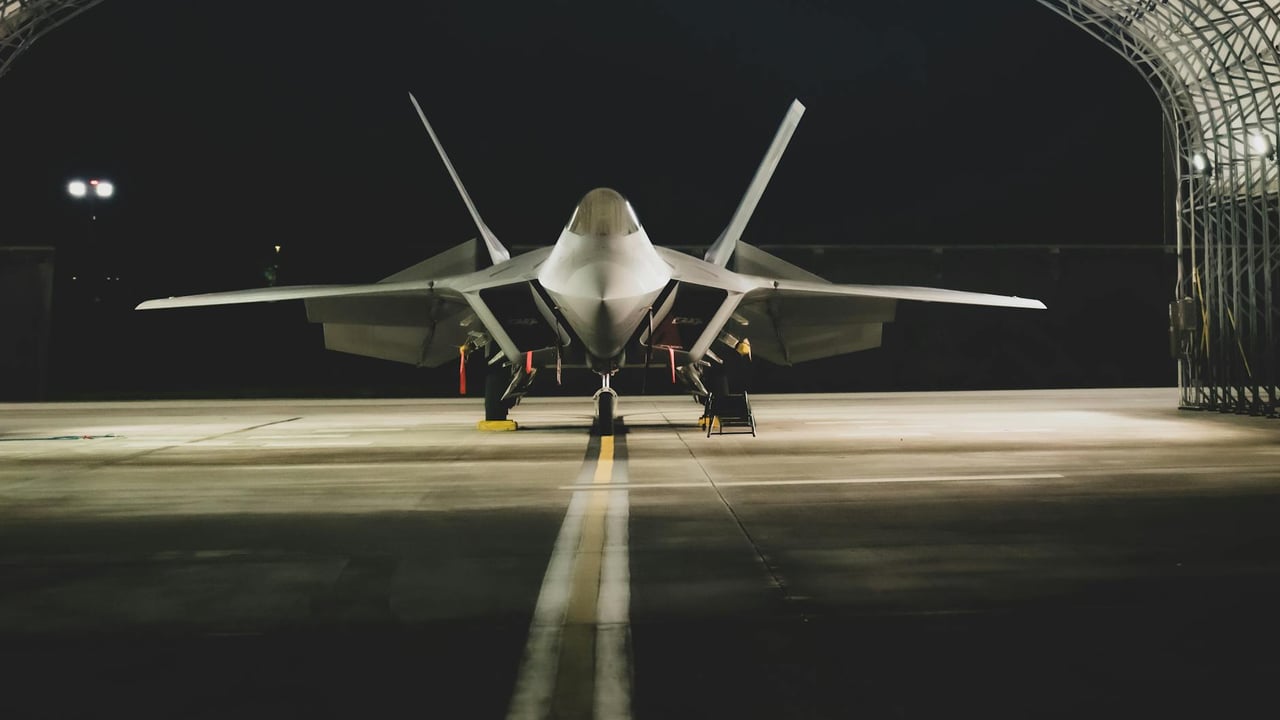

The U.S. Air Force quietly pulled two F-22 Raptor stealth fighters from the flyover scheduled for the Super Bowl, citing heightened operational requirements that forced a last-minute redeployment. The decision, disclosed by the service’s sports outreach coordinator, underscores a trade-off between public spectacle and mission priorities when tensions rise abroad.
Katie Spencer, who coordinates the Air Force’s public events, said the F-22s were originally planned as part of the aerial demonstration but were reassigned as operational needs increased. She declined to describe the missions for which the jets were redirected; reporting has linked recent F-22 activity to a June 2025 operation called “Midnight Hammer” that targeted Iran.
The pullback occurs against a backdrop of sustained U.S. pressure on Tehran. Washington has surged naval assets into the region, including carrier strike groups, maintained a regimen of economic sanctions and other coercive measures, and pursued intermittent indirect talks with Iranian interlocutors while warning of possible military responses.
Removing fifth‑generation fighters from a high-profile public display is a small but telling signal about the current U.S. force posture. It indicates that operational tempo—driven by real-world contingencies in the Middle East—has risen enough to consume assets the service normally reserves for both combat and public engagement.
The decision has two competing messages. To potential adversaries it demonstrates a willingness to commit top-tier platforms to active missions, reinforcing deterrence rhetoric. To domestic and international audiences it exposes the limits of U.S. surge capacity: highly capable aircraft are finite, and their use in overseas contingencies can crowd out non‑operational activities meant to showcase military prowess.
There are also practical strains behind the gesture. Sustained high tempo stretches maintenance cycles, pilot availability and spare parts supply, all of which can degrade readiness over time if deployments continue to mount. The Air Force’s unwillingness to disclose the reassigned missions adds a transparency gap that complicates public oversight and allied situational awareness.
For observers, the episode is a barometer rather than a turning point: it does not by itself signify imminent large‑scale conflict, but it does show how the U.S. military is prioritising combat operations over public relations at a moment of anxious diplomacy. Watch for further high-end asset movements, naval deployments and diplomatic signals that together will determine whether this operational tempo proves temporary or the new normal.