
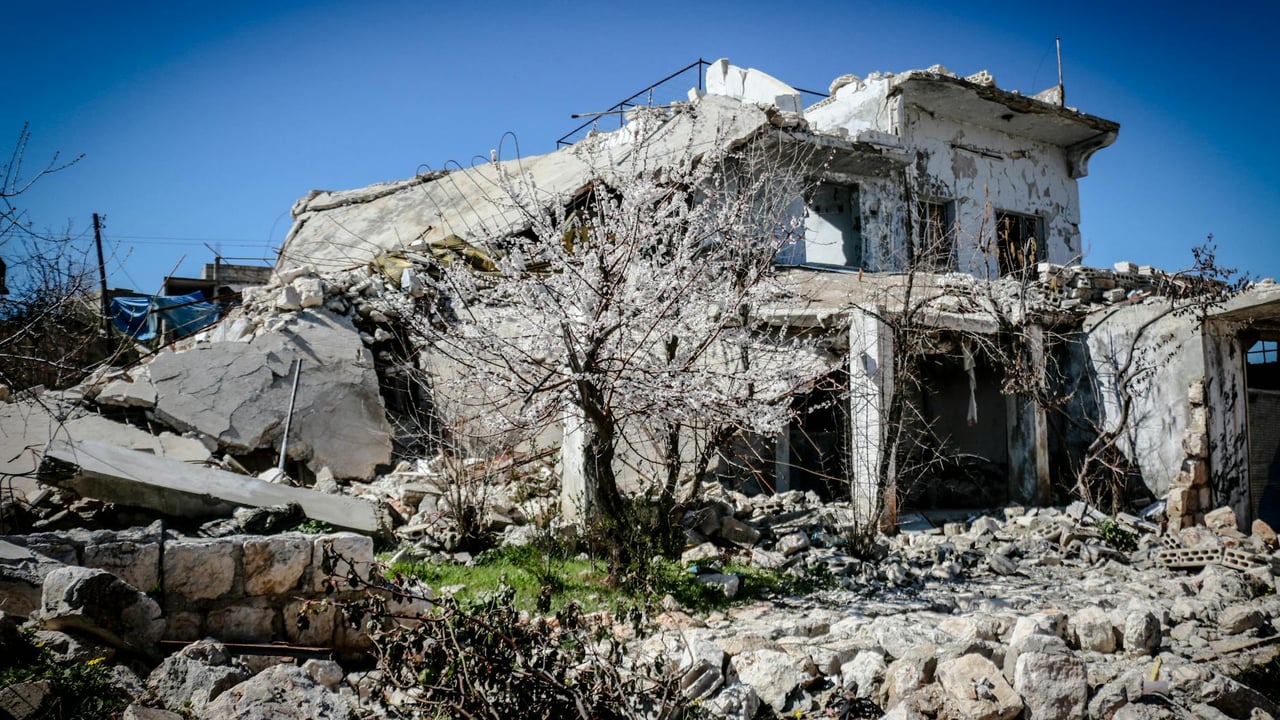

In a rubble-strewn quarter of Gaza City, 39-year-old Mahmoud Hamad spends his days with a hand sieve, a hammer and a makeshift spade, scraping through sand and concrete in search of the remains of his family. His wife, five children and extended relatives were killed in an Israeli airstrike in December 2023; their home was flattened and most of the bodies remain entombed beneath collapsed floors and twisted rebar. Mahmoud has found fragments — a jawbone from his son, pieces identified as his wife and an unborn child — about 1.8 kilograms of remains in total, evidence of both the violence that tore his family apart and the difficulty of recovering what is left.
For many Gazans the recovery of the dead is not only a matter of closure but of dignity. Local rescuers and grieving relatives say that since a ceasefire took effect on October 10, 2025, progress on clearing debris and retrieving remains has been painfully slow: Gaza's health authorities estimate roughly 8,000 people remain buried under the rubble, while only some 700 bodies have been recovered since the truce. A Gaza media office statement on February 10 accused Israeli authorities of failing to meet obligations under the ceasefire, including permitting the agreed number of heavy machines into the territory — equipment families say is essential to sift collapsed buildings safely.
The obstacles are both practical and political. Large swathes of Gaza remain under military control, access routes are restricted, and many sites are structurally unstable or suspected to contain unexploded ordnance. Humanitarian groups and local teams lack the bulldozers, cranes and forensic capacity needed to lift concrete slabs safely and to separate, tag and identify commingled remains. That slow pace compounds the psychological toll: relatives like Mahmoud and Ramzi Salim describe a compounded grief that comes from being unable to bury loved ones and from the indignity of piecing together fragments by hand.
The challenge is also forensic. Time, explosions and the mixing of remains across destroyed buildings make DNA identification a painstaking, resource-intensive task. Gaza's health system and morgues have been overwhelmed by the scale of casualties, making long-term storage, sample collection and laboratory analysis difficult. International forensic teams have worked in past conflicts to establish chain-of-custody and identification protocols; here, such deployments face political sensitivities and operational barriers.
This human story is embedded in a wider toll. United Nations and independent agencies estimate the death toll from the current round of fighting at more than 72,000, a figure that underlines the scale of destruction and the number of families awaiting answers. The inability to recover remains quickly risks eroding trust in ceasefire arrangements, hardening grievances among survivors and complicating any future reconstruction or reconciliation process. For neighbours and mediators, the retrieval of bodies is a humanitarian priority that also carries symbolic weight: it is a visible measure of whether the rules of war, and the post-conflict commitments that follow, are being respected.
For Gaza's ordinary people, the task is painfully simple in purpose and tragic in practice: to gather what is left of family, to bury them and to be able to visit a grave. In the absence of sufficient heavy machinery and secure, sustained access, that quiet demand for dignity remains unmet. As the rubble slowly yields to sifting hands, each fragment recovered is a small, costly affirmation of life and loss — and a reminder that the end of active hostilities is not the same as the end of human suffering.