
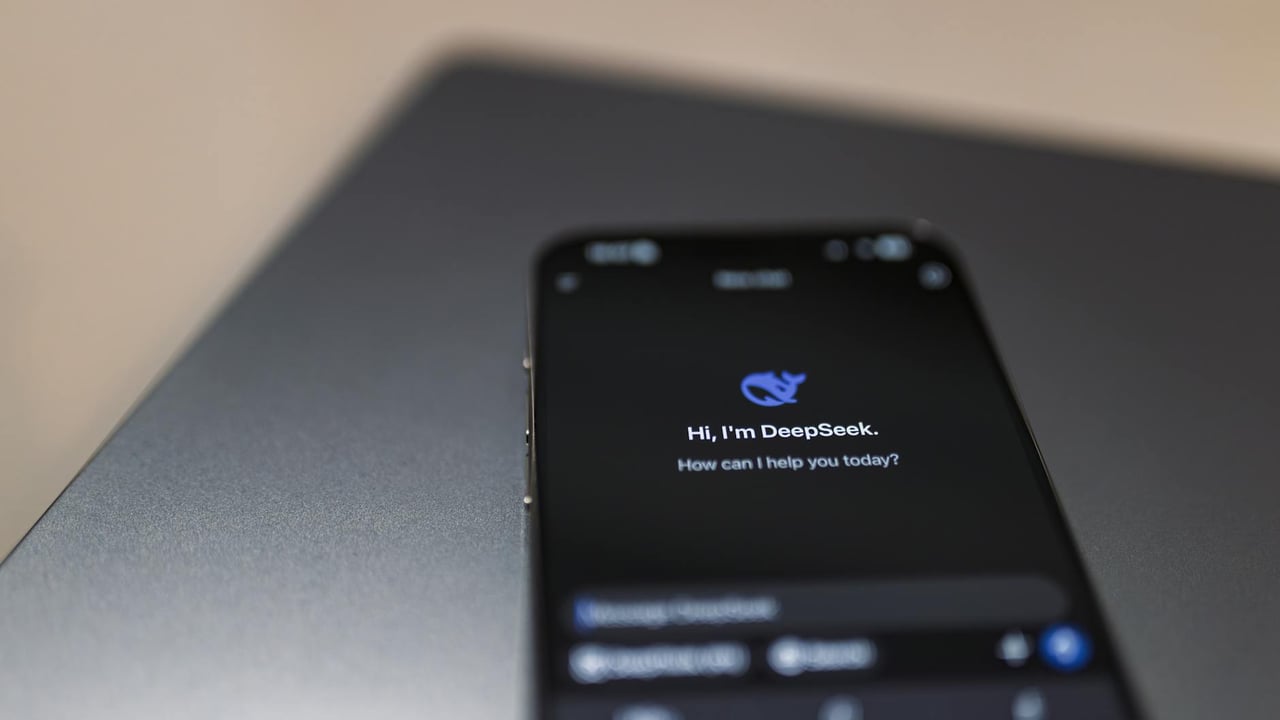

DeepSeek, an emerging player in China's large language model space, has begun testing a new long‑context model architecture on its web and mobile apps that can handle roughly one million tokens of context. The change was disclosed informally by the company's official assistant in a developer chat; DeepSeek's public API, however, remains on version 3.2 with a maximum context length of 128,000 tokens.
A context window of one million tokens is a substantial leap from most production models today and opens immediate practical uses that shorter windows struggle to serve. Legal briefs, scientific literature reviews, enterprise knowledge bases, multi‑file codebases and long transcripts can be ingested and reasoned over without aggressive chunking or repeated retrieval, reducing the engineering work required to maintain coherence across long documents.
Delivering such a large context presents real engineering and commercial trade‑offs. Models that process a million tokens demand either new attentional mechanisms, memory compression, or retrieval‑augmented designs to contain compute and memory costs; they also require careful tuning to avoid length‑dependent hallucinations and to preserve latency acceptable to users. Deploying this capability only in client‑facing apps while keeping the API on a smaller window suggests DeepSeek is experimenting with a controlled rollout, balancing product polish, safety testing and cost exposure.
The split between an experimental 1M‑token model in apps and a 128K API ceiling will matter to the developer ecosystem. Enterprises and third‑party integrators who depend on stable, documented APIs cannot immediately exploit the extended context in production workflows, forcing them to wait or to approximate the capability with retrieval and chunking strategies. For DeepSeek the approach buys time to iterate on model behaviour and pricing, while still showcasing a headline capability to end users.
Strategically, the move mirrors a broader industry push toward ultra‑long context models. International rivals and Chinese peers are racing to stretch context windows because of the clear value proposition: better handling of complex, multi‑document tasks that underpin high‑value enterprise use cases. The technology will also sharpen competition over how long‑context features are monetized — as premium app features, enterprise APIs, or specialised hosted services.
Risks remain. Large context windows amplify exposure to sensitive data if not properly governed, and they can exacerbate hallucination if systems do not combine long context with robust retrieval, grounding and verification. Regulators and customers alike will want transparency on data handling and safety mitigations, particularly in sectors such as healthcare, law and finance.
For now, DeepSeek's announcement is a modest but telling development: it demonstrates the firm has moved beyond academic proofs of concept to testing productised long‑context functionality at scale. The next milestones to watch will be whether the capability reaches the API, how it is priced, and how well it performs in real world enterprise workloads compared with retrieval‑heavy alternatives.