Hamas Refuses to Relinquish Arms as Israel Plans New Gaza Offensive — A Fragile Ceasefire on the Brink

Hamas has publicly refused to surrender arms while Israel continues strikes, directly challenging US and Israeli plans to demilitarize Gaza under a second-phase settlement. With mediators yet to present a full weapons proposal and Israeli plans for a new offensive reportedly underway, the fragile ceasefire faces a high risk of collapse.

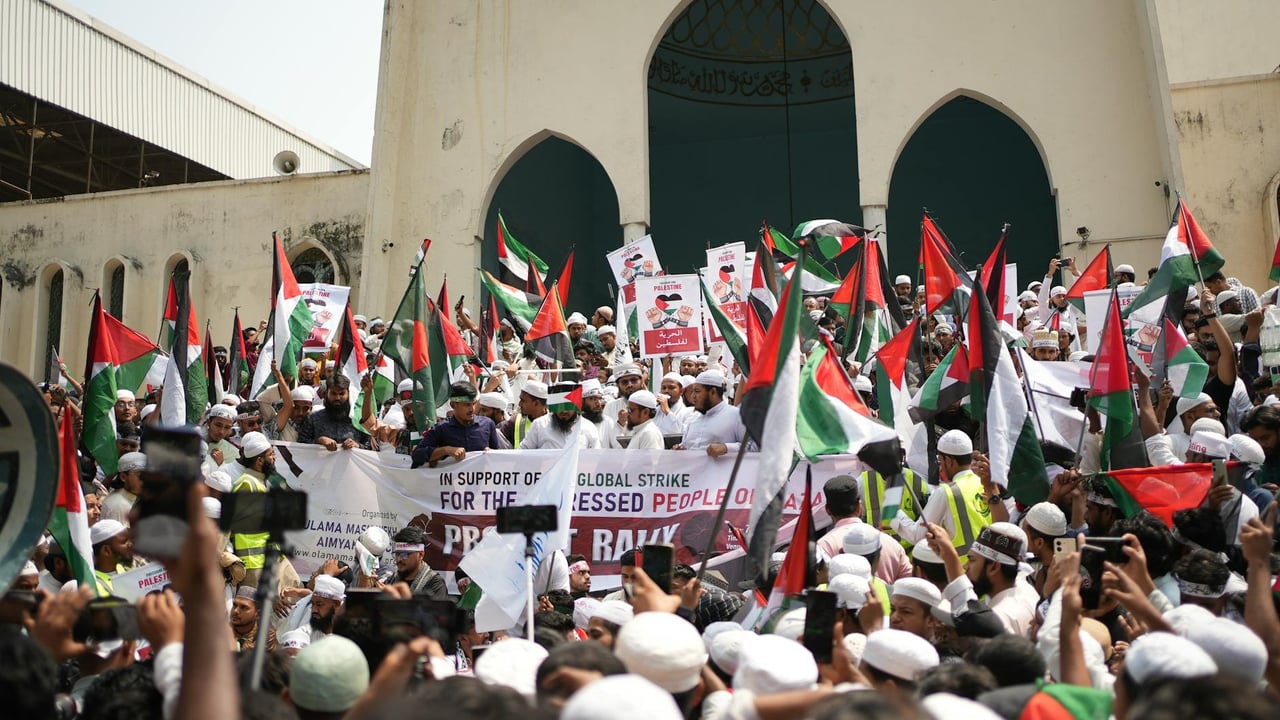
Crowd gathers in Dhaka for a pro-Palestinian demonstration waving flags and banners.

Key Takeaways

  • 1Hamas senior official says resistance forces will not hand over weapons while Israel continues attacks; arms would be surrendered only to a future Palestinian state.
  • 2Hamas claims it has not received a complete mediators' proposal on weapons and accuses Israel of obstructing the second-phase ceasefire.
  • 3The US '20-point plan' second phase aims for comprehensive demilitarization, technocratic governance and reconstruction — but leaves key implementation questions unresolved.
  • 4Israeli military planning for a renewed Gaza offensive to forcibly disarm Hamas raises the prospect of renewed heavy fighting.
  • 5Gaza health authorities report 591 deaths and 1,578 injuries linked to Israeli operations since the first-phase ceasefire took effect, highlighting the civilian cost of any escalation.

Editor's
Desk

Strategic Analysis

The standoff over arms illustrates a deeper paradox: international actors insist on demilitarization as a prerequisite for rebuilding Gaza, yet demilitarization without credible political sovereignty or trusted security arrangements is implausible. For Israel, the notion of a demilitarized Gaza is essential to prevent future attacks; for Hamas, weapons are the movement’s ultimate assurance against existential threats. The United States’ emphasis on technocratic governance and reconstruction risks appearing to prioritise administration over legitimacy, which may prompt local resistance and empower spoilers. Unless mediators propose a phased, enforceable security architecture — possibly involving multinational forces, disarmament sequencing tied to measurable Israeli withdrawals, and a durable political timetable toward Palestinian statehood — the second phase will likely founder and the ceasefire will remain precarious.

China Daily Brief Editorial
Strategic Insight
China Daily Brief

A senior Hamas official warned on 12 February that Palestinian armed groups will not hand over their weapons while Israeli strikes continue, setting up a direct clash with Israeli and US plans to demilitarize Gaza as part of a second-phase settlement. Mahmoud Mardawi framed the refusal as conditional: weapons would be transferred only to a unified Palestinian state after statehood is achieved, and not to any interim arrangement that leaves fighters vulnerable.

Hamas spokesman Hazim Qasim said the movement had not received a complete proposal on the weapons issue from mediators, accusing Israel of using the weapons question to justify delays to a deeper ceasefire. The allegation exposes a core stumbling block: for Hamas, arms are a bargaining chip and a coercive guarantee; for Israel and many international actors, disarmament is a precondition for reconstruction and long-term security.

Washington’s “20-point plan,” announced in January, envisions a shift from an initial ceasefire toward comprehensive demilitarization, technocratic governance and reconstruction in Gaza. The United States describes the second phase as centring on removing ‘‘unauthorised’’ armed groups and rebuilding civilian life, but has left the mechanics — who disarms whom, how and when — vague and politically explosive.

Israeli media and military sources report that the Israel Defense Forces are drafting plans for a renewed offensive aimed explicitly at ‘‘forcibly disarming’’ Hamas, a prospect that would unravel the lull achieved by the first-phase ceasefire. Gaza’s health authorities say Israeli operations since that first-phase deal took effect have already caused 591 deaths and 1,578 injuries, underlining the human toll that any return to large-scale fighting would inflict.

The impasse matters because disarmament is not simply a technical step but a political one: transferring weapons to a central authority presumes a sovereign Palestinian state or a trusted interim administration, neither of which exists. Without a realistic mechanism for security governance that guarantees both Israeli safety and Palestinian sovereignty, the risk is a return to armed confrontation that will delay reconstruction, complicate international aid and deepen regional instability.

Share Article

Related Articles

📰
No related articles found