
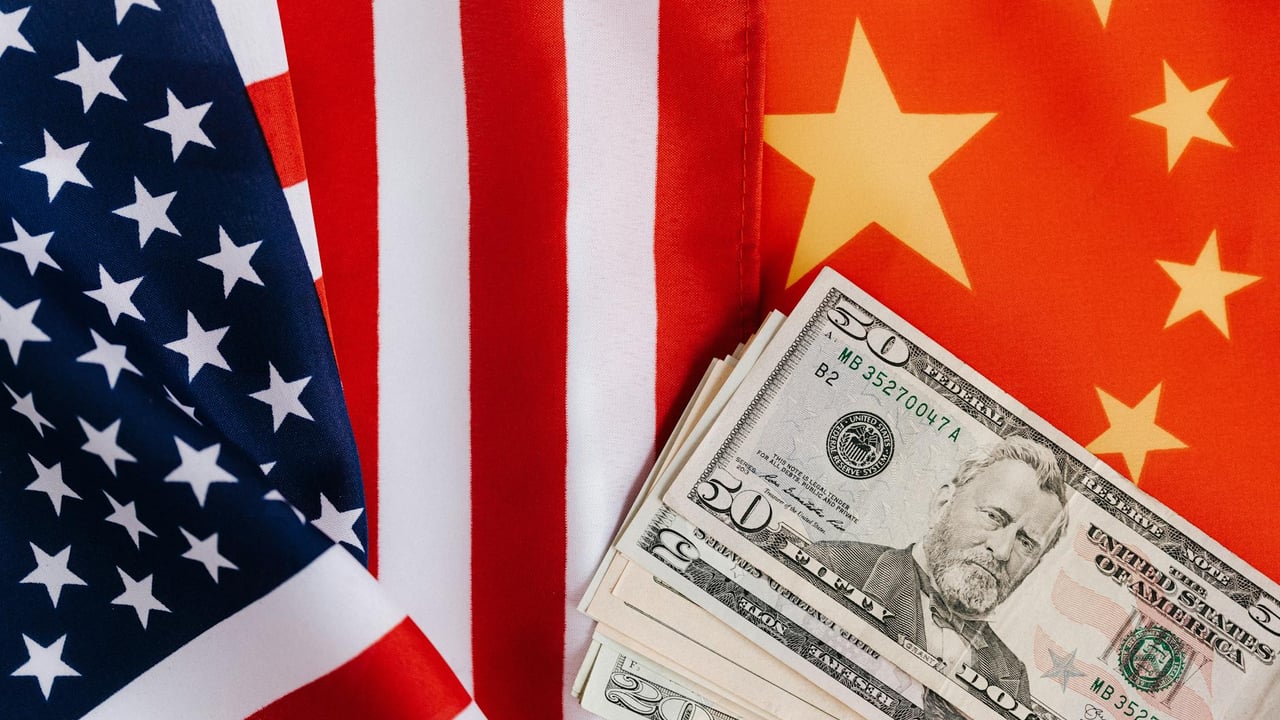

The US House of Representatives on a near‑unanimous vote approved a bill that would, in the event of a Chinese military attack on Taiwan, seek to expel China from six international bodies — including the G20 and several financial regulatory standard‑setting groups. The 395–2 tally underlines how hard‑line China policy has become a bipartisan default in Washington; the parliamentary arithmetic makes dissent politically costly and signals a durable, confrontational posture toward Beijing.
Those six organisations — the Financial Stability Board, the Basel Committee on Banking Supervision, the International Association of Insurance Supervisors and the International Organization of Securities Commissions, alongside the G20 — are not typical state clubs. They are technical, regulator‑led forums where central banks and supervisory authorities set conventions and coordinate crisis responses, so any attempt to “kick” a country out would be legally and politically complex and would fracture the machinery of global financial governance.
The legislative threat is therefore as much about signaling as about mechanics. Washington’s leverage is a warning that China could be marginalized from the international rule‑making and information channels that underpin cross‑border banking, capital markets, insurance and settlement arrangements. Even a credible prospect of restricted access would raise compliance costs for Chinese financial institutions, complicate market access and increase systemic risk — while also imposing collateral pain on the global system.
At the same time the House vote was unfolding, Beijing dispatched a political message of its own: a J‑20 stealth fighter model was presented to Iran’s air force leadership, and China’s vice foreign minister publicly vowed joint opposition to “hegemony.” Beijing emphasised the symbolism of 2026 as a milestone year for China‑Iran ties — the 55th anniversary of diplomatic relations and the tenth anniversary of a comprehensive strategic partnership — indicating a conscious decision to deepen cooperation at a time of heightened US‑Israel attention on Tehran.
The juxtaposition of Washington’s financial ultimatum and Beijing’s Iranian gesture highlights two parallel moves in great‑power competition. On one flank, the United States is weaponising multilateral and regulatory levers as part of a deterrence strategy focused on raising the costs of aggression. On the other, China is consolidating strategic partnerships in regions where US influence is contested, using anniversaries and high‑level diplomatic gestures to harden alliances and project resolve.
Practical constraints will limit the most dramatic outcomes. Expelling China from regulator networks would require broad buy‑in from other members — many of whom have substantial economic ties with Beijing — and would risk splintering the global architecture that underpins cross‑border finance. Still, Washington’s move raises the odds of incremental measures: restrictions on technical cooperation, limits on participation in working groups, and reputational penalties that can be implemented without formal expulsions.
For markets and policymakers the calculus is now more complicated. Investors will watch for concrete measures that impair China’s access to international clearing, regulatory information and capital markets. Beijing’s likely responses include reciprocal diplomatic and economic measures, accelerated efforts to build alternative institutions and deeper bilateral arrangements with partners such as Iran, both to secure strategic space and to demonstrate that sanctions and threats need not produce isolation.
The immediate watch points are clear: how multilateral bodies respond to US pressure, whether the executive branch translates congressional rhetoric into policy, and how China leverages anniversary diplomacy with Iran to produce tangible security or economic outcomes. The interplay of symbolic threats and real‑world institutional friction will determine whether this episode becomes a new normal in great‑power rivalry or a high‑stakes signal that is ultimately contained.