
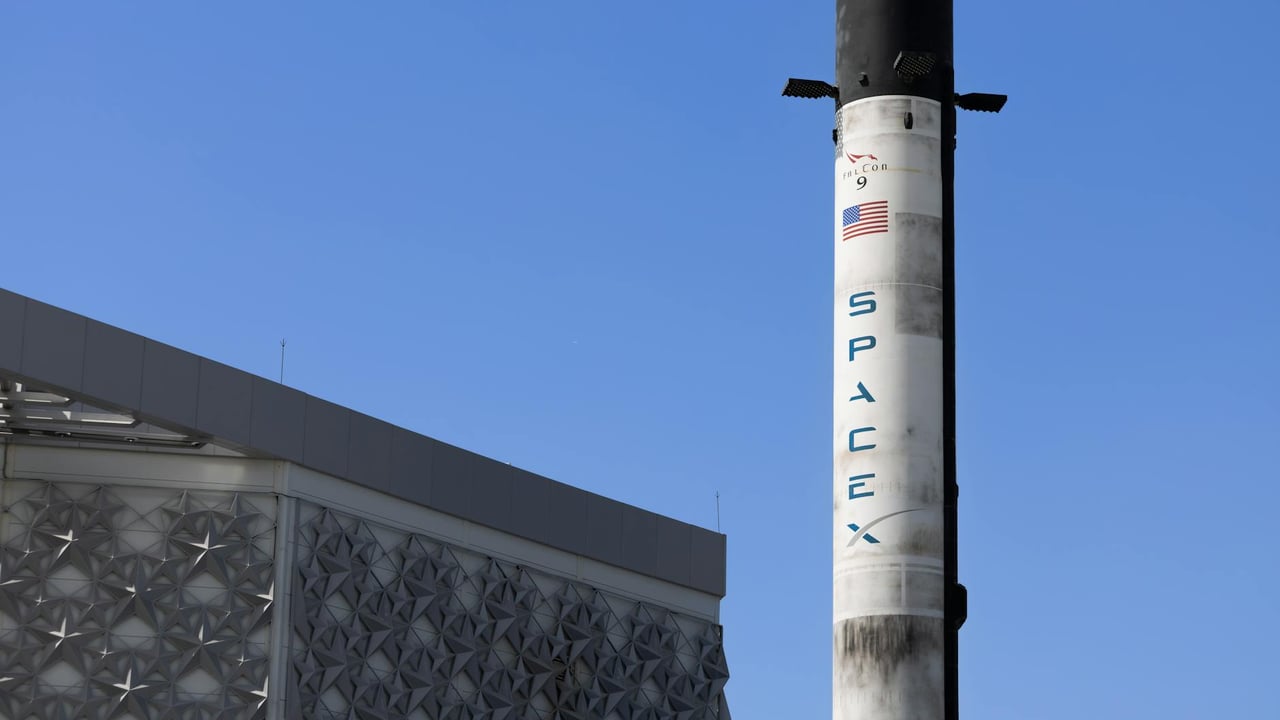

Elon Musk has said SpaceX has shifted its immediate focus toward building a self‑sustaining city on the Moon while reiterating that plans for Mars development will continue. In remarks republished on February 15, Musk acknowledged the company’s lunar pivot — a project he has previously described as achievable within a decade — but insisted the change would not derail Mars ambitions, estimating any delay to full Martian autonomy at no more than five years and suggesting the lunar work could even speed Martian development.
The comments follow a string of high‑profile statements from Musk about using the Moon as a platform for manufacturing, launch activity and large‑scale artificial‑intelligence infrastructure. The original item was posted on a Chinese social media channel and summarises Musk’s public remarks rather than reporting new technical milestones, but it crystallises a strategic choice: pursue near‑term lunar infrastructure that could serve as a commercial and technological proving ground, while keeping the longer‑term goal of a human presence on Mars alive.
The Moon‑first approach is significant because it reframes how a major commercial actor sees the sequence of extra‑terrestrial industrialisation. Building facilities on the Moon could allow SpaceX and its partners to trial life‑support systems, resource extraction and in‑space manufacturing in a nearer‑term, lower‑energy environment than Mars. In practice, however, a shift in emphasis does not eliminate the enormous technical, regulatory and financial challenges that underpin both lunar and Martian ambitions: radiation protection, lunar dust mitigation, in‑situ resource utilisation and the establishment of reliable logistics chains remain unresolved.
Musk’s claim that the adjustment would affect Mars autonomy by at most five years merits scrutiny. On one hand, lunar operations could supply technologies and operational lessons — and perhaps propellant or parts through orbital depots — that accelerate some aspects of Mars planning. On the other hand, concentrating engineering resources, launch cadence and capital on lunar infrastructure could divert attention and funding away from interplanetary architectures that are uniquely tailored to the Martian environment.
Beyond engineering trade‑offs, the pivot has geopolitical and commercial implications. A moon‑oriented commercial push will intersect with national programmes such as NASA’s Artemis initiative and China’s lunar ambitions, raising questions about coordination, competition and the rules that will govern resource use. Private‑sector leadership in lunar infrastructure would also crystallise a new commercial frontier that regulators and international institutions have yet to fully define.
Observers should treat decade‑scale deadlines from private entrepreneurs as aspirational benchmarks rather than guaranteed schedules. Ambitious targets can mobilise capital, public interest and political support, but the history of human spaceflight is littered with optimistic timetables. For now, Musk’s pronouncement is important less for its precision than for what it signals: a commercial strategy that treats the Moon as both a destination and a laboratory on the path toward sustained human presence beyond Earth.